
The short answer
Cats meow at night for many reasons, but most nightly yowling comes down to one of three things: hunger, boredom, or habit. Because cats are naturally most active at dawn and dusk, a busy indoor cat may decide that 3 a.m. is the perfect time for social interaction. The good news is that you can usually reduce nighttime meowing by building a predictable daily routine around play, feeding, and sleep. In most cases, the fix is not ignoring the cat – it's resetting the cat's internal clock by changing what happens during the day. Before you try any behavior plan, though, have your cat examined by a veterinarian to rule out a medical cause for the vocalizing.
Why cats meow at night
To understand the behavior, you need to know a little about cat chronobiology. Domestic cats are crepuscular, meaning they naturally have activity peaks at dawn and dusk. In the wild, these are prime hunting times. Your cat's ancestors evolved to hunt for small prey when light is low, and your indoor cat still carries that wiring.
When your cat meows at night, it is not trying to annoy you. The behavior usually means your cat wants something: attention, food, access to another room, or simply something to do. Cats are also creatures of habit. If a cat learns that meowing brings you running – even if you are frustrated – the behavior is reinforced. Over time, the cat learns that night vocalizing works.
Some cats meow more as they age. Older cats can develop cognitive decline or sensory loss that makes them disoriented at night. That is why the vet check matters. The goal of this article is to help you change the daily rhythm so your cat is tired, satisfied, and ready to sleep when you are.
Rule out medical issues first
The single most important step is to take your cat to the veterinarian before you begin any behavior modification. Nighttime yowling can be a symptom of several medical conditions, including thyroid disease, hypertension, urinary tract problems, or early cognitive dysfunction. It can also be a sign of pain, especially in older cats.
If the meowing is sudden, accompanied by other changes (appetite loss, increased thirst, inappropriate elimination, vomiting, lethargy, or a change in grooming), you need a full workup. Never assume it's behavioral until a vet gives your cat a clean bill of health.
If your cat's nighttime meowing is new, persistent, or paired with other concerning signs—like not eating, vomiting, straining in the litter box, or hiding—do not wait to see if a routine change helps. Contact your veterinarian right away. Nighttime vocalization can sometimes be the only early clue to a medical problem.
The daily routine that reduces nighttime meowing
Cats thrive on predictability. A consistent daily schedule tells your cat when food is coming, when play happens, and when the lights go out. Once your cat learns the schedule, nighttime vocalization often drops dramatically.
Here's a sample routine for an average adult cat:
| Time of day | Activity | Duration (approx.) |
|---|---|---|
| Morning | Interactive play session (wand toy, feather, etc.) | 10–15 minutes |
| Mid-morning | Puzzle feeder with a small portion of daily food | 10 minutes |
| Afternoon | Another play session or self-directed toys (tunnels, balls) | 15–20 minutes |
| Early evening | Feeding the main meal (or a large portion of the daily food) | 10 minutes |
| Before bed | High-energy play session, then a small pre-bed snack | 15–20 minutes |
The key is to place the biggest meal and the most intense play right before your own bedtime. This mimics the natural hunting sequence: chase, catch, eat, groom, sleep. After a burst of activity and a full meal, your cat is more likely to settle down for the night.
Play: the tired-cat solution
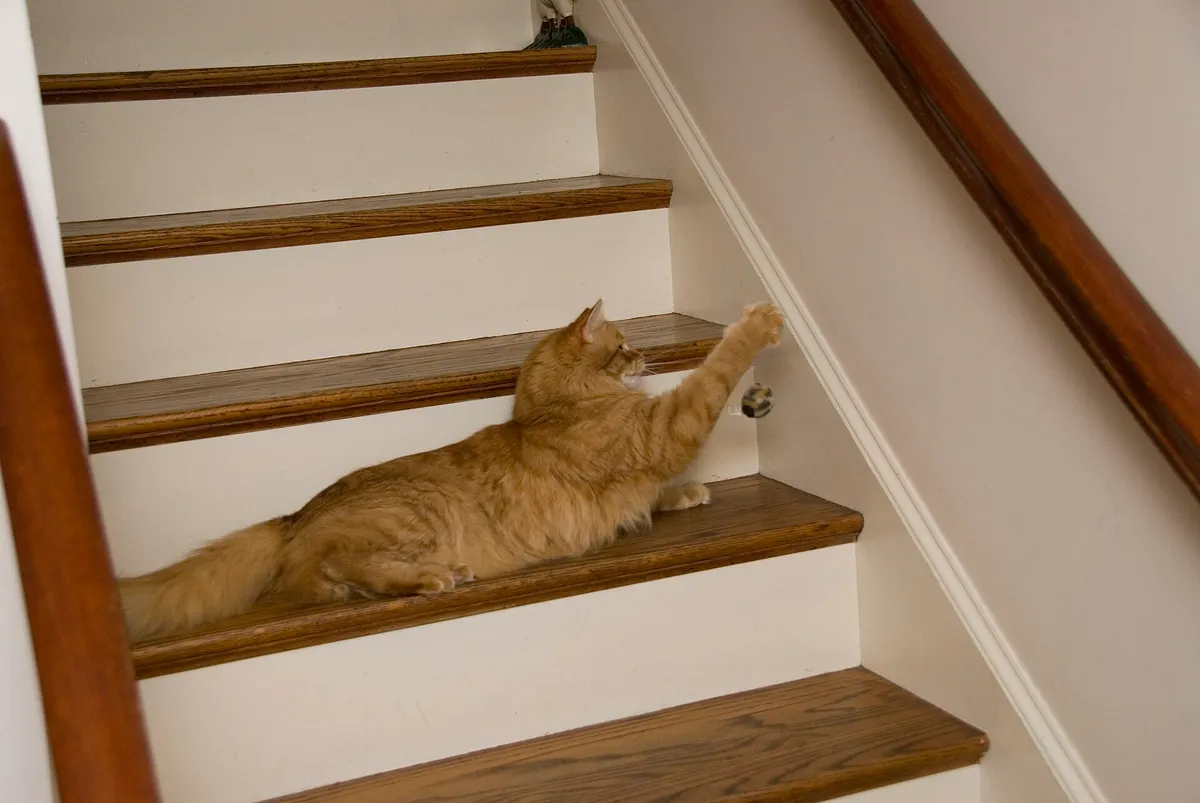
Interactive play is your strongest tool. Cats are predators, and a play session that lets them stalk, pounce, and catch a wand toy satisfies their instinct to hunt. A tired cat is a quiet cat.
When to play: schedule play sessions at the same times each day, especially in the evening. Aim for two to three sessions of 10–15 minutes each. In the evening, end the session with a "capture" — let your cat physically catch the toy, then put it away.
Watch your cat's energy. Some cats prefer short, frequent bursts; others like longer sessions. The goal is to get your cat breathing hard and happy by the time the game ends. Then immediately offer a small portion of food or a treat, which triggers the natural satiety cycle and prepares the cat for rest.
In addition to interactive play, provide self-directed options: cat trees, cardboard boxes, tunnels, and puzzle feeders. If your cat is alone overnight, leave a few toys that are safe to play with unsupervised. Rotate toys to prevent boredom.
Feeding: timing and portioning
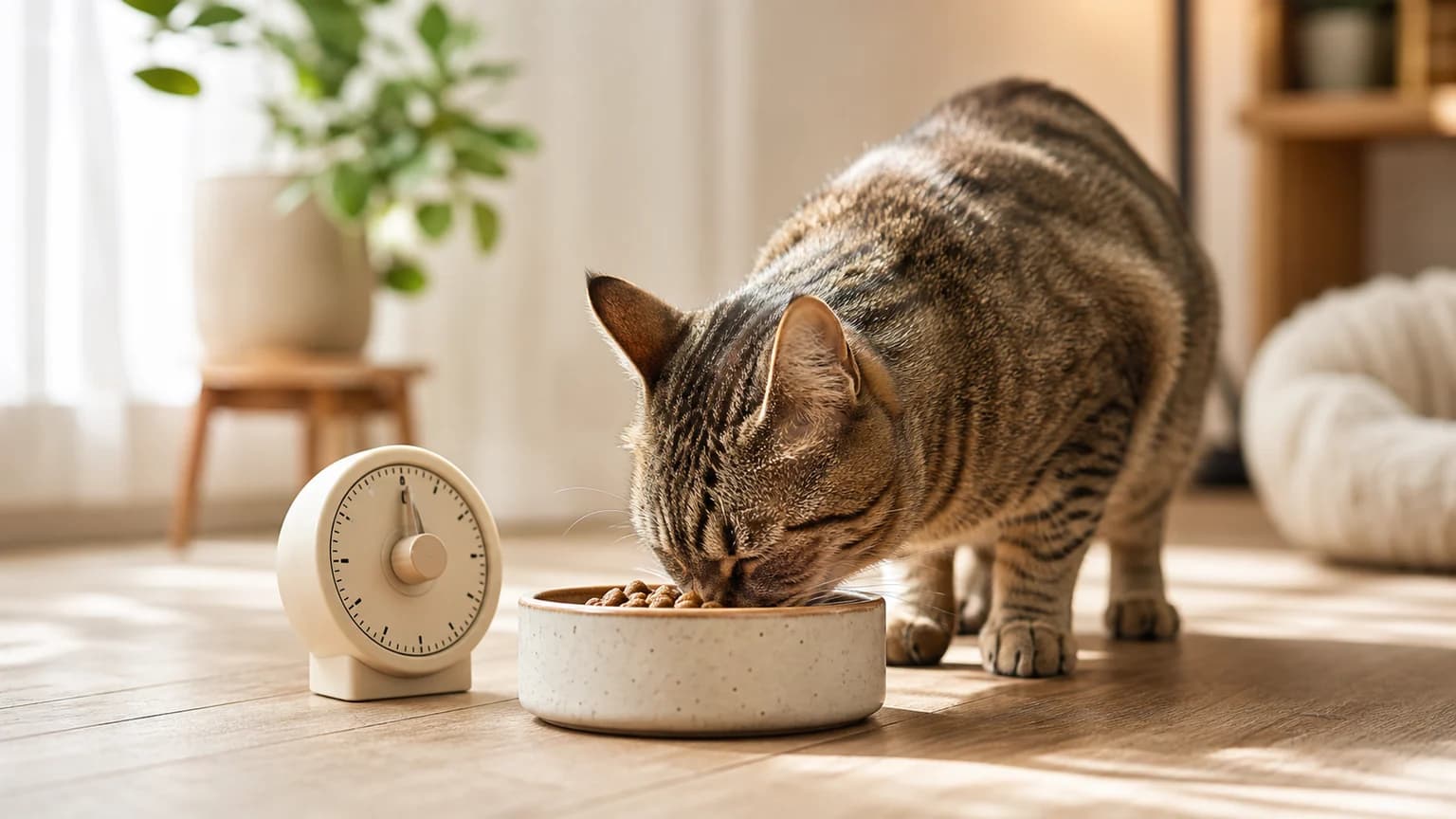
The timing of meals can make or break your night. Many cats prefer to eat small meals throughout the day, but if you free-feed, there is no cue for the brain that food is done. Switching to scheduled meals – even two or three set feeding times – gives the day a structure that helps regulate the cat's sleep-wake cycle.
The evening meal deserves special attention. Feeding your cat's largest meal in the evening, close to bedtime, is a well-known (and effective) strategy. Well-fed cats are more likely to sleep through the night than hungry ones. If your cat wakes you at 4 a.m. for food, the fix may be as simple as moving the dinner later or adding a small midnight snack.
Here are some feeding tips:
- Use a puzzle feeder for some of the food to add mental stimulation.
- Do not give in to 3 a.m. feedings. If you get up and feed a meowing cat, you lock in the habit. Make sure your cat has food available before you go to bed, then ignore the meowing.
- If you need to adjust the food amount, do it gradually and talk to your vet about the perfect calorie count for your cat's weight and activity level.
Environmental tweaks
A few simple changes to the bedroom and the house can help:
- Keep your cat out of your bedroom at night if you are a light sleeper. Many owners report that a closed door stops the meowing, though you may need an adjustment period. Install a tall cat tree or perch in the living room so your cat has an elevated lookout.
- Create a cozy sleeping spot for your cat in another room with a soft blanket and a piece of your clothing.
- Open curtains during the day and let natural light signal daytime. Cats' circadian rhythms respond to light exposure.
- If you want your cat to wake you later, use blackout curtains and a dawn-simulation lamp. Some owners train their cat to wait until the lamp turns on.
- Never punish your cat for meowing. Punishment increases anxiety and can make the behavior worse. Instead, reward quiet behavior with attention during the day.
What to do if the meowing continues
If you've ruled out medical issues and kept a consistent routine for a few weeks, but the meowing persists, it may be time to work with a veterinary behaviorist or a certified cat behavior consultant. They can assess your cat's environment and individual personality. In some cases, especially with older cats, cognitive dysfunction needs to be managed with behavioral enrichment and veterinary support.
Keep a log of the meowing: When does it happen? What do you do in response? How often? This information helps you and your veterinarian see patterns. A cat that only meows when the bedroom door is closed may simply hate closed doors, and a dog gate might solve the problem.
Frequently Asked Questions
How long does it take for a cat to stop meowing at night?
Most cats adjust within one to two weeks if you are consistent. The key is not to reward the meowing with attention. If you stay firm and keep the daily schedule, the habit usually fades. If there is no improvement in three to four weeks, revisit the medical and environmental checklist.
Should I ignore my cat when it meows at night?
In most cases, yes. Responding – even with a negative response – gives your cat attention and can reinforce the behavior. But make sure you've already met your cat's needs: play, food, clean litter box, and safe access to the house. The "ignore" strategy works only when the cat is not actually in distress. Do not ignore a cat that cannot access its litter box or is injured.
Does my cat sleep through the night?
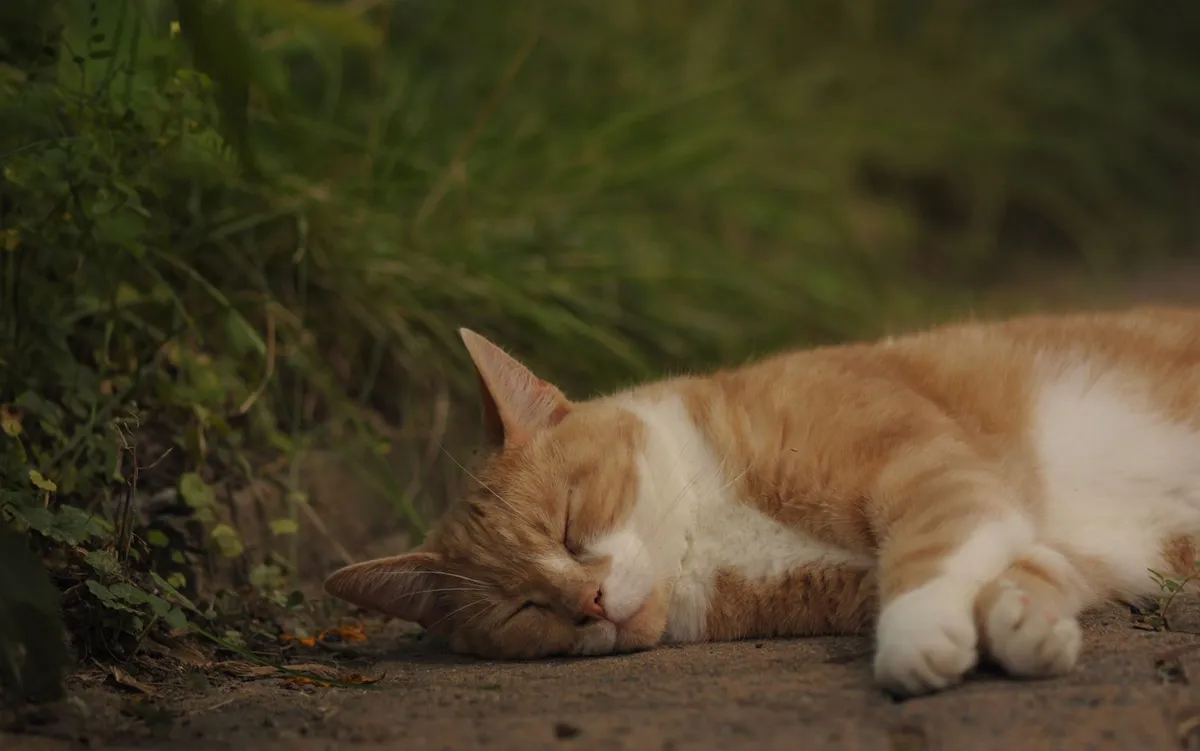
Cats are not strictly nocturnal. They sleep in polyphasic bursts, meaning they have multiple sleep periods over 24 hours. In fact, a cat can spend up to 16 to 20 hours a day sleeping. However, their waking peaks often fall at dawn and dusk, which is why they may be active at night.
Is it normal for older cats to meow at night?
Older cats can meow more at night due to reduced vision, hearing loss, arthritis, or cognitive dysfunction. It's important to have a vet check to look for underlying conditions that can be treated or managed. Never assume it's just "old age."
Key Takeaway
Nighttime meowing is one of the most common behavior complaints from cat owners, but it is rarely a mystery. The solution involves three parts: a thorough vet visit, a consistent daily routine of play and feeding, and an environment that gives your cat a place to be a cat. Meal timing matters, and play before bed helps your cat use its natural hunting drive. Above all, do not reward the meowing with attention. With patience and consistency, most cats learn to sleep through the night – and so do you.
Share this guide
Help another cat parent find it.