The short answer
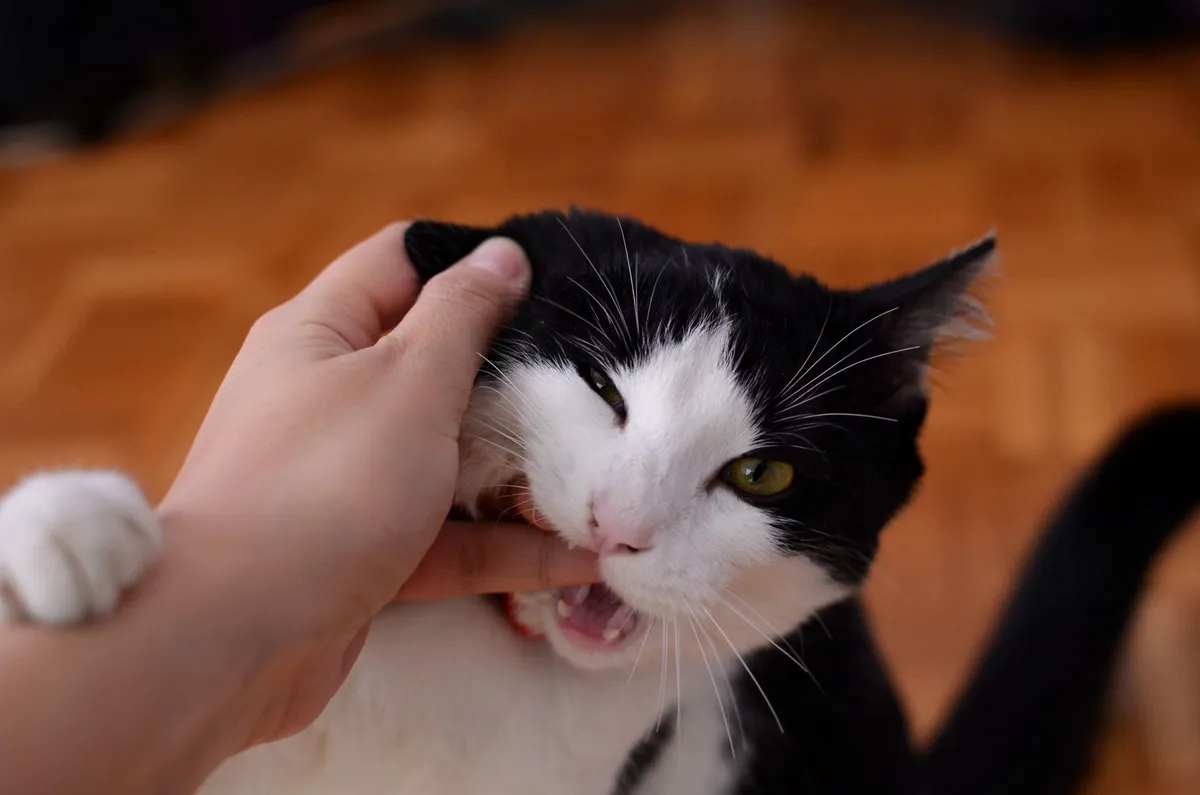
Biting is a normal way cats play, explore, and communicate, but it can become a problem when those bites land on human skin. The most effective way to stop it is to stop rewarding the biting and start rewarding the behavior you want instead. That means watching for early warning signs, removing your hands or feet from the game, and showing your cat an acceptable target for their pouncing, chasing, and chewing instincts. Punishment, such as yelling, scruffing, tapping, or spraying water, might stop the behavior in the moment, but it often increases fear and can turn a play-biting cat into one that bites defensively. A calm, consistent, positive-reinforcement approach works better for most cats and strengthens your bond.
Why Cats Bite During Play
Kittens learn a lot about biting from their mothers and littermates. When a kitten bites too hard during play, their sibling will yelp and stop playing. That is a clear social signal: play stops when teeth hurt. Kittens who are separated from their litter too early, or who are adopted as singletons, sometimes miss part of that lesson. They may also see hands and feet as moving toys because those body parts are the exact size and speed that trigger a cat’s prey drive.
In adult cats, biting often happens for one of these reasons:
- Play aggression: the cat is overstimulated, under-exercised, or has no appropriate outlet for hunting instincts.
- Petting-induced overstimulation: the cat enjoys a few minutes of petting, then bites as a way to say "that's enough."
- Fear or defensive aggression: the cat feels cornered or threatened and gives a warning bite.
Understanding the difference matters because the solution is different. The advice here focuses on play-related biting and overstimulation. If your cat suddenly starts biting when they were previously gentle, or if biting is paired with hiding, flinching, or hissing, be sure to rule out pain first. A sudden change in behavior is a good reason to see your veterinarian.
Why Punishment Backfires
It can be tempting to scruff a cat, tap their nose, or spray them with water after a bite. These methods may seem effective because a startled cat often runs away. But what the cat is learning is that you are unpredictable and frightening. That is a dangerous lesson, because a cat who is afraid may bite more, not less, and the next bite may be harder.
Punishment also damages the communication loop. A cat’s bite is usually a signal. If you punish the signal, the cat may stop giving gentler warnings and skip straight to a more serious bite next time. Punishment can also create anxiety around hands, laps, and play, which defeats the goal of a trusting relationship.
Positive reinforcement flips the script. Instead of trying to make a behavior disappear by adding something unpleasant, you make the behavior irrelevant by teaching the cat that good things happen when they use their claws and teeth on the right things—and play stops when they use them on you.
The Redirect Toolkit
Redirection is the art of swapping an unwanted target for an acceptable one. Timing matters: you want to offer the replacement the moment you see the pounce coming, not after your hand is already scratched. Here is a quick reference to keep near your play area.
| Technique | When to Use | How It Works | What It Teaches |
|---|---|---|---|
| Wand toy or fishing-pole toy | The cat crouches, tail swishes, or eyes lock onto your hand | Move the toy away and jiggle it to trigger the hunting chase | Teeth and claws belong on toys, not hands |
| Toss a treat or kibble | The cat already has your hand or arm in a bite hold | Toss a few treats a few feet away so the cat releases and moves off | Letting go leads to a reward |
| Plush toy or kicker pillow | The cat body-slams and rabbit-kicks during play | Offer a soft toy to grab and kick when the cat goes into full attack mode | Kicking is allowed, just not on human limbs |
| Interactive puzzle feeder | The cat seems restless and mouthy outside of play sessions | Give the cat a puzzle feeder to make mealtime more mentally active | Boredom has a productive outlet |
| Leave-the-room signal | The cat bites after repeated warnings | Say a calm word, gently remove yourself, and close a door for 20–30 seconds | Biting ends the fun completely |
| Scheduled play sessions | The cat gets mouthy at the same time each day | Use a regular daily play session before that time to drain the energy | Predictable energy release reduces ambush behavior |
Keep the table handy, but don’t overthink which technique to choose. The best redirection is the one you can use consistently. A wand toy is usually the first choice because it puts distance between your hand and the cat’s mouth while still allowing a satisfying catch.
A Step-by-Step Redirection Routine
Here is a simple sequence you can start today. It works best when you repeat it every time, because cats learn through consistency.
-
Start with active play. Before you expect your cat to be calm, offer ten to fifteen minutes of interactive play with a wand toy. Let the cat chase, pounce, and catch. End the session by letting them "capture" the toy, then offer a meal or a treat so they complete the full hunt-catch-eat cycle.
-
Watch for the warning signs. A swishing tail, flattened ears, dilated pupils, or that sudden "stare" before a pounce are your cues. If you can redirect before contact, you are teaching the skill of impulse control.
-
Withdraw the body part slowly. If your cat’s teeth or claws land on you, do not yank your hand away fast. A quick movement can excite the chase drive and lead to more scratching. Instead, stop moving, call the cat’s name softly, and let the pressure release.
-
Redirect to a toy. Place the wand toy or kicker pillow in front of the cat. The goal is not to scold but to make the new target more appealing than your limb.
-
Reward calm choices. The moment your cat lets go, turns to the toy, or simply backs off, mark it with a calm “good” and follow with a treat or a short play opportunity. This is what reinforces the behavior you want to see again.
-
Pause the game if biting repeats. If the cat keeps coming at your hands, your cue is clear: that play session is over. Walk to another room, close the door briefly, and then return to reset. This gives the cat a very concrete lesson: teeth on skin ends the fun.
When Extra Caution Is Needed
For most cats, redirection works within a few weeks when practiced consistently. However, biting safety is about more than training. If a bite ever breaks the skin, wash the wound thoroughly with soap and warm water, and seek medical attention if there are signs of infection or if the bite is deep. Cat bites can introduce bacteria, so prompt care is important.
Never punish a cat by hitting, scruffing, confining for a long time, or spraying water. These methods can escalate fear and aggression. If a cat is biting defensively, or if a child in the home is a target of biting, stop the interaction immediately and get hands-on advice from a qualified feline behavior professional.
Frequently Asked Questions
Is my cat biting because they are angry or spiteful?
No. Cats do not bite out of revenge. Play biting is a misplaced hunting behavior, and overstimulation biting is a communication signal that the cat has had enough. Reading it as spite often leads people to punish the cat, which makes the real problem worse.
What if my cat bites while being petted?
This is usually overstimulation. Many cats have a limit on how much touching they enjoy, especially on the belly or the base of the tail. In the beginning, keep petting sessions short, watch for tail twitches or skin ripples, and stop before the bite happens. Reward the calm moments and let the cat choose when they want more.
Will neutering or spaying stop biting?
Hormones can influence behaviors like roaming, urine marking, and fighting with other cats, but play-related biting is not driven by hormones. Spaying or neutering is important for many reasons, but it is not a substitute for redirecting play aggression.
How long does it take to stop the biting?
It depends on the cat’s age and history. Kittens often improve within a few weeks of consistent redirection. Adult cats who have practiced the behavior for years may need more time, especially if they also have high energy needs. If there is no improvement in a month, consider whether the cat needs more environmental enrichment or a professional behavior consultation.
Can I still use my hands to play with my cat?
It is safer to stop using your hands and feet as toys completely. Every time you wiggle your fingers and allow the cat to pounce, you strengthen the habit of attacking human body parts. Replace that game entirely with wand toys and kicker pillows.
Key Takeaway
Cat biting is a behavior, not a moral failing. The most respectful and effective way to stop it is to make biting at humans unrewarding, offer a satisfying alternative, and celebrate the choices you want to see again. With consistent redirection, regular play, and zero punishment, most cats can learn that hands are for gentle interaction and toys are for claws and teeth.
Share this guide
Help another cat parent find it.