
The short answer
Introducing a cat to a new baby is less about a dramatic first meeting and more about gradual preparation that begins weeks before your due date. Cats are creatures of habit, and a baby changes the scents, sounds, and daily rhythm of the home. Most cats adjust well when they are given time, a quiet place to retreat, and a consistent routine. The safest plan is simple: prepare early, let the cat set the pace, keep positive experiences tied to the baby's arrival, and never leave the cat and baby together unsupervised.
Before the baby arrives: set up for success
Start your preparations several weeks before the baby is due, not the night before you come home from the hospital. This gives your cat time to adjust to gradual changes while the household is still relatively calm.
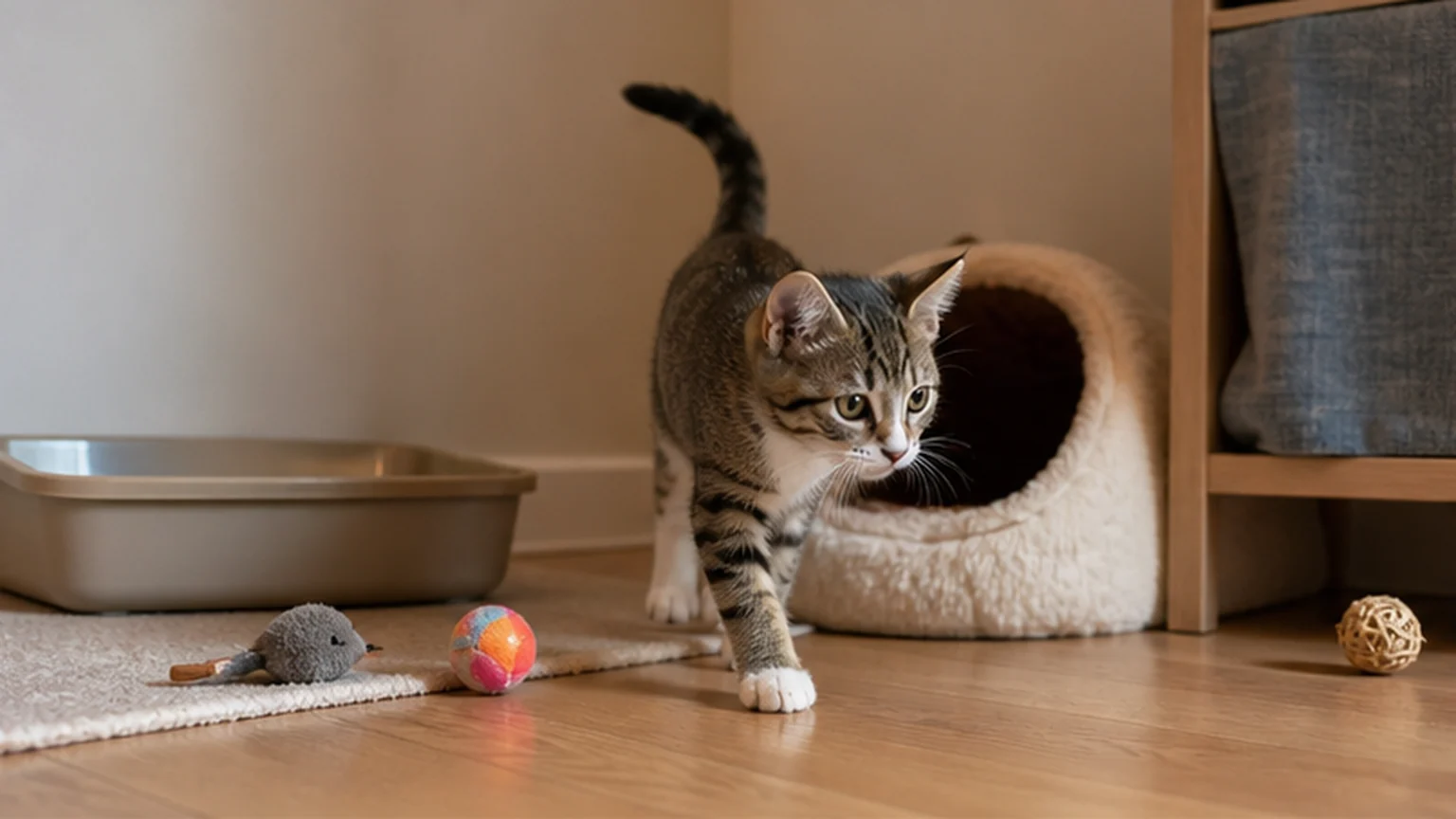
Create a cat-friendly zone. Choose at least one area where your cat can escape the bustle of family life. This could be a spare room, a quiet corner with a window perch, or a tall cat tree in a low-traffic spot. Make sure the space has food, water, a litter box, and something soft to sleep on. The goal is a place your cat chooses to go, not a room you lock them in as punishment.
Move the litter box gradually. If you need to relocate a litter box because of where the baby's room will be, move it a few feet each day rather than all at once. A sudden change in location can make a cat reluctant to use the box.
Play baby sounds. Babies are noisy in ways cats have never heard — crying, cooing, gurgling, and the mechanical whir of swings and monitors. Play short recordings of these sounds at a low volume a few times a day, and pair them with something pleasant like a treat or a play session. Over time, your cat may learn that the strange new sounds predict good things.
Set up baby equipment early. Assemble the crib, changing table, and stroller well in advance so the cat can investigate them while they are stationary and unthreatening. Place a few treats on or near the furniture so your cat forms a positive association. When you put new batteries in a mobile or a baby swing, let the cat hear it at a distance at first.
Introduce the baby's scent. After your baby is born — before you both come home — have your partner bring home a worn receiving blanket or a piece of clothing that holds the baby's scent. Place it near your cat's food bowl or favorite resting spot. This lets the cat become familiar with the new smell without the stress of the actual arrival.
Adjust attention and routines before the baby arrives. Cats often crave attention at the exact moments you are busiest. If your cat is used to a specific playtime in the evening, gradually shift it to a time that will still work after the baby arrives. The idea is to make the change so gradual that your cat barely notices.
The first meeting: keep it short and controlled
When you come home from the hospital, your cat will be curious and possibly a little uneasy. Plan for a low-key homecoming.
Have someone else carry the baby into a room with a closed door while you greet your cat first, without the baby. Give your cat a few minutes of calm attention, then allow the cat to enter the room where the baby is, or place the sleeping baby in a bassinet or with a caregiver and let the cat approach on its own terms.
Keep the first few interactions brief — five to ten minutes is plenty. Let the cat sniff the baby's feet if it wants to, and reward calm behavior with a favorite treat. Do not force the cat closer, hold the cat near the baby, or restrain the cat to "show" the baby. If the cat walks away, that is a successful interaction. Let the cat decide when to approach.
A useful pattern is to give treats or a meal only while the baby is in the room, in the beginning, so the cat learns that the baby's presence predicts good things. Over the following days, allow slightly longer supervised sessions as long as the cat is relaxed.
Reading your cat's body language
Cats communicate discomfort in subtle ways long before they hiss or swat. Learn to recognize the early signs so you can give your cat space before stress escalates.
| Calm signal | Stress signal | What it means |
|---|---|---|
| Soft, blinking eyes | Hard stare with dilated pupils | The cat is wary and watching closely |
| Tail held high or gently curved | Tail lashing or thrashing | Irritation is building — pause the interaction |
| Ears forward | Ears flattened sideways or pinned back | The cat feels threatened |
| Relaxed, loose posture | Low crouch with tense muscles | The cat is ready to flee or defend |
| Purring, kneading | Hissing, growling, yowling | Clear "back off" message — end the session |
| Walks away calmly | Retreats and hides for long periods | Needs more time and a quieter setup |
If you see stress signals, end the interaction calmly. Do not punish the cat — punishment teaches a cat to associate the baby with fear, which is exactly the opposite of what you want.
:::caution Never leave your cat and baby alone together, even for a moment — even the most tolerant cat can scratch or bite if startled, and a baby cannot move away or read the warning signs. Keep the baby's room off-limits when you are not present: use a door, a sturdy mesh screen, or a tall baby gate. If you see repeated hissing, growling, or attempts to swat, or if your cat stops eating or hides constantly, reach out to your veterinarian or a certified feline behavior professional for guidance.
Keeping everyone safe day to day
Supervise every interaction. Position yourself between the cat and the baby during any shared time. If you are leaving the room, take the cat with you or close the door behind you.
Give the cat escape routes. Never place the cat in a corner or on your lap while holding the baby. Make sure tall furniture, cat trees, and open doorways let the cat move freely away from the baby.
Keep the crib and changing table cat-free. A cat jumping into a crib is usually drawn by warmth and curiosity, but a swaddled baby cannot push the cat away. Use a mesh crib tent, or simply close the nursery door during naps. Keep the changing table clear of tempting items and never leave a baby unattended on a high surface.
Trim claws — but don't declaw. Keeping your cat's front claws trimmed short reduces accidental scratches during normal play and sniffing. Declawing is an amputation and is not recommended by veterinary professionals; it also removes your cat's main defense, which can actually make a stressed cat more likely to bite. Note: declawing is banned in some places. Instead, provide scratching posts and use nail trims.
Keep the litter box clean and quiet. A clean litter box is important for hygiene around a baby, but do not move it to an area with lots of foot traffic. Scoop daily and wash your hands thoroughly afterward. If you are pregnant, ideally have someone else handle litter-box duty — or at least wear gloves and wash your hands well — because of toxoplasmosis risk.
Maintain routines. Try to keep feeding times, play sessions, and lap time consistent. A sudden loss of routine is one of the most stressful parts of a baby's arrival for a cat.
Frequently Asked Questions
Will my cat be jealous of the baby?
Jealousy is a human emotion, and cats do not experience it in the same way. A cat that hisses or hides after a baby arrives is showing fear or confusion about a major change in the household, not spite. With gradual introductions and stable routines, most cats settle into the new normal within a few weeks.
Is it dangerous if my cat sleeps near the baby?
A sleepy cat curling up next to a baby carries a small but real risk of accidental scratches, and old concerns about cats "stealing a baby's breath" are unfounded — cats do not do that. The practical rule is simple: allow supervised visits only, and keep the cat out of the crib entirely.
What if my cat hisses at the baby?
Hissing is your cat saying "I need more space." Remove the baby from the immediate area, give the cat time alone, and go back to a slower introduction — more distance, shorter sessions, and more treats. If hissing continues for more than a couple of weeks or escalates, ask your veterinarian for a referral to a feline behavior specialist.
Should I rehome my cat before the baby arrives?
Almost never. Rehoming is traumatic for cats and rarely necessary. With preparation, supervision, and a safe retreat, the vast majority of cats and babies can coexist safely. Rehoming should be considered only on the advice of a veterinarian or behavior professional after a genuine attempt to resolve a safety problem.
Key Takeaway
A smooth cat-and-baby introduction comes down to preparation, patience, and supervision. Start weeks ahead, let your cat control the pace, reward calm behavior, and never leave them together alone. Most cats adapt beautifully when the change is gradual and they always have a quiet place to escape to — and your family gains a lifelong companion who simply learned to share the home.
Share this guide
Help another cat parent find it.