The short answer
Yes, you can fly with a cat, but a calm flight is built on weeks of preparation, not a lucky day. Most cats do best in the passenger cabin, tucked inside an airline-approved carrier under the seat in front of you, rather than in the cargo hold. That means choosing an airline with a cabin pet program, getting the right health paperwork before you leave, and spending two to four weeks teaching your cat that the carrier is a safe, boring, everyday object. Expect some meowing and some stress; plan around those realities instead of hoping your cat will simply fall asleep.
Start with the airline, not the ticket
Before you book a seat, check the airline’s pet policy — ideally before choosing which airline to fly. Policies differ more than you might expect. Some airlines allow pets in the cabin; others have retired cabin pet programs. Many limit cabin pets to one or two per flight, so you need to reserve early. Fees commonly run in the $100 range each way in the US. The same airline can even have different rules for different aircraft types.
Confirm these details before you pay for anything:
| What to check | Why it matters | Where to confirm |
|---|---|---|
| Cabin availability | Some airlines don’t allow pets in the cabin at all; most limit the number per flight | Airline website or reservations line |
| Carrier dimensions | The carrier must fit under the seat; soft-sided carriers have a little more flexibility | Airline "traveling with pets" page |
| Pet fee | Cabin pet fees are commonly around $100 each way in the US | Airline fee schedule |
| Health certificate | Many US airlines require documentation issued within 10 days of travel | Airline policy and your veterinarian |
| Flat-faced breed restrictions | Brachycephalic cats are often barred from cargo travel | Airline policy |
| Booking method | Many airlines only add a pet when you book by phone | Airline reservations |
Visit your veterinarian before you book
A pre-travel vet visit isn’t just paperwork. Most US airlines require a health certificate from a licensed veterinarian issued within 10 days of departure; international destinations often have stricter rules — some countries require rabies titer blood tests months in advance. Confirm your cat’s vaccines are current, especially rabies, and make sure the microchip is registered with your current contact details.
This visit is also the right time to talk about travel anxiety. Some cats genuinely benefit from a veterinarian-prescribed anti-anxiety medication tested at home first. Others respond well to synthetic pheromone sprays or a calming wrap. What you should not do is improvise with over-the-counter calming products.
Never give your cat a sedative or tranquilizer for a flight unless your veterinarian has prescribed it specifically for this trip. Sedated cats can lose the ability to balance and regulate body temperature at altitude, and some airlines refuse to carry pets that appear sedated. An alert cat in a familiar carrier is much safer than a drowsy one.
Choose an airline-approved carrier
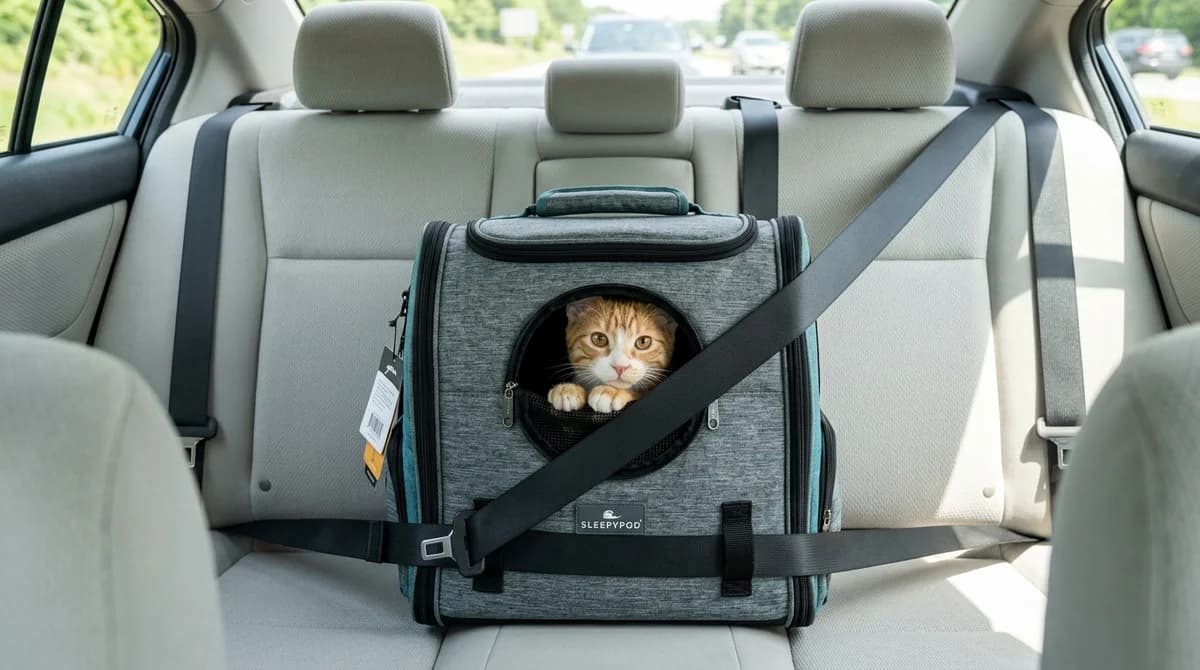
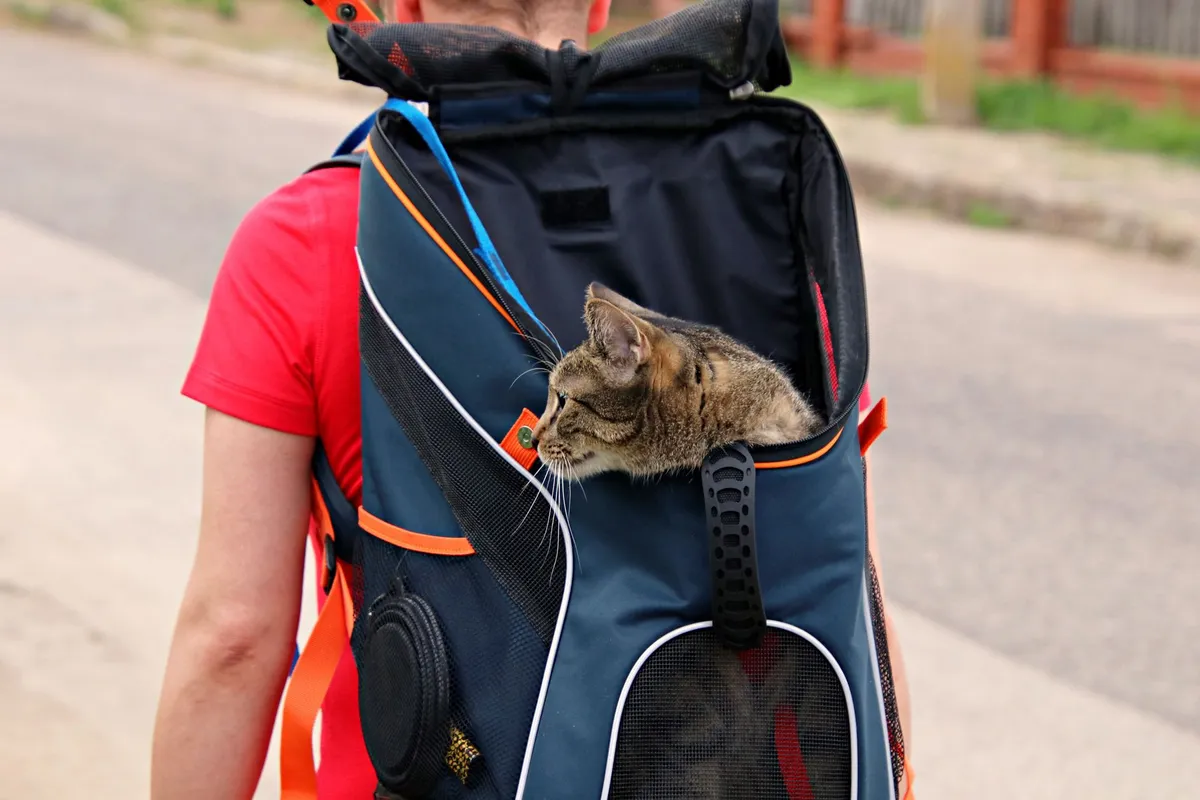
Look for a carrier that fits the under-seat dimensions on the airline’s website — a typical cabin limit is about 18 by 11 by 11 inches. Soft-sided carriers are popular because they squeeze into slightly smaller spaces and are easier to carry through the airport.
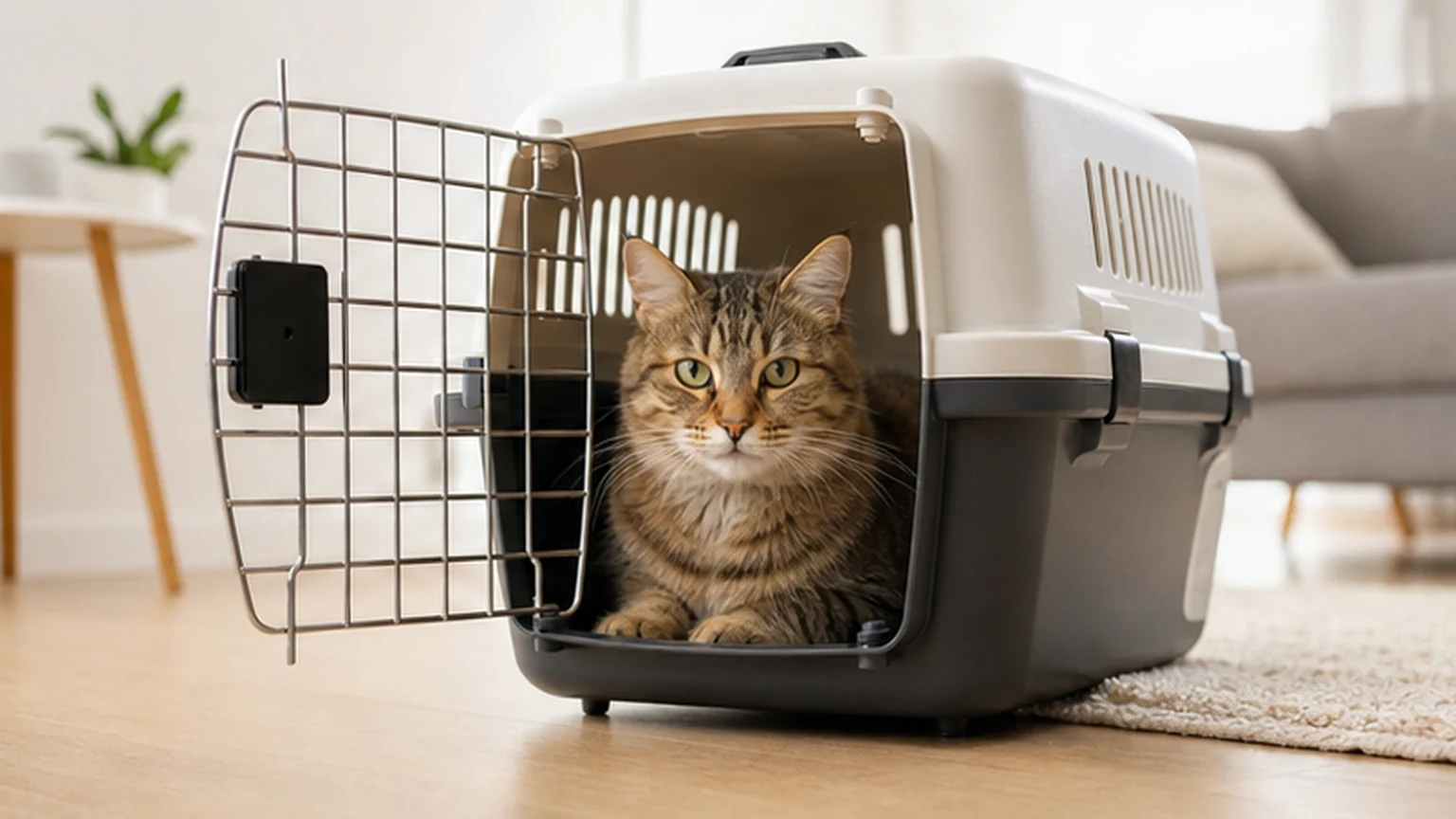
Whatever style you choose, the carrier should have mesh ventilation on at least two sides, a secure zipper system (add a small carabiner linking the zipper pulls), a waterproof base, and enough room for your cat to stand, turn around, and lie down. Put an absorbent pad inside and a familiar, washable blanket. Attach a label with your name, phone number, and destination in case the carrier gets separated from you.
Practice, practice, practice
Start carrier training two to four weeks before the flight, not the night before. Leave the carrier out in a room your cat uses constantly, with a favorite blanket inside. Feed meals inside the carrier with the door open, then gradually zip the door during and right after meals. Once your cat is relaxed, move the carrier to different rooms and take short car rides.
If your cat only sees the carrier on trips to scary places, the flight will start poorly. Make the carrier a boring, normal part of home life.
Pack a dedicated cat carry-on
Keep a separate small bag for your cat with absorbent pads, a small bowl and food, a zip-close bag of litter, paper towels, copies of the health certificate and rabies record, and a harness and leash. Keep the cat on the harness inside the carrier at the airport so it’s not a struggle to secure them if the carrier opens.
Skip the big meal on travel day. A light meal three to four hours before departure is enough and reduces the chance of an upset stomach.
Getting through the airport
Give yourself extra time at the airport. At the security checkpoint you will need to take your cat out of the carrier: the carrier goes through the X-ray machine, and the cat goes through the metal detector with you, on a harness and leash. If that sounds like too much for your cat, ask a TSA officer for a private screening room — it’s a normal request and gives you a quiet place to work.
Before security, use a family or accessible restroom to set up a disposable litter tray and let your cat stretch. After security, refill the water bowl. If your cat is panting, drooling heavily, or breathing hard, stop and let them rest; these can be early signs of stress overload.
Never let a cat loose in the terminal, even if they seem calm. An airport is one of the worst possible places for an escaped cat: cavernous spaces, moving walkways, automatic doors, baggage machinery, and jet noise. If you open the carrier at all, your cat should be on a harness and leash inside a closed room or restroom.
On the plane
Place the carrier on the floor under the seat in front of you, opening facing you. Many owners drape a light cloth over the carrier to create a cave-like feeling — test this at home, since some cats prefer to watch what’s happening.
You can talk quietly and offer small treats through the mesh, but resist unzipping the carrier mid-flight. Crying is common for the first 20–30 minutes and usually settles once the engine noise steadies. Do not take a crying cat out; that teaches them that crying leads to escape.
When to think twice about cargo
Cargo is genuinely harder on cats. The hold is noisy and dark, temperatures can shift during delays, and ground crews handle the carrier without you nearby. Airlines restrict cargo pets during extreme heat or cold, and many refuse flat-faced breeds because their airways are easily stressed. If you have no choice, book a direct flight with no layovers, pick the mildest part of the day, and tell the check-in agent clearly that a live animal is in the hold. Then make pickup at the destination your first task after landing. If a cabin option exists at all, take it.
A practical timeline
| When | What to do |
|---|---|
| 6–8 weeks before | Choose your airline, confirm the cabin pet policy, and reserve a spot for your cat |
| 3–4 weeks before | Schedule a vet visit, update vaccines and microchip, start carrier training |
| 1 week before | Get the health certificate; wash and label the carrier; assemble the cat carry-on |
| Day before | Confirm the flight, check your paperwork, feed a normal dinner |
| Travel day | Light meal 3–4 hours ahead, litter break at home, arrive at the airport early |
Frequently Asked Questions
Can my cat ride in the cabin with me?
In most cases, yes, as long as the airline allows pets in the cabin and the carrier fits under the seat. Cabin pet spots sell out quickly, so reserve one as soon as you book your ticket.
Do I need a health certificate to fly with my cat?
For most US domestic flights, yes — airlines usually require a certificate issued by a licensed veterinarian within 10 days of travel. International rules vary by country; some require blood tests and government endorsement months ahead, so check early.
Can I give my cat a sedative to make the flight easier?
Only if your veterinarian prescribes one for this exact trip and you've tested it at home first. Sedatives can interfere with balance and temperature regulation on an aircraft, and some airlines refuse visibly sedated pets. Never use a product made for dogs.
What if my cat cries the whole flight?
Keep your voice calm, lightly cover the carrier, and avoid reacting to every meow. Most cats settle once the engine noise becomes steady. Don't open the carrier to comfort your cat — it's a security risk and teaches your cat that crying opens the door.
What if my cat escapes in the airport?
Don't run or yell. Stay low, keep your eyes on the cat, and lure with favorite treats while asking nearby staff to close doors. Prevention is simpler: keep zipper pulls linked with a carabiner and keep the harness on your cat whenever the carrier is open.
Key Takeaway
Flying with a cat is completely doable when you treat it as a project rather than a day trip. Book a cabin spot early, get the health paperwork done, choose a well-ventilated carrier, practice at home for weeks, and keep your cat secured and calm through security and the flight. Above all: no sedatives without veterinary guidance, no loose cats in the terminal, and the carrier stays under the seat.
Share this guide
Help another cat parent find it.