The short answer
Cats are built to register sudden, loud, unpredictable noises as danger — and that's a survival instinct, not a personality flaw. The most reliable way to help a cat through fireworks or a thunderstorm is to prepare before the noise starts: set up a safe room with plenty of hiding spots, mask the sound with white noise or music, plug in a pheromone diffuser ahead of time, and offer play or food puzzles if your cat seems interested. Then step back and let your cat choose how to cope. Some cats will want a closet; others will want to sit beside you. Both are fine. Your main job is to make the environment calmer, keep your routine normal, and never force a frightened cat to come out.
Why fireworks and thunder turn on your cat's alarm system
A cat's hearing is extraordinary. Cats can detect sounds up to roughly 64,000 hertz, while people stop at about 20,000 — so a firework's whistle or a thunderclap hits a cat far harder than it hits us. But this is about more than volume. In the wild, a sudden loud noise usually signals a predator or a falling tree, and a cat's survival instinct is to freeze, hide, or flee. When loud, unpredictable sounds arrive, the nervous system escalates quickly.
Thunder adds extra layers: low-frequency rumbles cats may feel through the floor, drops in barometric pressure, and flashes of light. Fireworks add crackles, whistles, and bangs that fire in no predictable rhythm. Hiding, pacing, trembling, or becoming clingy are all normal coping responses. A cat who hides is managing the situation the best way they know how. The goal isn't to eliminate the startle response — it's to make the experience softer and give your cat somewhere safe to go.
Before the noise starts: set up a safe room
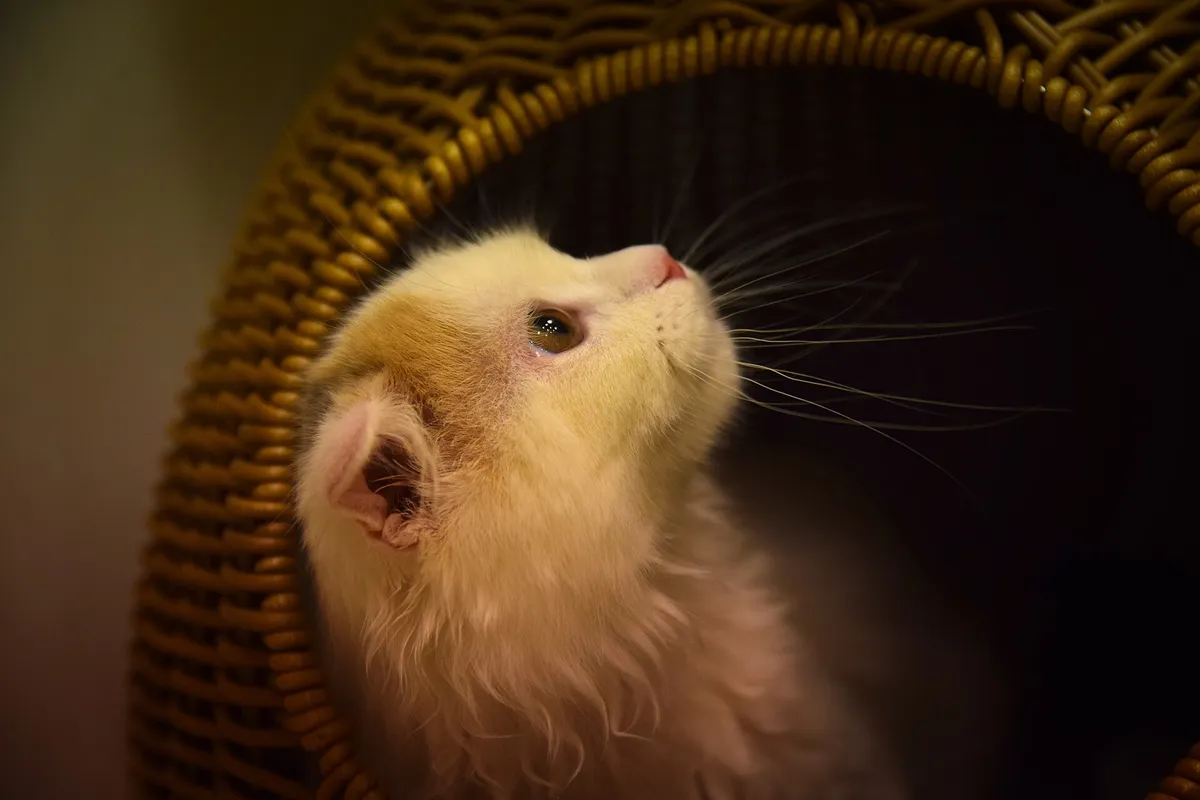
The most effective tool is a safe room — a space where your cat can ride out the noise. Choose a room away from exterior walls and windows when possible, such as a bedroom, bathroom, or large closet. Add "hide and retreat" options: a cardboard box with a doorway cut in it, a covered cat bed, an open carrier draped with a towel, or access under the bed. Include at least one raised option, like a cat tree or shelf, since many cats feel safer up high.
Place a clean litter box, fresh water, and a soft blanket in the room, plus a piece of your worn clothing for a familiar scent. Set it up a few days beforehand, leave the door open, and let your cat wander in and out so the room feels familiar rather than trapping. Some cats will pick their own hiding spot, like under the sofa. That's fine, as long as the spot is safe and doors and windows are secured.
| Calming tool | What it does | When to set it up |
|---|---|---|
| Safe room with hiding spots | Gives your cat control over where they go | A few days before |
| White noise or music | Masks sudden bangs and rumbles | Before the noise starts |
| Pheromone diffuser | Signals "this place is safe" | 24–48 hours before |
| Interactive play | Burns energy and builds a positive mood | In the hour before |
| Food puzzle | Redirects focus into a calm activity | During the event, if willing |
Keep your cat strictly indoors during fireworks. A panicked cat can slip through a door or window screen in seconds. Close windows, check screens, and confirm every exterior door latches firmly. Keep flames and candles out of the safe room, and remove anything a panicked cat could knock over.
White noise and music: turn down the volume of fear
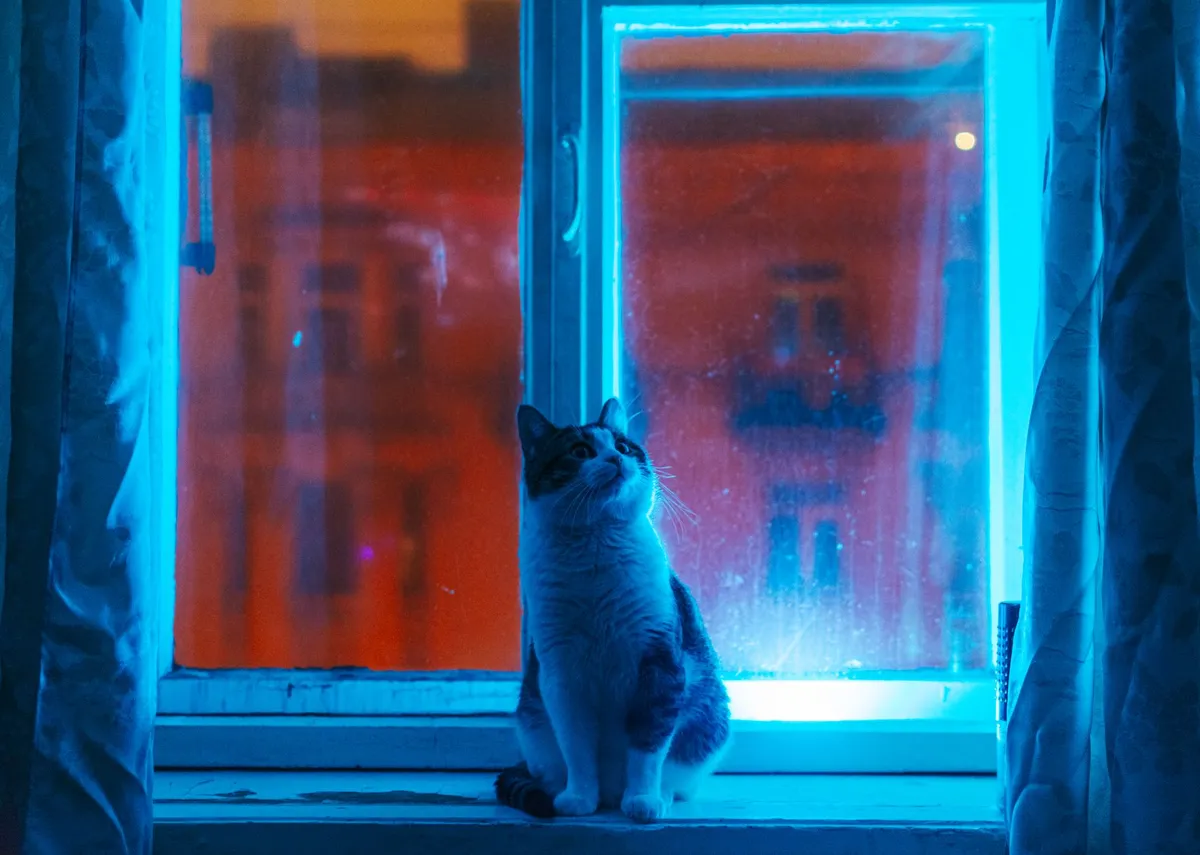
Once the noise begins, work to even out the soundscape so sudden bangs don't arrive in total silence. A fan, white noise machine, radio, or television at normal volume all do the job. Close the curtains to block the bright flashes that come with fireworks and lightning. The goal isn't total silence — it's reducing the contrast between quiet and loud, which keeps your cat's nervous system closer to baseline.
Music can help too. Some research has explored music designed specifically for cats, using tempos and frequencies closer to feline vocalizations, and these tracks appeared more calming than standard human music in controlled studies. Even classical music has shown modest calming effects in some feline research. Whatever you choose, keep the volume moderate, and start the sound before the fireworks begin if you can, so the room already feels settled when the first bang hits.
Pheromone products: a chemical signal of calm
Every time cats rub their cheeks on a door frame or chair, they leave a facial pheromone that signals "this place is safe." Synthetic versions of that signal are sold as plug-in diffusers and sprays, and they can help nudge a stressed cat toward feeling more secure.
Use the diffuser early — plug it in 24 to 48 hours before the event so the safe room is saturated by the time the noise starts. Replace refills according to the package instructions, since the effect fades over time. Sprays can be applied to bedding, a carrier, or a favorite hiding spot; wait a few minutes for the scent to settle and never spray directly on your cat's fur or face.
Pheromones help many cats, but not all, and they work best as one layer of a plan rather than a stand-alone fix. Keep the room ventilated, and skip strongly scented candles or essential oils near the diffuser — a cat's sense of smell is far more sensitive than ours.
Never give cats human medication, supplements, or over-the-counter calming products without your veterinarian's approval. Products are not interchangeable between species, and a dose meant for a person is not safe for a cat.
Play and food: distraction that works
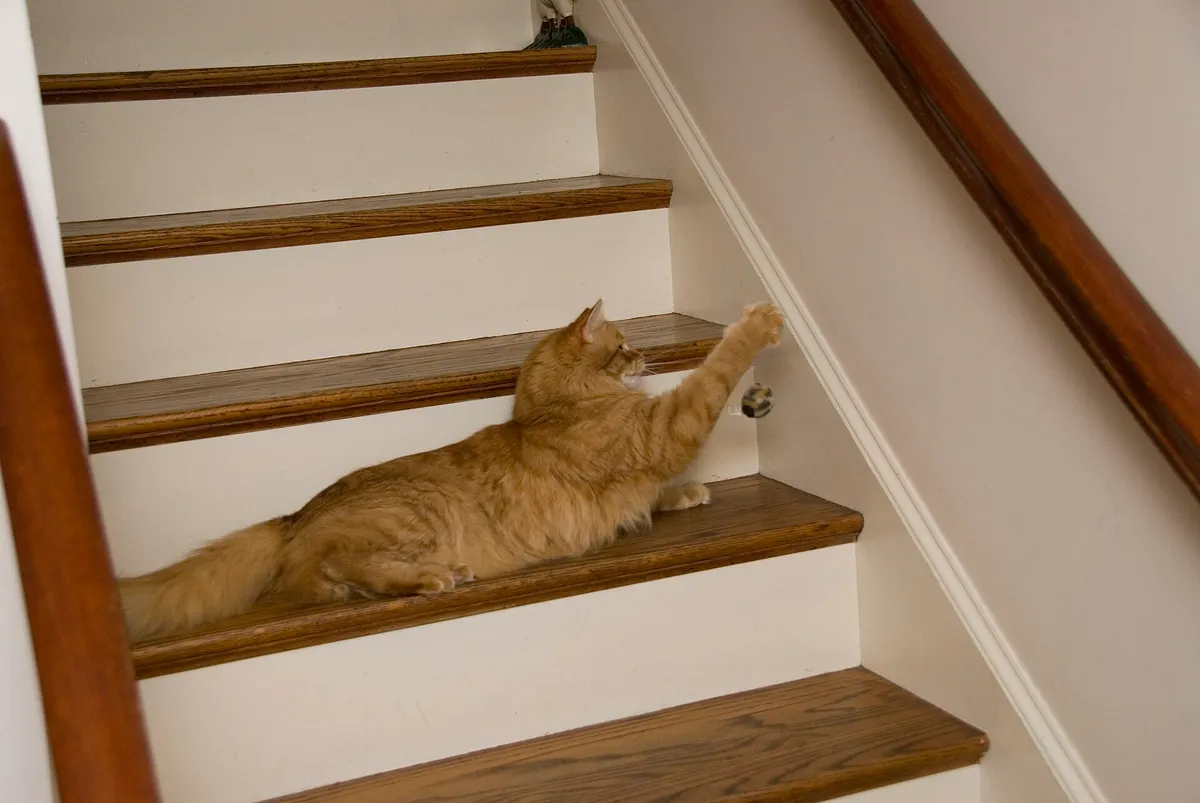
A tired cat is often a calmer cat. In the hour before fireworks usually start — often before dusk — run an interactive play session with a wand toy. Let your cat chase, pounce, and catch, then finish with a small, tasty reward so the game ends on a satisfying note. If you repeat this routine before known noise events, your cat can start to associate the lead-up with something pleasant.
During the event, offer distraction only if your cat is willing to come out. A food puzzle, a treat-dispensing ball, or a lickable treat on a plate can redirect attention into calm, focused activity. Some cats lose their appetite entirely when stressed — that's common and usually temporary, so never force food on a cat who isn't interested. Read your cat's signals: ears forward, a relaxed tail, or an approach toward the toy means "keep going." Hiding, flattened ears, and dilated pupils mean "pause" — let them rest and try again later.
What not to do when your cat is frightened
Knowing what to avoid matters as much as knowing what to do. Never punish a cat for hiding, crying, or pacing — punishment deepens fear and teaches your cat that you're part of the threat. Don't drag a cat out from under the bed or force them into your lap; a cornered cat may scratch or bite, and being restrained during a panic can make the fear worse. Don't leave windows open or doors unlatched in case your cat "wants out," and don't take an anxious cat outside during an event.
You may have heard the old myth that comforting a frightened pet "rewards" the fear. Most veterinary behavior experts now reject that idea — fear is an emotion, not a learned trick, and a calm presence helps far more than icy avoidance. The useful middle ground is to stay nearby, speak in a normal low tone, go about your routines, and let your cat decide whether to approach. Your calmness is contagious, and that alone is a form of comfort.
Frequently Asked Questions
Should I comfort my cat during fireworks, or does that reinforce the fear?
Comforting a frightened cat doesn't reinforce fear the way a treat reinforces a behavior. Fear is an emotion, and a calm, quiet presence is helpful. What's less helpful is hovering, picking the cat up, or acting anxious yourself. Let your cat come to you, and keep your voice low and even.
Why does my cat hide under the bed for hours?
Hiding is a natural coping strategy. It lowers stimulation and helps your cat feel protected. Leave water nearby and let your cat emerge on their own schedule — most cats come out once the noise stops and the world feels predictable again.
Do pheromone diffusers work for every cat?
No. Many cats show measurable signs of calm, but responses vary from cat to cat. Pheromones work best as one element of a layered plan — safe space, sound masking, and distraction — rather than the only solution.
Is it okay to offer food and treats during a stressful event?
Yes, if your cat willingly eats. Forcing food on a stressed cat is counterproductive. Voluntary eating is actually a good sign; a temporary loss of appetite during loud noise is common and usually resolves on its own.
When is it safe to let my cat outside again?
Keep your cat indoors for at least a full day after a firework event. Fireworks often continue sporadically after official shows end, and a frightened cat may be disoriented or more likely to bolt.
Key Takeaway
You don't need to turn your cat into a fireworks fan — you just need to give them a place to feel safe and the freedom to use it. Prepare a quiet room with hiding spots in advance, mask the noise with white noise or music, plug in a pheromone diffuser as a supporting layer, and offer play or food puzzles if your cat is willing. Then let your cat choose. Preparation, consistency, and a calm presence will carry most cats through the loudest nights.
Share this guide
Help another cat parent find it.