The short answer
A cat first aid kit is a small, organized set of supplies that lets you handle minor problems — like a bleeding claw or a small cut — and keeps your cat stable and comfortable while you get veterinary help for anything more serious. The exact contents matter less than three habits: knowing where the kit lives, checking it every few months, and remembering that first aid is a bridge to the veterinarian, not a replacement for one.
Why a cat kit can't be a hand-me-down human kit
Cats are small, sensitive, and very good at hiding pain, so a home kit has to be built around feline biology. It also needs to be used carefully: a hurt cat is a frightened cat, and even the friendliest cat may bite when handled roughly or in pain.
A human first aid kit contains things that are dangerous for cats. Pain relievers such as acetaminophen, ibuprofen, and naproxen are toxic to cats and can be fatal even in small doses. Rubbing alcohol is too harsh for feline skin and can slow healing. Regular adhesive bandages stick to fur, get chewed off, and can cause a blockage if swallowed. Hydrogen peroxide damages tissue when poured into a wound and should never be used to make a cat vomit unless a veterinarian specifically instructs it.
For these reasons, build a dedicated cat kit instead of sharing your own. Keep it in a labeled, waterproof container in a spot every adult in the household knows, but out of reach of curious kittens who may see packaging as a toy.
What to include: the essential list
The table below covers the core items most veterinary organizations recommend. You do not need specialty brands — focus on the basics and replace anything you use.
| Category | Item | What it's for |
|---|---|---|
| Bandaging | Sterile non-stick gauze pads | Absorbing blood and covering wounds without sticking to damaged tissue |
| Bandaging | Self-adhesive vet wrap | Holding gauze in place without sticking to fur |
| Bandaging | Blunt-tipped scissors and medical tape | Cutting wrap safely and keeping bandages secure |
| Cleaning | Sterile saline solution (not contact lens solution) | Rinsing dirt from wounds and flushing eyes |
| Cleaning | Dilute chlorhexidine (2% or less) or povidone-iodine | Gentle antiseptic for cleaning around a wound |
| Tools | Blunt-tipped tweezers | Removing visible splinters, grass seeds, or plant material |
| Tools | Digital thermometer | Checking temperature; normal is 100.5–102.5°F (38.1–39.2°C) |
| Tools | Lubricating jelly | Making thermometer use more comfortable and safe |
| Tools | Styptic powder or cornstarch | Stopping bleeding from an over-trimmed nail |
| Tools | Syringe or dropper without a needle | Flushing wounds and offering water |
| Restraint | Towel or small blanket | Wrapping a frightened cat, keeping it warm, and padding the carrier |
| Restraint | Muzzle or soft fabric strip | Preventing bites during handling |
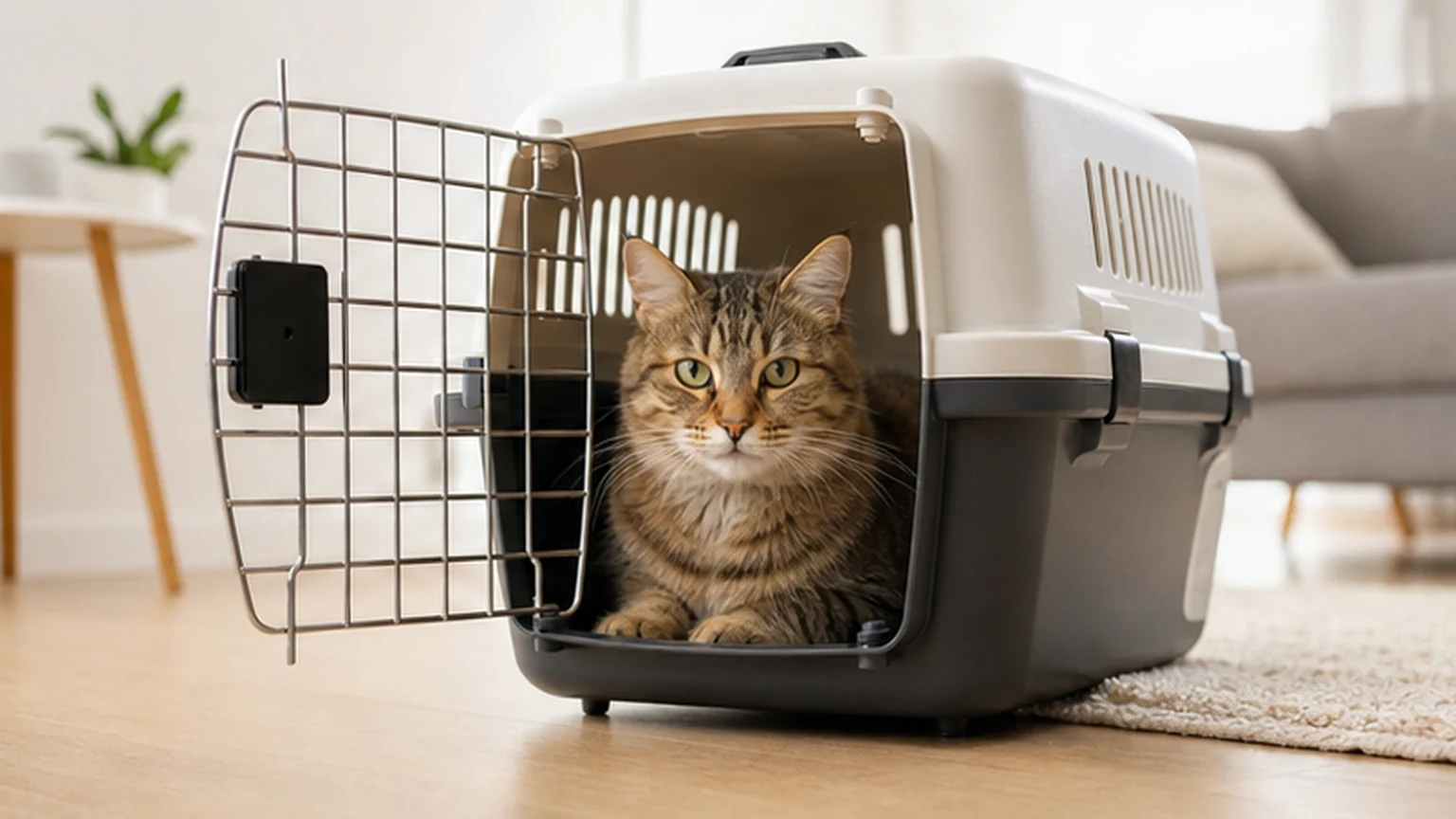
| Transport | Carrier with a removable top or wide-opening door | Moving a hurt cat with minimal disturbance |
| Documents | Vet and emergency clinic phone numbers | Having the numbers where you will look under stress |
| Documents | Microchip number and vaccination records | Helping an emergency clinic identify your cat quickly |
A few notes on choosing items. Vet wrap is the closest thing to a miracle product in feline first aid: it sticks to itself, not to fur, so it holds bandages in place and comes off easily. Sterile saline in a squeeze bottle is useful for both wounds and eyes, but check the label — contact lens solution contains preservatives that can irritate a cat's eye. If you buy an antiseptic, read the concentration: chlorhexidine above 2% is too strong for cats, and anything labeled for human wounds should be diluted or skipped unless your vet has approved it.
What to leave out
Leave the following out of the kit entirely.
- Human pain relievers. Acetaminophen, ibuprofen, naproxen, and aspirin can be lethal to cats. The only medication cats should receive is one prescribed by a veterinarian.
- Hydrogen peroxide. It damages healthy tissue and is not an appropriate wound cleaner. Do not use it to induce vomiting at home.
- Rubbing alcohol. It stings, strips protective skin oils, and can be absorbed through the skin.
- Band-Aids and standard adhesive bandages. They stick to fur, are easily swallowed, and can cause intestinal blockages.
- Tourniquets. Proper tourniquet use is rare in cats; an improperly applied one can cause more harm than the bleeding it was meant to stop.
- Antibiotic ointments with added pain relievers or ingredients such as neomycin. Some can trigger allergic reactions in cats. Use only a product your vet recommends.
Never administer human medication to your cat — including common pain relievers — and never use hydrogen peroxide to make a cat vomit. Either can be fatal. If you suspect your cat has swallowed something toxic, call your veterinarian or a pet poison control line immediately.
How to use the basics safely
The point of a first aid kit is to stabilize, not to treat. Keep everything calm and quiet, and move slowly so the cat does not panic.
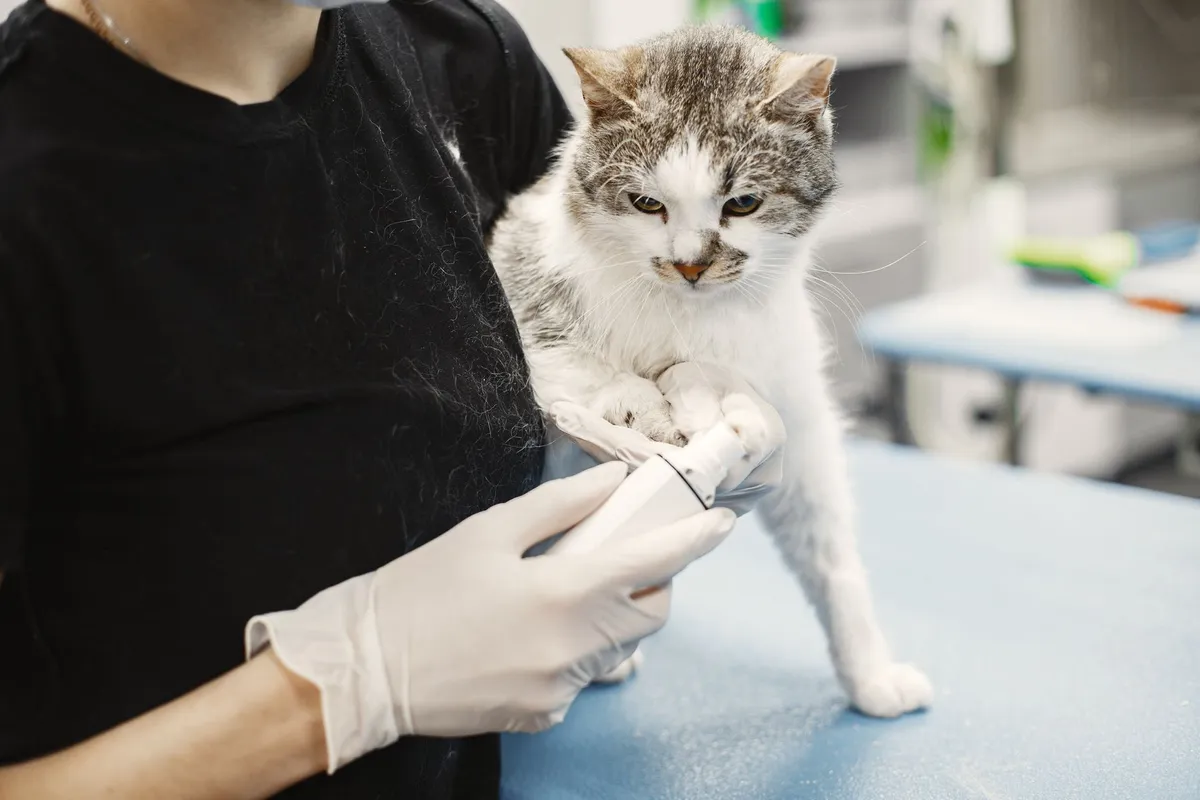
Stopping bleeding. Press a sterile gauze pad firmly over the area for several minutes without lifting it to peek. If blood soaks through, add more gauze on top. For a nail that keeps bleeding after an over-trim, press the tip into styptic powder or cornstarch, then apply steady pressure with gauze.
Cleaning a minor wound. If the wound is small and the cat is calm, rinse it with sterile saline, then clean around the edges (not inside the wound) with dilute antiseptic on a gauze pad. Cover it with non-stick gauze and vet wrap, snug but not tight.
A bandage that is too tight can cut off circulation. After wrapping a limb, confirm the toes stay pink and warm, and loosen the wrap if anything looks off. Never leave a bandage on longer than 24 hours without veterinary guidance.
Taking a temperature. Lubricate the tip of a digital thermometer with jelly, then insert it about 2.5 cm (1 inch) into the rectum. A normal temperature falls between 100.5°F and 102.5°F (38.1–39.2°C). A temperature above 104°F or below 99°F is a veterinary emergency.
Restraining without injury. A towel wrap usually works well: lay the cat on a towel, fold one side over the body, tuck in the legs, and fold the other side over, leaving the head free. Wrap snugly but not tightly. A basket-style muzzle can prevent bites, but use it only when the cat is breathing normally.
Never muzzle a cat who is unconscious, vomiting, coughing, or having trouble breathing — a muzzle can block the airway. Skip the muzzle and get veterinary help immediately.
When to skip the kit and go straight to the vet
First aid is for stabilization. Go to the vet directly — or to an emergency clinic — when the cat has any of these signs: unconsciousness, difficulty breathing, pale or blue gums, seizures, a suspected fracture, an eye injury, a swollen or painful abdomen, collapse, repeated vomiting or diarrhea, difficulty urinating, or bleeding that does not stop after several minutes of firm pressure. If you have handled a known poison, do not wait for symptoms. When in doubt, call your vet; they can tell you whether the situation can be managed at home or needs an immediate visit.
Keeping the kit ready
Building the kit is the easy part. Keeping it ready means checking it regularly: replace expired saline and ointments, restock anything you used, and rewrite the emergency numbers if they change. Every few months, open the box and look through it. If you travel with your cat, consider a smaller travel version with the same core items. Most importantly, tell everyone in the household where the kit lives and what it is for — in a real emergency, the person who remembers it might not be the person who stocked it.
Frequently Asked Questions
Can I use my own first aid kit for my cat?
You can borrow clean gauze, scissors, tweezers, and a thermometer, but anything that goes on or in the cat — medications, antiseptics, ointments, bandages — should be cat-safe and cat-specific. Human pain relievers are toxic to cats, so never keep them in the same kit.
What should I do if my cat is bleeding?
Apply firm pressure with sterile gauze for several minutes without lifting it to check. If the bleeding is heavy or does not stop, keep pressure on the area, put the cat in a carrier, and contact your vet or emergency clinic on the way.
Should I muzzle my cat before treating her?
If your cat is conscious, in pain, and breathing normally, a basket muzzle can protect you from bites. Do not muzzle a cat who is vomiting, coughing, struggling to breathe, or unconscious. A towel wrap may be enough for a small procedure like trimming a bleeding nail.
Why is hydrogen peroxide sometimes mentioned for cats?
Under specific veterinary instruction, hydrogen peroxide is occasionally used to induce vomiting after a confirmed toxin ingestion. But it is easy to get wrong, can injure the esophagus, and must never be poured into a wound. Call your vet before ever considering it.
My cat's nail is bleeding after a trim — is that an emergency?
Usually not. Press the nail with gauze, then dip it in styptic powder or cornstarch. If bleeding continues beyond a few minutes, or if your cat seems painful, contact your vet.
Key Takeaway
A cat first aid kit is not a treatment plan — it is a stabilizing tool. Stock it with gauze, vet wrap, sterile saline, a digital thermometer, a towel, a muzzle, a carrier, and emergency numbers. Learn the basic skills before you need them, keep human medications out of the equation, and let your veterinarian do the diagnosing. The kit buys you time; the vet provides the treatment.
Sources & Scientific References (3)
Share this guide
Help another cat parent find it.