
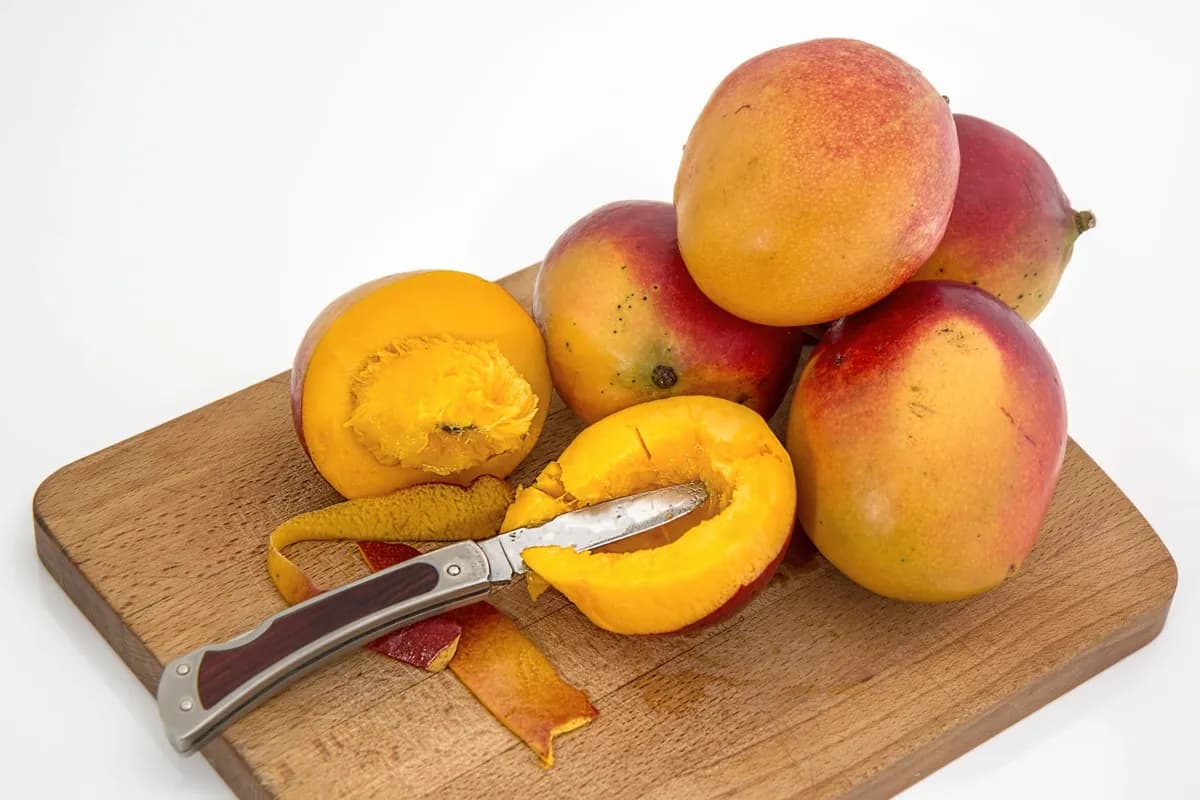
The short answer
Yes, cats can eat mango, but only the ripe flesh, and only in tiny pieces as an occasional treat. The skin and the pit are unsafe, and mango's natural sugar means portions should stay very small. Mango is not part of a cat's natural diet, and it should never replace a complete, balanced cat food. Think of it as a fun novelty, not a necessary food.
What mango can offer a cat
Mango flesh is mostly water, carbohydrates, and a little fiber. It also provides vitamins A and C, plus antioxidants. For humans, those nutrients are meaningful, but for cats they matter less. Cats produce their own vitamin C, and their bodies are designed to get energy and protein from animal sources. That doesn't make mango harmful, but it does make it more of a treat than a health food. A small bite of sweet, soft mango can be an interesting texture for a curious cat, and it can add variety to a routine of plain treats. The main value is enrichment: a new smell, a new feel, a new taste. Some cats will sniff and walk away; that's normal. Others may ask for more. In both cases, mango is optional and not a sign that anything is wrong.
The main concerns
There are several reasons to be careful with mango.
First, sugar. Mango is naturally sweet, and a cat's digestive system is not built to handle large amounts of sugar. Even a few extra pieces can lead to upset stomach, soft stool, or diarrhea. For cats with diabetes or weight issues, sugary treats are a genuine risk and should be skipped unless your veterinarian approves.
Second, the pit. The mango pit is large, hard, and slippery. If a cat chews on it, the pressure can crack a tooth. If the cat swallows pieces, the pit can become stuck in the esophagus or lower intestines, which is a medical emergency. The pit is also poorly digestible, so it won't break down safely in the stomach. Keep it away from cats completely.
Third, the skin. Mango skin is tough, fibrous, and can be a choking hazard. It can irritate the stomach lining and cause vomiting even if a small piece is swallowed. The skin may also carry pesticide residues or other field treatments, which is another reason to remove it fully. The flesh itself is much softer and easier to manage, but it should be ripe.
Fourth, individual sensitivity. Cats, like people, can have food sensitivities. The first time a cat tries mango, give only a single small piece and watch for adverse reactions. If your cat drools, vomits, or has a change in appetite or litter box habits, stop giving mango.
There is also a real difference between "not ideal" and "dangerous." Mango is not a strong poison, but the physical and digestive risks are real. That's why we say the skin and pit are unsafe, and the flesh is safe only in tiny amounts.
How to serve mango safely
Choosing and preparing mango carefully reduces most risks.
- Pick a ripe mango. It should be slightly soft and smell sweet. Overripe, bruised, or fermented mango can contain alcohol, which is unsafe for cats.
- Wash the outside of the mango under running water before cutting. This helps remove surface dirt and residues.
- Peel the skin off completely. No skin should remain.
- Cut the flesh away from the pit. Remove any stringy fibers attached to the flesh.
- Dice the flesh into pieces no bigger than a pea or the size of your cat's regular treat.
- Serve one or two pieces on a small plate or your finger. Do not mix mango into a full bowl of food.
If you are making a fruit salad for yourself, set aside a tiny cube for your cat before adding sugar, syrup, or other ingredients. Those additions are not safe for cats. Similarly, avoid feeding mango from a can or jar, since these may contain sugar syrup, preservatives, or artificial sweeteners.
Mango part safety table
| Mango part | Safe? | Why / serving tip |
|---|---|---|
| Ripe flesh | Safe in small pieces | Soft and easy to chew; give pea-sized pieces only |
| Unripe flesh | Not recommended | Sour and hard; may upset the stomach |
| Skin | Unsafe | Tough, fibrous, choking hazard; peel and discard |
| Pit | Unsafe | Hard and large; can break teeth or block the gut |
| Dried mango | Not recommended | Sticky and high in sugar; skip it |
How much mango can a cat eat?
Treats should make up no more than about 10% of a cat's daily calorie intake. A typical adult indoor cat needs around 200 to 250 calories per day, depending on age, weight, and activity level. A teaspoon of diced mango has roughly 5 calories, so one or two pea-sized pieces are well within the treat budget. But if you're also giving other treats, those calories add up quickly. For a healthy adult cat, one or two tiny pieces two or three times per week is enough. Do not offer mango daily. For cats with diabetes, obesity, or a history of digestive problems, avoid mango and check with your veterinarian about safer treat options. Also, don't offer mango juice, canned mango in syrup, or fruit smoothies, because in these forms the sugar is more concentrated and can easily cause diarrhea.
Remember that treats are extras, not meal replacements. A cat that eats too many treats may refuse its regular food, which can lead to nutritional imbalances over time.
What about mango skin and pit?
Both skin and pit should be treated as unsafe and kept away from your cat. When you peel a mango, put the skin and pit straight into a lidded trash can or compost container. Curious cats often grab things that fall on the floor, so it's safer to dispose of them immediately.
If your cat chews on a mango pit, take it away right away. If you think a cat swallowed skin or a piece of pit, call your veterinarian. Signs such as repeated vomiting, refusing to eat, straining in the litter box, or a painful belly can indicate a blockage and need immediate attention. The pit is especially dangerous because it is rigid and may not pass through the digestive tract.
Frequently Asked Questions
Can kittens eat mango?
It's best to avoid mango in kittens. Their digestive systems are still maturing, and they are more likely to choke on small, slippery pieces. Kittens also have different nutritional needs than adult cats, and treats can interfere with their appetite for growth-focused kitten food. If you want to let a kitten taste fruit, ask your vet first.
Can cats eat dried mango?
No. Dried mango is much higher in sugar than fresh mango and is sticky, making it a choking hazard and a source of sugar stuck to the teeth. Even small pieces have very little water and a lot of concentrated sugar, so they are not worth the risk.
What if my cat swallowed mango skin or pit?
Remove any remaining pieces from the floor, then watch closely for drooling, retching, vomiting, or loss of appetite. Contact your veterinarian right away and mention the size of the piece. A swallowed pit or a large piece of skin may need an exam.
Is mango helpful for overweight cats?
No. Mango contains sugar and calories that do not help with weight loss. For overweight cats, a better treat is a small piece of plain cooked meat or a low-calorie commercial cat treat. Talk to your vet about portion sizes.
Why do cats like mango if they are carnivores?
Cats are curious and attracted to sweet smells. Some cats simply like the texture of soft fruit. A tiny taste is okay for most healthy adults, but it should not become a regular habit.
Any treat, including mango, should stay under 10% of a cat's daily calories. Offer only one or two pea-sized pieces of peeled, ripe mango flesh, and skip it for cats with diabetes, obesity, or digestive issues. Mango skin and pit are unsafe — keep them away from your cat.
Key Takeaway
Cats can safely enjoy a tiny taste of ripe mango flesh now and then, but the skin and pit are unsafe and should never be offered. Sugar content and portion size are the main concerns, so keep servings small and rare. When in doubt, a simple commercial cat treat is the safest choice.
Check a food before you guess
Search the PurrWise food checker for a specific ingredient and review the recommended safety action.
Sources & Scientific References (3)
Share this guide
Help another cat parent find it.