The short answer
Cats stare at humans for a variety of reasons, from simple curiosity to a request for food or attention. Most staring is normal feline behavior, but it's worth learning to read the context. Your cat isn't trying to hypnotize you or plot revenge—they're simply gathering information, showing affection, or asking for something. Understanding the nuances of your cat's gaze helps strengthen your bond and ensures you meet their needs.
Why cats stare: the basics
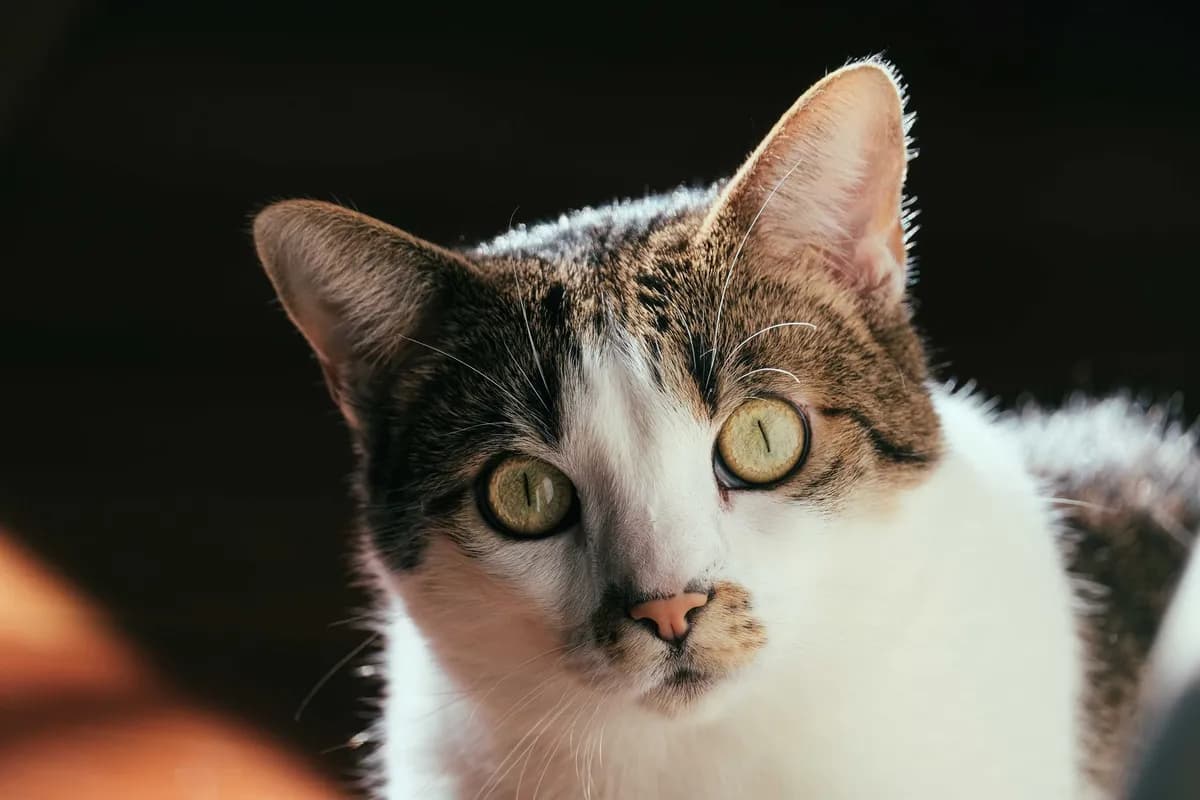
Cats are visual hunters. Their eyes are adapted to detect the slightest movement, and their brains are wired to watch anything that might be prey, a threat, or a source of food. When your cat stares at you, they're doing exactly what their wild ancestors did: observing a large, unpredictable creature to figure out what you're going to do next. Your cat has learned that you control food, playtime, and comfort, so your actions matter to them.
Staring is also a form of communication. Cats use eye contact to signal trust and affection, especially when they pair it with a slow blink. In feline body language, a relaxed, steady gaze with slow blinks is a sign of love and safety. If your cat stares at you and then slowly closes and opens their eyes, they're effectively giving you a cat kiss.
6 common reasons your cat stares at you
1. Curiosity
Cats are naturally curious about their environment, and you're a big part of it. If you're doing something new—cooking, folding laundry, typing on a laptop, or simply moving around—your cat may stare to figure out what you're up to. Their senses are sharp, and they may be tracking your movements out of interest or just to keep an eye on their favorite human.
2. Affection
A relaxed stare, often accompanied by slow blinking, purring, or a soft tail, is a sign that your cat feels safe and bonded with you. Cats don't usually make direct eye contact with creatures they distrust. By staring at you with a calm, soft gaze, your cat is showing that you're part of their inner circle.
3. Hunger
Cats are creatures of routine. If you feed them at the same time every day, they'll quickly learn to associate your presence with mealtime. A persistent stare, especially if it's aimed at you and then at their food bowl, is a clear request for a snack. Some cats even lead you to the kitchen while staring back to make sure you're following.
4. Attention seeking
Your cat might simply want your attention. Staring is a reliable way to get a reaction—you might talk to them, pet them, or offer a toy. If your cat has learned that staring gets them what they want, they'll use it often. This is especially common in cats that live alone with their owners and crave interaction.
5. Alertness
Cats are always on the lookout for potential threats. If your cat's pupils are dilated, ears are forward, and body is tense, they may be staring at you to gauge whether you're a threat or to signal that they sense something unusual. This kind of staring is more intense and may be paired with a twitching tail or flattened ears. In multi-cat households, a cat might stare at you to assert dominance or to check your mood before approaching.
6. Medical concern (rare)
In rare cases, staring can be a sign of a medical issue. Cats with vision problems, neurological issues, or certain illnesses may stare blankly at walls or people. If your cat's staring is accompanied by other symptoms—lethargy, hiding, changes in appetite, or disorientation—it's worth a veterinary check. But most staring is normal and doesn't indicate a health problem.
How to tell the difference
The table below summarizes the common reasons for staring and the body language cues to look for. Paying attention to the whole picture—not just the eyes—helps you interpret what your cat is trying to say.
| Reason | Body language cues | What to do |
|---|---|---|
| Curiosity | Ears forward, relaxed tail, soft eyes | Let them watch; they're just interested |
| Affection | Slow blinking, purring, relaxed posture | Slow blink back, offer gentle pets |
| Hunger | Meowing, leading to bowl, pacing | Check feeding schedule, offer a meal if appropriate |
| Attention seeking | Pawing, rubbing, chirping | Engage in play or give affection — chirps at birds through the window are prey chattering, not attention |
| Alertness | Dilated pupils, tense body, flattened ears | Assess environment for stressors, speak softly |
| Medical concern | Lethargy, hiding, appetite loss, disorientation | Consult your veterinarian |
When staring might be a problem
While staring is usually harmless, there are times when it signals something more serious. If your cat's stare is paired with aggressive posturing—hissing, growling, swatting, or a stiff tail—they may feel threatened. This can happen if you've startled them or if they're in pain. Similarly, if your cat stares at you and then suddenly attacks, it could be a sign of redirected aggression or an underlying anxiety issue.
Another scenario is compulsive staring. If your cat stares at walls, corners, or empty spaces for long periods, it could indicate a neurological problem, such as feline cognitive dysfunction (in older cats) or seizures. If you notice this behavior, especially in a senior cat, a veterinary exam is wise.
If your cat's staring is accompanied by sudden aggression, hiding, changes in appetite, or disorientation, seek veterinary advice to rule out underlying medical conditions. Never punish your cat for staring—it's a natural behavior, and punishment can damage trust.
How to respond to your cat's stare
The best response depends on the reason. If your cat is staring out of curiosity or affection, you can simply let them be or offer a slow blink to show you trust them. If they're hungry, check whether it's actually mealtime—overfeeding can lead to weight issues. If they're seeking attention, engage in a short play session or give them a few gentle pets. For alertness, try to identify and remove any stressors in the environment, like loud noises or unfamiliar visitors.
A common mistake is to stare back intensely. In cat language, a hard, unblinking stare is a challenge or a threat. If you lock eyes with your cat, they may become anxious or defensive. Instead, use slow, deliberate blinks to communicate that you're not a threat. This simple gesture can actually deepen your bond.
Frequently Asked Questions
Why does my cat stare at me while I sleep?
Cats are crepuscular, meaning they're most active at dawn and dusk. While you sleep, your cat may watch over you as a form of bonding or because they're waiting for you to wake up. They might also be guarding their territory—you are part of their territory. As long as they're not waking you up, this is normal behavior.
Is staring a sign of aggression?
Not usually. Aggressive staring is typically accompanied by dilated pupils, flattened ears, a twitching tail, and a tense body. If your cat's stare is relaxed and paired with slow blinking, it's a sign of trust, not aggression. If you're ever unsure, look at the rest of their body language.
Should I stare back at my cat?
It's best to avoid a hard, unblinking stare, as cats can interpret it as a challenge. Instead, try slow blinking—close your eyes slowly and open them again. This signals that you're relaxed and friendly. Many cats will slow blink back, which is a lovely form of communication.
My cat stares at the wall. Is that normal?
Occasionally, a cat may stare at a wall because they see a shadow, a bug, or hear a sound. But if your cat frequently stares at blank walls or corners for long periods, it could be a sign of a medical issue, such as seizures or feline cognitive dysfunction. If you're concerned, consult your veterinarian.
Key Takeaway
Most cat staring is normal and simply means your cat is curious, affectionate, or wants something. Pay attention to the context and your cat's overall body language to understand what they're communicating. Respond with warmth—offer a slow blink, a gentle word, or a play session—and you'll build a deeper connection with your feline friend. If staring is ever paired with worrying signs like aggression, lethargy, or disorientation, don't hesitate to reach out to your vet.
Share this guide
Help another cat parent find it.