
The short answer
Cats sleep an average of 12 to 16 hours every day, and some cats happily log closer to 20. This isn't laziness — it's biology. Cats evolved from solitary predators whose survival depended on short, explosive bursts of hunting energy followed by long recovery periods. Their natural rhythm is crepuscular, meaning they are wired to be most alert at dawn and dusk. The rest of the day is, in effect, built for resting and recharging.
Sleeping also makes sense from a calorie perspective. A predator that sleeps during the hot middle of the day uses less energy, which is useful when a meal isn't guaranteed. Even though most pet cats no longer need to hunt, their bodies still run on the same ancient operating system.
How much sleep does an average cat need?
Sleep totals vary with age, personality, health, and environment. As a general guideline:
- Kittens grow and process enormous amounts of new information, so they often sleep up to 20 hours a day.
- Young to middle-aged adults typically sleep between 12 and 16 hours.
- Senior cats often return to higher totals, sometimes 16 to 20 hours, because their energy reserves shrink and age-related changes make rest more appealing.
The table below summarizes those life-stage differences.
| Life stage | Typical sleep per day | Why it's higher or lower |
|---|---|---|
| Kitten (under 1 year) | 16–20+ hours | Growth, brain development, and new experiences require lots of energy |
| Adult (1–7 years) | 12–16 hours | Energy conservation between bursts of hunting-like play and activity |
| Senior (7+ years) | 16–20 hours | Lower activity levels, age-related body changes, and a smaller energy budget |
Keep in mind that 'normal' is a range, not a number. A quiet indoor cat with a laid-back personality may sleep more than a busy household's cat — and still be perfectly healthy. A kitten's marathon naps support rapid brain wiring, while a senior's longer rests reflect a natural slowdown in energy. Neither is inherently worrying.
Why is the cat body built for so much sleep?
Several pieces of feline biology explain the sleepy life:
1. They are crepuscular, not nocturnal. Cats are active around dawn and dusk, which is when many small prey animals are also active. Their eyes are adapted to low light, but they aren't true night-operating creatures. The middle of the day — and much of the night — are natural down-time.
2. They are ambush hunters. Instead of chasing prey for miles, cats stalk, pounce, and strike in quick flashes of speed. That style of hunting demands sudden energy, not endurance. Short bursts are followed by long rest to conserve fuel for the next opportunity.
3. Sleep is calorie-efficient. A resting cat's body requires less energy, which is a quiet advantage when food is unpredictable. Wild cats often sleep after a meal — the familiar 'eat, groom, sleep' cycle — because digestion and rest pair well.
4. They are polyphasic sleepers. Unlike humans, who generally sleep in one long block, cats sleep in many short episodes across the day. This allows them to stay semi-alert to their surroundings and respond quickly if an opportunity or threat appears.
That combination — low-light vision, quick reflexes, and a body that budgets energy carefully — is why your pet cat can race around the living room at 7 a.m., then collapse into a window-side curl by 10 a.m. Every zoomie is, in evolutionary terms, a practice hunt. Every nap is recovery from a hunt that never actually happened but was rehearsed in the brain.
A look inside a cat's sleep cycle
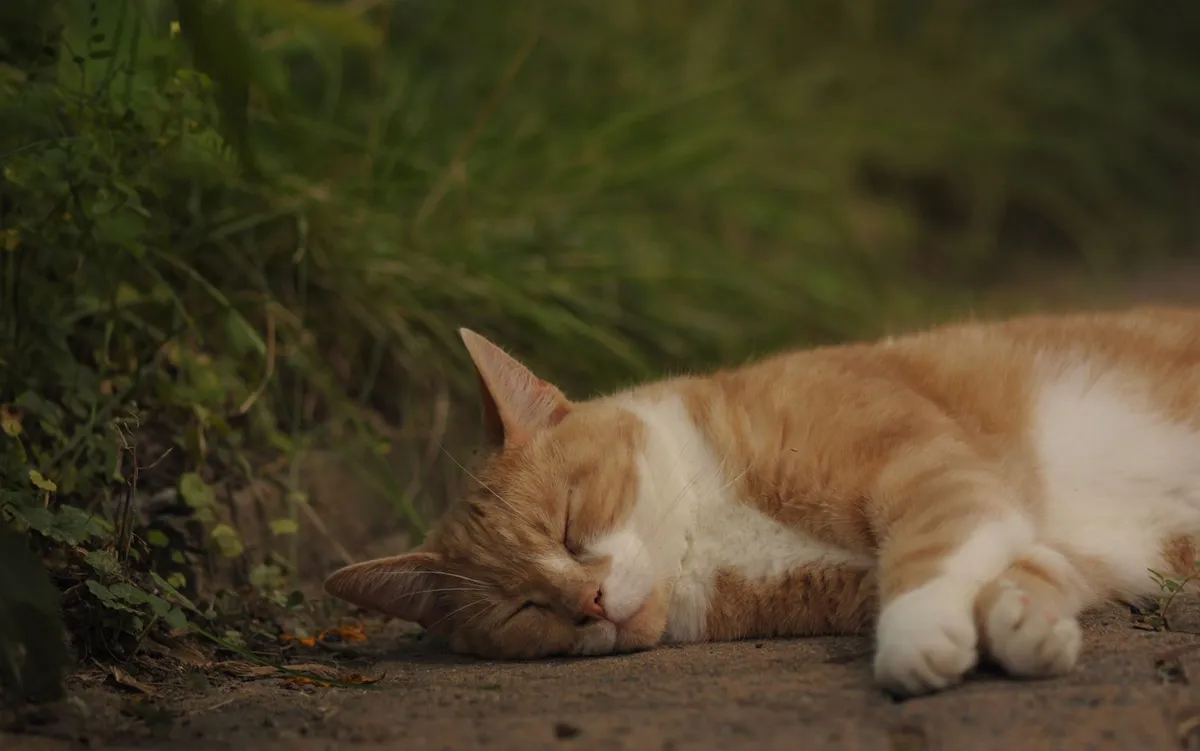
If you watch a cat nap, you've probably seen the progression. First comes light sleep: ears still twitch, eyes half-open, body relaxed but ready. This may last 15 to 30 minutes. Then the cat may sink into deeper sleep, and later into REM (rapid eye movement) sleep, when whiskers, paws, and tail sometimes twitch. REM sleep is the dreaming stage, and cats experience it just like many mammals do.
Cats spend a good portion of their sleep in a light, polyphasic state rather than the long, deep blocks humans use. This is partly protective: a half-awake cat can still hear a rustling mouse or a rival cat approaching. Even their favorite naps are usually taken in curled or loafed positions that let them spring up quickly.
Interestingly, a cat's deep-sleep phases are relatively short compared with a human's. Cats are always, on some level, ready to spring into action. That's why a sleeping cat can look almost dead to the world yet bolt upright at the sound of a can opener.
When 'sleeping a lot' becomes 'sleeping too much'
Because big numbers are normal, the alarm bell isn't the number — it's the change. Watch for any of these warning signs:
- A sudden dramatic increase in sleep that lasts more than a day or two
- Difficulty waking the cat, or an apparently unresponsive cat during sleep
- Loss of appetite or thirst along with extra sleep
- Hiding, avoiding social contact, or a change in litter box habits
- Sleepiness combined with weight loss, vomiting, or other physical symptoms
If your cat's sleep patterns shift suddenly and are paired with other signs like reduced appetite, hiding, litter box problems, or trouble waking, contact your veterinarian. Extra sleep alone is often harmless, but when it arrives with other changes it can point to pain, illness, or an underlying condition. Never assume 'cats are just sleepy' when the change is abrupt.
It's also worth noting that cats may sleep more when they are bored. An indoor cat without enough stimulation sometimes retreats into sleep as an adaptation. That's less dangerous than illness, but it's still a sign that the environment could use more play, climbing space, and enrichment.
How to protect healthy sleep
Cats value a good sleeping spot. Because so much of their day is rest, small details matter. Provide safe, elevated resting places where they can observe the room; keep sleeping areas accessible and quiet; and respect the sleep itself — waking a deeply sleeping cat can be startling for them. A good rule of thumb is to let sleeping cats lie.
A predictable daily rhythm also helps. Cats thrive on routine: play sessions, mealtimes, and quiet time at the same hours make the awake periods meaningful and the sleeping periods easier. Many behavior experts recommend a 'hunt, eat, sleep' routine — a short play session that mimics hunting, followed by a meal, followed by rest. It gives the cat's inner predator a job to do and supports a natural cycle.
If your cat sleeps more than you'd expect, try adding interactive toys, puzzle feeders, and vertical spaces before assuming something is wrong. Enrichment often solves the 'bored sleeper' problem better than any other change you can make.
Frequently Asked Questions
Can a cat sleep too much?
A healthy cat can sleep 20 hours a day, so high numbers alone aren't concerning. Worry more about sudden changes, difficulty waking, and sleep combined with other symptoms like appetite loss or hiding. Those are good reasons to call your vet.
Do cats dream?
Yes. Cats enter REM sleep, the stage associated with dreaming, and twitching whiskers or paws are often signs they're in it. What exactly they dream about is unknown, but researchers have long observed the same brain wave patterns in cats that humans show during dreaming.
Are indoor cats more likely to oversleep?
They can be. Without natural hunting opportunities, some indoor cats turn to sleep as a default activity. Increasing enrichment — play sessions, puzzle feeders, window perches, climbing furniture — can help them spend more waking hours engaged.
Why does my cat sleep on top of me?
Sleeping next to a human is usually a sign of trust and warmth-seeking, not a health problem. Cats are social sleepers in many contexts, and you may simply be the coziest, safest spot in the house.
Is it OK to wake a sleeping cat?
It's better not to. Cats use their sleep to recharge, and being roused from deep sleep can leave a cat startled or disoriented. If you must move a sleeping cat, do it gently and let them resettle somewhere comfortable.
Key Takeaway
Cats aren't lazy — they're efficient. Their sleepy nature is an inherited survival strategy: crepuscular rhythms, short-burst hunting, and calorie conservation have shaped a creature that rests deeply between moments of intense activity. For most cats, 12 to 16 hours a day is entirely normal, and kittens, seniors, and bored indoor cats may snooze even more. Keep an eye on sudden changes rather than trying to count exact hours, and make sure your cat's environment supports both good awake time and genuinely restful sleep. If extra sleep arrives with other symptoms, a quick conversation with your vet is the safest move.
Share this guide
Help another cat parent find it.