The short answer
Cats don't universally hate water — but most avoid being drenched for reasons that trace to their desert-dwelling ancestors. Waterlogged fur loses its insulating power, becomes heavy, and dries slowly, leaving a cat cold, slow, and vulnerable. Add hypersensitive whiskers, ears that trap moisture, a scent-driven world turned upside down by a bath, and a strong preference for feeling in control, and you have an animal that will almost always choose the dry side of the room.
That said, "cats hate water" is an overgeneralization. The Turkish Van is nicknamed the swimming cat, Bengals routinely splash in ponds, and plenty of ordinary household cats happily bat at dripping faucets. What most cats actually hate is being forced into water — not water itself.
The desert ancestry of the domestic cat
Every domestic cat traces its line back to Felis lybica, the African wildcat, which still roams arid scrubland across parts of Africa and the Middle East. The African wildcat hunts small rodents and birds by stalking through dry grass, and its body is optimized for short bursts of speed — not for paddling. Water is scarce in its habitat, and prey lives on land, so swimming never offered a survival advantage. Evolution simply never gave cats water-friendly bodies or attitudes.
Compare genuinely aquatic felines: tigers sprawl in rivers to cool off, and fishing cats hunt in wetlands. Domestic cats are not built or wired for that lifestyle. A kitten raised in a cozy home may never meet a desert, but instincts don't care — the ancestral message to avoid open water is still coded into its responses.
Wet fur is a physical problem
Cat fur is a precision tool for staying warm, dry, and agile on land. Guard hairs shed some water, but the soft, dense undercoat behaves like a wet wool sweater when soaked: heavy, clammy, and slow to dry.
| What happens to wet fur | The physical cost | Why cats avoid it |
|---|---|---|
| Weight increases sharply | A soaked coat feels surprisingly heavy | Slows jumps and sprints; escape feels impossible |
| Trapped air is displaced | Insulating air pockets fill with water | Body heat drains fast; the cat feels genuinely cold |
| Long drying time | Dense undercoats dry very slowly | Extended shivering and discomfort |
| Tangling and matting | Wet hair clumps and knots | Painful to groom; skin irritation follows |
Cats also run a higher baseline body temperature than humans — around 101 to 102.5°F — and they are built to conserve heat. That's why they love sunbeams and radiators. Losing heat through wet fur is not merely unpleasant; for a small animal it can be dangerous. And from an evolutionary view, a cold, slow cat looks like an easy target. Vulnerability is the worst feeling a prey animal can have.
A nose designed for air, not water
Cats meet the world through scent. Their sense of smell is far more acute than ours, and they layer information from their environment, other animals, and themselves. Getting soaked scrambles that system. Water rinses away familiar smells and replaces them with chlorine, shampoo, and soap notes. A cat that smells unfamiliar to its own sensitive nose feels unsettled. A bath also masks the odor cues of territory, familiar humans, and other pets, making the world harder to read. Wet fur produces a distinctive musty odor when moisture lets microbes release compounds from the coat — not comfort for a scent-first creature.
Whiskers, ears, and the need for control
A full bath is a sensory ambush. Cat whiskers are packed with nerve endings and act as precision instruments for sensing air and space. A splash across the face is a sudden static storm on that finely tuned system.
Ears complicate matters further. The cat ear canal is shaped to keep debris out, but it traps moisture easily, and water trapped in the ear invites discomfort or infection. That's why cats shake their heads after any stray drip.
Finally, there is control. Cats are animals of the vertical and predictable; they want footing, exit routes, and visible escape options. A slippery tub offers none. Even in the safest bathroom, a cat's instinctive response to slick footing is to scramble, and scrambling in water is exhausting. When a cat is placed in water, it loses traction, loses body heat, and loses control — three things no cat surrenders willingly.
The felines that break the rule
Water aversion is a tendency, not a law.
| Breed | Why water sometimes gets a pass |
|---|---|
| Turkish Van | Historically linked to the Lake Van region; the "swimming cat" of folklore |
| Bengal | Highly curious and playful; many happily splash and paddle |
| Maine Coon | Dense coats shaped by cold climates; many tolerate or enjoy water |
| Any individual cat | Temperament and early positive experiences can override the default |
Loving a dripping faucet is not the same as loving a bath, though. The distinction tells us what cats actually dislike.
Why faucets fascinate but baths don't
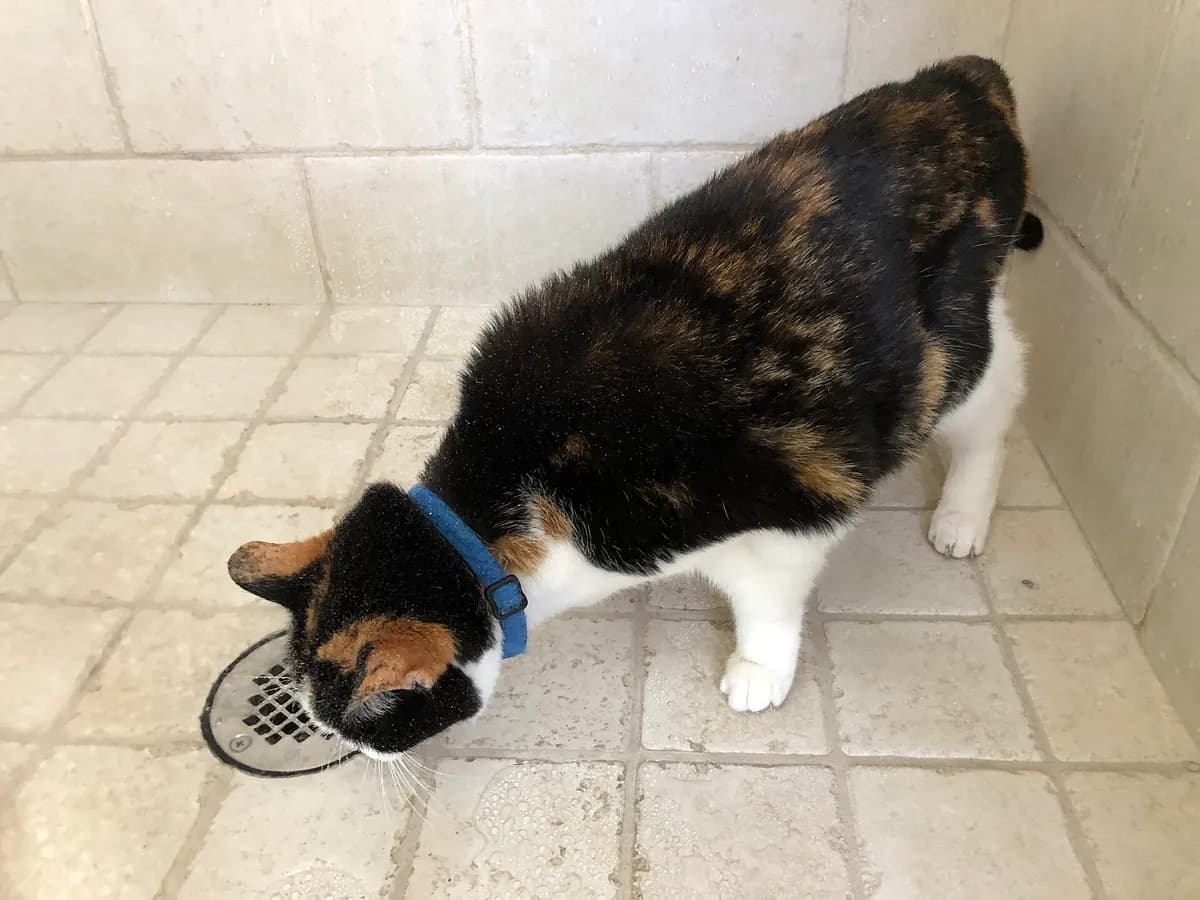
When a cat bats at a running tap or dabs a paw in its bowl, it is not being contradictory. Running water is fresh; still water can carry stale smells. Running water moves, which triggers hunting instincts — droplets become prey-like toys. And the contact is on the cat's terms: it can touch, retreat, and re-engage whenever it wants. Many cats dip a paw because they prefer to test an unpredictable surface rather than splash their sensitive whiskers.
A bath inverts every one of those positives. It's still, chemically smelling, deep, cold, and imposed.
When (and how) to actually bathe a cat
Most cats never need a bath. They groom themselves with disciplined thoroughness, and routine bathing — especially with human products — can strip natural skin oils and cause irritation. Baths are reserved for real need: veterinary-directed medicated washes, removal of sticky or toxic substances under vet instruction, and the occasional heavily soiled coat.
If you must bathe a cat:
- Use lukewarm water tested on your wrist.
- Use a shampoo made specifically for cats — human shampoo disrupts feline skin pH.
- Keep the water shallow and the session to a few minutes.
- Never submerge the head; use a damp, wrung-out cloth for the face.
- Have a warm, fluffy towel ready, and skip hair dryers entirely — the noise frightens most cats.
- Finish with treats and praise so the experience ends positively.
Bathing a cat is rarely a do-it-yourself emergency. If a bath is needed for medical reasons — skin infection, flea treatment, toxic exposure — follow your veterinarian's prescribed protocol exactly. Never use human shampoo or essential-oil products; many are toxic to cats. Never hold a cat under water or submerge its head. If your cat becomes frantic, stop immediately, wrap it in a towel, and call your veterinarian for alternatives such as waterless wipes. A professional cat groomer with experience handling anxious felines is often safer than struggling at home.
Frequently Asked Questions
Do all cats hate water?
No. Most avoid submersion because of desert ancestry and slow-drying fur, but some breeds — notably the Turkish Van and Bengal — enjoy water. Individual cats vary widely based on personality and early experience.
Why does my cat love the faucet but hate the bathtub?
The faucet is fresh, moving, and entirely under the cat's control. The bathtub is still, chemically scented, and involves restraint and submersion. These are almost opposite experiences.
Should I bathe my cat?
In general, no. Healthy cats groom themselves effectively, and bathing can irritate skin. Bathe only when a veterinarian recommends it, the coat is heavily soiled, or a grooming necessity demands it — always with cat-specific products.
Can I get my kitten used to water?
Yes, with patience and without force. Offer shallow, warm water with treats and play, keep sessions voluntary and tiny, and never hold the kitten in the water. A neutral attitude toward water is a realistic goal; a cat that loves full baths is not guaranteed.
Do cats hate water or being cold?
Both — but they are linked. Wet fur makes cats lose body heat much faster, and cats run a naturally higher body temperature than people. What looks like hatred of water is frequently hatred of being cold, heavy, and soaked.
Key Takeaway
Cats don't shrink from water out of spite. They avoid it because evolution never equipped them for it, and being drenched undermines every survival system they have: insulation, agility, scent, and control. The exceptions prove the rule — cats who enjoy water do so on their terms, as curious individuals, not as a species-wide transformation. Respect your cat's dry preference, offer fresh running water through a fountain, and remember that for most cats, the bath they give themselves is the only one they need.
Share this guide
Help another cat parent find it.