The short answer
Cats eat grass because it is a normal, instinctive behavior — not a sign of illness and nothing to worry about by itself. Researchers have not settled on a single reason, but the evidence points to several useful explanations: grass provides fiber that can help move fur and food through the digestive tract, it contains nutrients such as folic acid, and it may be a habit inherited from wild ancestors that swallowed plant matter along with their prey. For most cats, grazing is safe as long as the grass is clean and chemical-free. Occasional vomiting after eating grass is usually not a red flag; frequent, forceful vomiting or lethargy is worth a conversation with your veterinarian.
A very normal habit
Surveys of cat owners consistently show that plant-eating is widespread and that grass is by far the most popular plant on the menu. Kittens start nibbling early, and cats of every age — indoor and outdoor — will sample an interesting blade. Veterinary organizations treat grass-eating as normal behavior rather than as a symptom of disease. If your cat grazes but otherwise eats, drinks, plays, and uses the litter box normally, you can usually relax. It is also worth knowing that most cats do not vomit after eating grass. The occasional throw-up grabs attention, but it is not the norm, which matters for understanding why cats actually do this.
Why do cats eat grass? The leading theories
An instinct inherited from the wild
Cats are obligate carnivores, but their wild relatives eat plant matter. When a wild cat eats prey, it also swallows plant material from the prey's stomach, and large cats are sometimes seen chewing leaves on purpose. Because rough grass can irritate the stomach lining and speed up gut movement, some researchers think grazing helped ancestors purge intestinal worms. This "natural cleanse" idea is plausible and widely repeated, but it has not been proven in controlled studies.
Fiber for digestion and hairballs
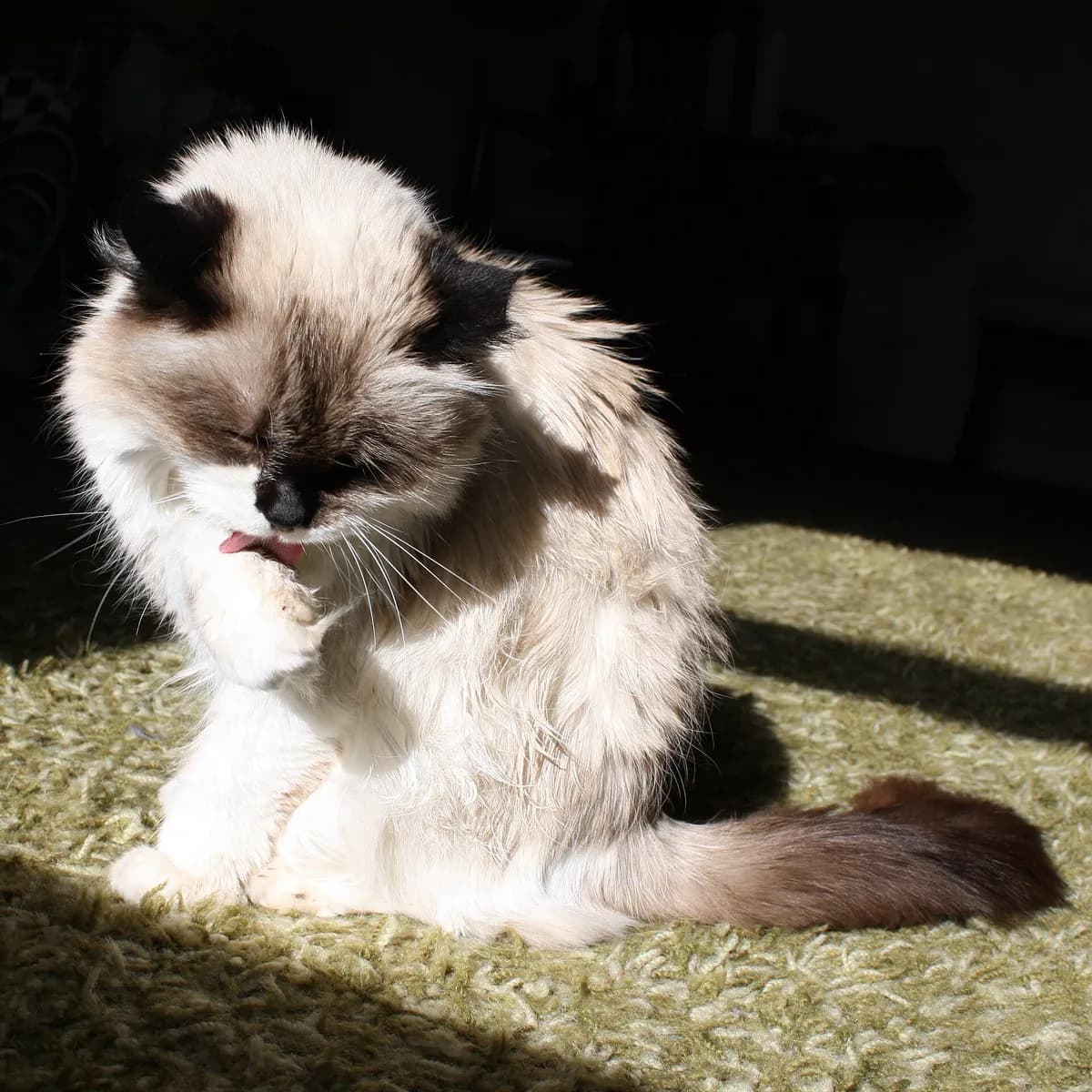
A cat's tongue is covered in tiny rear-facing hooks, so a lot of fur gets swallowed during grooming. Most of it passes through, but some lingers in the stomach. Grass is rich in insoluble fiber, which adds bulk to stool and stimulates gastrointestinal movement — both of which help fur keep moving instead of clumping into a hairball. When a cat vomits grass along with a hairball, the grass may have acted like a natural brush that helped the hairball travel upward. This fiber theory is one of the best-supported explanations, although direct experiments are still lacking.
A response to an unsettled stomach
Some cats nibble grass and then throw up, which leads many owners to assume the cat is self-medicating. But most cats that eat grass do not vomit afterward, so vomiting looks more like a side effect of rough blades irritating the throat and stomach than a goal. A cat with mild nausea may still seek out grass, and the behavior might sometimes bring relief, but it is difficult to study and is probably not the main driver of everyday grazing.
A small nutritional top-up
Grass contains folic acid, a B vitamin involved in red blood cell production and cell growth. Kittens and nursing mothers have higher folate needs, and some nutritionists suggest grazing is a way to cover that gap. A healthy adult cat on a complete commercial diet almost certainly does not need grass for folate, but this theory may help explain why young cats seem especially eager to graze.
Because it is interesting
The simplest explanation should not be ignored. Grass is a wiggly, textured, novel object that smells interesting and moves in the breeze. For an indoor cat, a grass patch is pure enrichment — something to sniff, paw, and chew. Boredom can absolutely prompt nibbling, which is one reason offering safe cat grass is such an easy win for indoor cats.
Is eating grass safe?
Grass itself is not toxic to cats, but what comes with the grass can be. Lawns treated with pesticides, herbicides, or fertilizers are risky because the cat swallows the residue along with the blade. Soil can also carry roundworm eggs and other parasites, which is a good argument for homegrown grass over garden grazing. Foxtails and similar seed-head grasses are another hidden hazard: those dry, barbed seed heads can lodge in a cat's nose, ears, or throat and cause serious infection. And many houseplants that look innocent are genuinely dangerous. Lilies are the most notorious — every part of the plant can cause rapid, often fatal, kidney failure. Sago palm causes liver failure, and tulips and daffodils cause drooling, mouth pain, and vomiting.
Never let your cat graze on lawns that may have been treated with pesticides, herbicides, or chemical fertilizers, and never assume an outdoor plant is safe because it looks like grass. Indoors, remove lilies, sago palm, tulips, and other toxic plants completely. If your cat suddenly develops frequent or forceful vomiting, lethargy, or loss of appetite — with or without grass — call your veterinarian.
Which plants are safe for cats?
| Plant | Safe for cats? | Notes |
|---|---|---|
| Cat grass (wheat, oat, or barley shoots) | Yes | Best choice; easy to grow indoors and free of chemicals |
| Unsprayed lawn grass | Mostly yes | Only if no chemicals are used; soil can carry parasite eggs |
| Foxtails and seed-head grasses | No | Barbed seeds can lodge in the nose, ears, or throat |
| Lilies (all types and all parts) | No | Can cause rapid kidney failure in cats |
| Sago palm | No | Causes liver failure |
How to offer grass the safe way
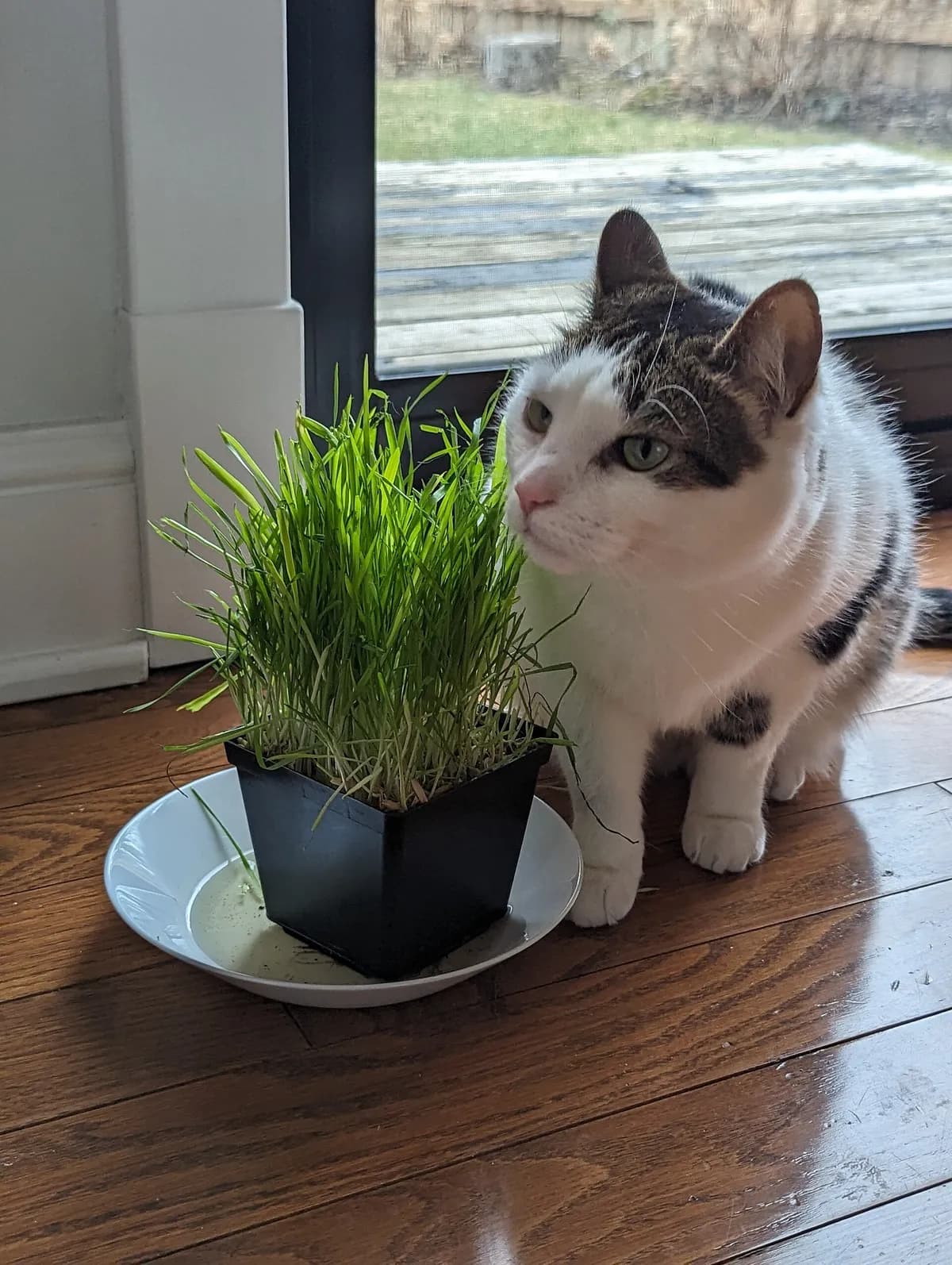
If your cat loves to graze, grow a small pot of cat grass indoors. You can buy a ready-made kit or simply purchase wheat, oat, or barley seeds from a garden store. Plant the seeds in a shallow pot of plain, fertilizer-free potting soil, keep it lightly moist, and within about a week you will have tender shoots. Place the pot where your cat enjoys exploring, keep it clean, and replace it when it yellows or gets slimy. A single patch gives your cat a safe outlet for the grazing urge and helps keep them away from plants that can hurt them.
When to call the veterinarian
Grass-eating itself is not an emergency, but these signs deserve professional attention:
- Repeated or forceful vomiting, beyond an occasional throw-up
- Lethargy, heavy drooling, or a loss of appetite after grazing
- Diarrhea or constipation that follows the habit
- Gagging, coughing, or pawing at the mouth while outdoors
- Obsessive grass-eating that pushes out normal meals
These can point to a hairball blockage, intestinal parasites, or a foreign object — problems that need veterinary help, not a new grass patch.
Frequently Asked Questions
Why does my cat eat grass and then throw up?
Grass blades are rough and can irritate the stomach, triggering vomiting in some cats. An occasional throw-up is usually harmless; frequent or forceful vomiting is not.
Do cats eat grass because they are sick?
Usually no. Healthy cats of all ages graze, so the behavior alone is not a symptom. If your cat also shows signs of illness, that combination is worth investigating.
Can grass help with hairballs?
Yes, the fiber in grass can help fur move through the digestive tract, and some cats vomit grass together with a hairball. If hairballs are frequent, ask your veterinarian about grooming routines, fiber supplements, and specialized diets.
Is cat grass the same as lawn grass?
Not exactly. Cat grass is grown indoors from wheat, oat, or barley seeds, so the shoots are soft, clean, and chemical-free. Outdoor lawn grass may look similar but can carry pesticides and parasite eggs, and it often hides toxic weeds.
Should I stop my cat from eating grass?
No — redirect rather than punish. Remove toxic plants, keep your cat off treated lawns, and provide clean cat grass indoors.
Key Takeaway
Grass-eating looks strange and turns out to be ordinary. The best available evidence describes it as an inherited, instinctive habit that can aid digestion, support hairball passage, supply a little folic acid, and simply serve as enrichment. Your job is not to stop the grazing but to make it safe: grow clean cat grass indoors, remove lilies and other toxic plants, avoid chemically treated lawns, and check with your vet if the habit ever turns into a health problem.
Share this guide
Help another cat parent find it.