The short answer
Cats bury their poop for a beautifully practical reason: it keeps their scent from traveling. In the wild, a mound of feces is like a flashing sign that says a cat lives here and exactly where it has been. Covering waste with litter hides that sign from predators and prey alike. It also sends a social message to other cats: “I am not challenging you.” For indoor cats, the same instinct switches on whenever they step into a litter box, which is why the ritual of sniffing, scratching, covering, and sniffing again looks so deliberate.
The predator-prey instinct
Domestic cats are descended from small wildcats that were both hunters and hunted. They are efficient ambush predators, but they are also small enough to be someone else’s meal. A trail of strong-smelling waste is a giveaway. If a predator is moving through the area, the smell of freshly buried feces can reveal that a cat is nearby. Hiding the waste reduces that risk.
At the same time, prey animals use smell to avoid danger. A rabbit or bird sniffing the air will avoid an area that smells strongly of a predator. By burying waste, a cat keeps the hunting ground from becoming too “loud” with its scent. This matters because a good hunting spot is valuable, and a cat would rather not scare dinner away.
This is not a conscious plan. A cat does not think, “I need to hide from the fox.” The behavior is wired into the brain. Kittens learn much of it from watching their mother, but even cats raised without that example will often scratch at the ground around waste because the movement itself is instinctive.
The instinct does not disappear when a cat moves indoors. A house cat may never meet a fox, but its brain still treats the home as a territory where its smell could attract attention. That is why even a safe indoor cat will scrape the sides of the box for a few extra seconds. The warning system is older than the litter box.
What burying communicates to other cats
Waste is not only a scent missile for predators and prey; it is also a social post for other cats. In the feline world, uncovered feces can act like a notice board. A confident cat in its own core territory may intentionally leave waste exposed to tell others, “This space is taken.” A less confident cat, or one who shares space with a more dominant cat, is more likely to cover its waste as a way of saying, “I am not here to compete.”
The paws also play a role. Cats have scent glands between their toes. Scratching the ground around waste leaves chemical marks from the paws in addition to hiding the smell of the waste. So what looks like fussy bathroom behavior is really a conversation made of scent.
Because scent is a major cat language, the litter box becomes a message center. Each cat combines hiding waste with a paw-scent note. In multicat homes, how each cat buries may shift with mood, health, and recent conflicts.
Here is a simple way to read the signals:
| What you see | What it usually means |
|---|---|
| Waste fully buried | “I prefer to stay under the radar” |
| Waste partially covered | “I am making a softer social comment” |
| Waste left uncovered | “I feel confident in this space” |
| Scratching nearby but not covering | “I am adding my paw scent to this area” |
No single behavior is “wrong.” Much depends on the cat, its history, and the other animals in the home.
Why some cats don’t bury
Some cats never bury and are perfectly healthy. A cat who lived as a stray and learned to defend resources may leave waste uncovered. A senior cat with achy joints may find it painful to balance while kicking litter. A cat with a paw injury may not want to dig. If your cat suddenly stops burying, a conversation with your veterinarian is a sensible first step before assuming it is purely behavioral.
The litter itself can also change the ritual. Many cats prefer soft, sandy, unscented litter that is deep enough to dig. If the box is too shallow, too small, or cleaned too often or not often enough, a cat may rush the job or avoid it entirely. Some cats simply dislike the feeling of certain pellets.
Kittens who grow up in competitive homes may learn that leaving waste uncovered is a way to claim space, while a cautious mother may pass on deeper burying. Personal history matters. The box may also have a lingering smell from a cleaner, or the litter may be too shallow to feel effective.
| Possible reason | What it might mean | What to try |
|---|---|---|
| Strong confidence | Feels safe and in charge | No change needed |
| Joint discomfort | Digging is uncomfortable | Upper-entry box, softer litter, vet check |
| Litter texture issue | Paws dislike the substrate | Try fine, unscented clumping litter |
| Tiny or dirty box | No good place to cover | Larger box, more frequent scooping |
| Stress in the home | Other cats or changes | Extra boxes, hiding spots, vet guidance |
Litter-box behavior and setup
Most litter-box “problems” are really setup problems. Cats want a place that is clean, quiet, and easy to access. A simple rule is one box per cat plus one extra, spread out rather than lined up in a row. You can see the details in our how many litter boxes guide, but the main idea is that a cat should never have to cross another cat’s territory to reach a toilet.
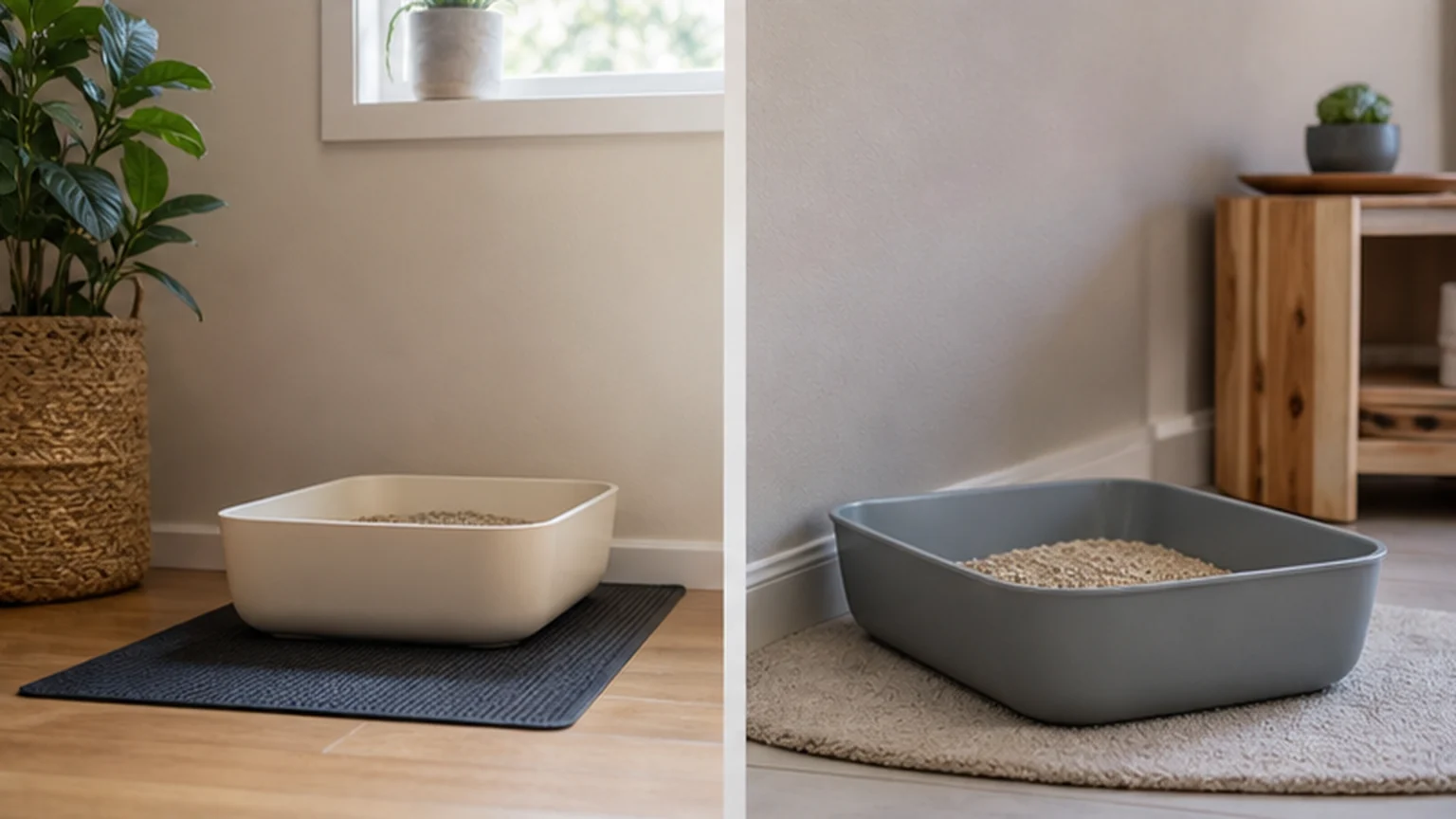
Depth matters too. Many cats like two to three inches of unscooped clumping litter so they can dig and cover without scraping the bottom. Boxes with high walls help cats who like to stand while scratching, while covered boxes can trap odors and make a cat feel trapped. If your cat is scratching the walls or floor around the box, it may be trying to tell you the box itself does not feel right.
Size matters more than style. A tiny box makes the digging ritual awkward. Some cats prefer a storage-tub-sized box; others like an open, low-sided tray. The best box is the one the cat uses without hesitation.
It can also help to think about the whole room. A litter box next to a loud washing machine or in a busy hallway puts a cat on edge. When a cat is on edge, the instinct to cover waste may become overactive or it may shut down entirely.
How to encourage consistently good litter-box habits
Start with the basics and make the box worth using. Scoop daily, wash the box with warm water and mild dish soap rather than strong cleaners, and place boxes in calm, low-traffic spots. If your cat kicks litter over the side, a high-sided box or a mat can help without forcing the cat to change its style.
Keep an eye on the social environment. If there are multiple cats, watch for one guarding the litter area. That can make another cat feel unsafe enough to skip the digging ritual or avoid the box altogether. Giving each cat a separate safe area and adding vertical space, hiding spots, and playtime goes a long way. We explore this in indoor cat enrichment.
If you need to switch litters, do it gradually by adding the new litter to the old so the cat can adjust to the texture and smell. A sudden change can be enough to make a nervous cat avoid the box altogether. Keep the same routine for a few weeks before making another change.
Never punish a cat for bathroom behavior. Yelling, spraying water, or rubbing a cat’s nose in waste creates fear and makes the problem worse. A calm, patient approach—and a visit to the vet when habits change suddenly—is always the safer route.
Also, don’t overdo the perfectionism. Some cats bury like an archaeologist; others do one scratch and walk away. As long as the cat is using the box and seems relaxed, the exact amount of covering is not important.
Frequently Asked Questions
Is it normal for a cat not to bury its poop?
Yes. Many healthy, confident cats leave waste uncovered on purpose. What matters more is whether the behavior is new, whether the cat seems comfortable, and whether it is using the box consistently.
Why does my cat scratch around the box but never cover the waste?
This is often scent signaling. Scratching spreads scent from glands in the paws. It can also mean the cat dislikes the litter texture or the box is too small.
Are indoor cats burying because they are trying to be clean?
Not exactly. Cats do not have a human idea of “clean.” They bury because the instinct to hide scent is strong, and indoor cats usually have a favorite, familiar place to do it. If a cat leaves waste uncovered, it is not being “dirty”—it is communicating.
Should I change my cat’s litter if it doesn’t bury?
Worth trying, but change slowly. Cats can be very particular. Offer a second box with a different litter and let the cat choose. Most cats prefer soft, unscented, sandy litter, but every cat is an individual.
Why would a cat suddenly bury more than usual?
A cat might bury more obsessively when it feels threatened by another animal or when the box is in an exposed place. Making the bathroom area more private and checking the social dynamics of the home usually helps.
Key Takeaway
Burying poop is one of the most common cat behaviors because it is rooted in survival. It hides scent from larger animals, keeps prey from being frightened away, and sends a signal of non-aggression to other cats. When a cat stops burying or suddenly starts, look first at the environment: litter texture, box size, cleanliness, stress, and the presence of other cats. When the setup is right, most cats will follow their instincts and take care of the rest.
Share this guide
Help another cat parent find it.