The short answer
Cats bite during petting because they become overstimulated or have a low tolerance for touch. This behavior, often called petting-induced aggression, is a natural way for your cat to say "stop." It's not spite or revenge—it's a communication signal that you've crossed a comfort threshold. By learning to recognize the warning signs and adjusting how you interact, you can enjoy affectionate moments without ending up with a sore hand.
What is petting-induced aggression?
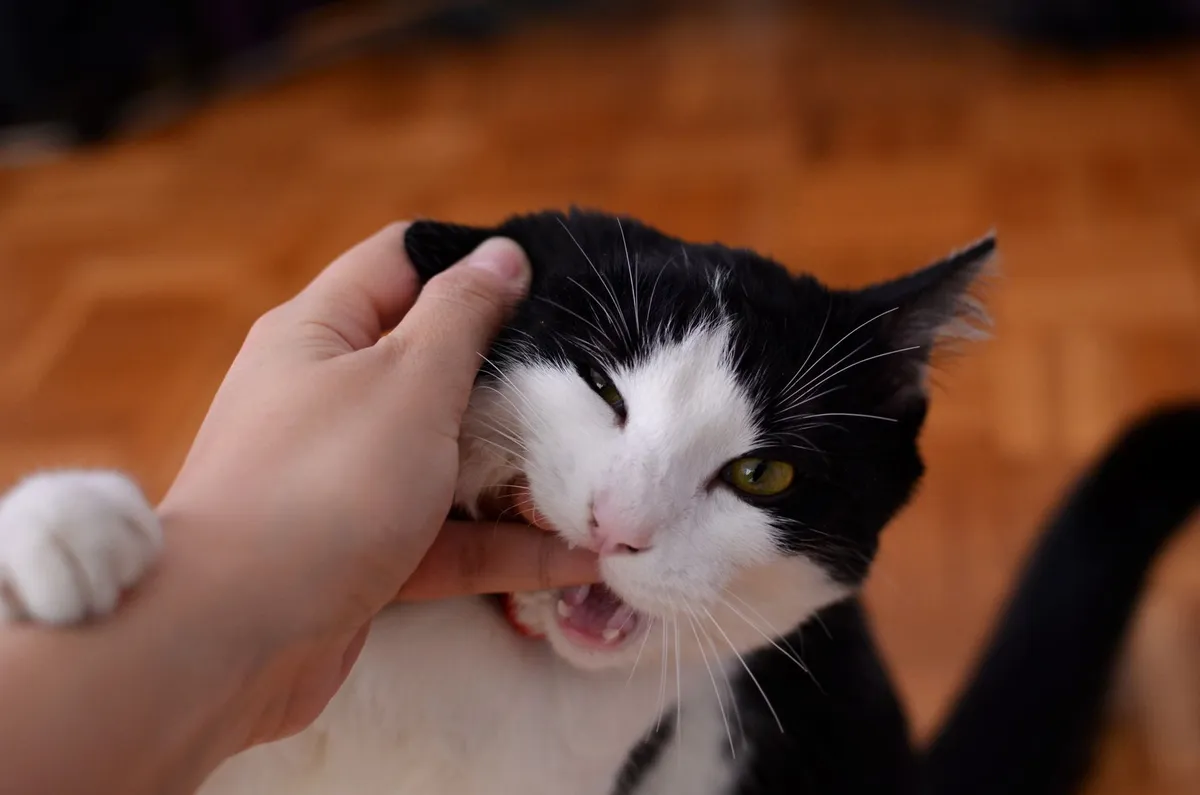
Petting-induced aggression is a specific type of feline behavior where a cat appears to enjoy being petted—purring, rubbing, and leaning into your hand—only to suddenly turn and bite or scratch. It's one of the most common reasons cat owners get bitten, and it often feels confusing because the cat seemed to be having a great time.
This behavior is not a sign of a "mean" cat. It's a normal response to overstimulation. Cats have a threshold for how much physical touch they can tolerate before it becomes uncomfortable or even painful. When that threshold is crossed, the cat's instinct is to stop the interaction quickly—and a bite is the most effective way to do that.
Why do cats do this?
Several factors contribute to petting-induced aggression:
Overstimulation
Cats are highly sensitive to touch. Their skin is packed with nerve endings, and repetitive stroking can become irritating after a while. What feels soothing for the first few minutes can quickly turn into sensory overload. The purring and relaxed posture you see early on may be genuine, but as stimulation continues, the cat's mood shifts—often without obvious warning.
Sensitive areas
Not all body parts are equally welcome to touch. Many cats are especially sensitive around the tail, belly, and hind legs. These areas are more vulnerable in nature, so a cat's instinct may be to protect them. Even cats that enjoy belly rubs are the exception, not the rule. Petting in these zones can trigger a bite more quickly than stroking the head or cheeks.
Individual tolerance
Every cat has a unique personality and history. Some cats love long, vigorous petting sessions; others prefer just a few gentle strokes. A cat that was not socialized to handling as a kitten may have a lower threshold. Age, health, and mood also play a role. A cat that is tired, anxious, or in pain may be less tolerant of touch.
Pain or discomfort
Though not always the cause, pain can make a cat more reactive to petting. If your cat suddenly becomes aggressive during petting when they used to enjoy it, it's worth considering an underlying health issue. Conditions like arthritis, dental pain, or skin irritation can make touch uncomfortable. If the behavior appears suddenly or is accompanied by other signs like hiding or changes in appetite, a veterinary check-up is a wise first step.
Reading your cat's body language
Cats rarely bite without warning. They give subtle signals that they've had enough. Learning to read these signs can help you stop before a bite happens. The table below outlines common signals and what they mean.
| Signal | What it means |
|---|---|
| Tail flicking or thumping | Irritation or overstimulation; a warning to ease up |
| Ears flattening or rotating back | Discomfort or annoyance |
| Skin rippling along the back | A sign of arousal or agitation |
| Dilated pupils (with a tense body) | Heightened arousal, possibly leading to defensive behavior |
| Head turning toward your hand | The cat is tracking your hand and may be preparing to bite |
| Sudden stillness or freezing | The cat is holding still before reacting; a clear "pause" signal |
| Low growl or a soft warning "meow" | An audible request to stop |
These signals can come in quick succession. The key is to watch for the earliest one—often a tail twitch or ear rotation—and stop petting before the cat escalates.
How to prevent petting bites
Prevention is all about respecting your cat's limits and building trust. Here are practical strategies:
Keep sessions short
Instead of petting for as long as your cat tolerates, try shorter, more frequent sessions. Even a minute of gentle stroking can be enough for many cats. End the session on a positive note, while your cat is still relaxed, rather than waiting for the warning signs.
Pet in safe zones
Focus on areas where cats typically enjoy being touched: the top of the head, under the chin, and along the cheeks. Avoid the belly, tail, and hind legs unless you know your cat enjoys it. Watch your cat's reaction and adjust accordingly.
Use the "one-and-done" rule
Some behaviorists suggest petting once or twice, then stopping and letting the cat decide if they want more. If the cat nudges your hand or leans in, continue; if they walk away or seem disinterested, respect that.
Stop at the first warning
As soon as you see a tail flick, ear flatten, or any other sign from the table above, stop petting. Move your hand away slowly and calmly. This teaches your cat that they don't need to bite to make you stop—you'll listen to their quieter signals.
Avoid sudden movements
When you stop petting, do so gently. Pulling your hand away quickly can startle the cat and trigger a chase-and-bite response. Instead, let your hand rest still for a moment, then withdraw slowly.
Provide enrichment
A bored cat may be more prone to overstimulation. Ensure your cat has plenty of toys, climbing spaces, and interactive play. This helps them release energy and reduces stress, which can make them more tolerant of handling.
Never punish your cat for biting during petting. Yelling, hitting, or spraying water will damage your bond and increase fear and anxiety. Punishment can make the problem worse, as the cat may learn to associate your presence with negative experiences. Instead, focus on prevention and positive reinforcement for calm behavior.
What not to do
Beyond punishment, there are other common mistakes that can escalate petting-induced aggression:
- Ignoring the warning signs – Pushing through the signals hoping the bite won't come usually ends badly.
- Holding the cat still – Restraining a cat that wants to leave can trigger a defensive bite.
- Assuming every cat likes the same touch – Each cat has preferences; what works for one may not work for another.
- Petting while the cat is eating or sleeping – These are vulnerable moments; a cat may react defensively.
Frequently Asked Questions
Why does my cat purr and then bite me?
Purring can indicate contentment, but it can also be a self-soothing behavior when a cat is overstimulated or stressed. A cat that is purring and then bites is not being deceptive—the purring may have started as genuine pleasure, but as stimulation increased, the cat's mood shifted. The bite is a signal that the purring cat has reached its limit.
Is petting-induced aggression more common in certain cats?
There's no strong evidence that any specific breed is more prone to it. However, cats that were not handled regularly as kittens, or that have had negative experiences with touch, may be more sensitive. Individual temperament and early socialization play a larger role than breed.
Can I train my cat to tolerate more petting?
Yes, you can gradually desensitize your cat to longer handling, but it takes patience. Start with very short sessions, always stop before your cat shows discomfort, and reward calm behavior with treats or praise. Over time, some cats extend their tolerance, but others never enjoy long cuddle sessions—and that's okay.
Should I see a vet if my cat bites during petting?
If the behavior is new, or if your cat also shows signs like lethargy, hiding, or changes in appetite, a veterinary visit is recommended to rule out pain or illness. If your cat has always been sensitive to petting, it's likely a behavioral trait rather than a medical issue.
Key Takeaway
Petting-induced aggression is a normal feline behavior rooted in overstimulation and individual sensitivity. By learning to read your cat's body language, respecting their boundaries, and keeping interactions short and positive, you can prevent most bites. Remember, your cat isn't trying to hurt you—they're trying to communicate. Listen, and you'll build a stronger, safer bond.
Sources & Scientific References (3)
Share this guide
Help another cat parent find it.