
The short answer
Yes — you can teach a cat to feel calm, and even happy, about getting into a carrier. It has nothing to do with forcing, wrestling, or "showing the cat who's boss." Cats learn through slow, predictable, positive experiences. The carrier needs to become an ordinary piece of furniture that smells like home, not a signal that a stressful trip is coming. With several weeks of counter-conditioning — treats, meals, naps, and short practice sessions — most cats will walk into a carrier on their own. The process takes patience, but it turns vet visits and moves from a wrestling match into a manageable routine.
Why so many cats hate the carrier
Cats don't hate carriers because they're stubborn or spiteful. They dislike them for two simple reasons.
First, the carrier is unfamiliar. Most cats only see theirs a few times a year, and each appearance is usually followed by something unpleasant: a jostling car ride, a strange clinic, a poke-and-prod exam. Cats are creatures of association. One or two scary experiences can teach them that the box means danger.
Second, a carrier removes control. Cats are territorial and need to scan their environment. A carrier is a small, enclosed space where the cat can't hide, run, or predict what happens next. For an animal that evolved as both predator and prey, that feels like being trapped — even when the carrier is technically safe.
The good news is that you can rewrite that association. It just takes repetition, patience, and time.
Step 1: Choose the right carrier and make it part of the house
Before any training begins, make sure the carrier is comfortable. It should be large enough for your cat to stand, turn around, and lie down in. A top-opening carrier is a useful option for vet visits because it lets a veterinary team reach in from above, which feels less threatening than being grabbed through a front door.
Then stop storing the carrier in the garage or on top of a closet. Keep it out, open, in a corner where your cat already spends time. Line it with a soft blanket that carries familiar scents, and consider a synthetic cat pheromone spray designed to promote calm. Over days, the carrier becomes part of the furniture — something your cat walks past, sniffs, and eventually ignores.
Step 2: Make the carrier the best snack spot in the house
Now you're building a food-based positive association. Start by dropping a few high-value treats near the open door. Let your cat eat them at whatever distance feels comfortable. Over several days, move the treats closer, then just inside the doorway, then to the back of the carrier.
Some cats respond even better to meals. If your cat eats wet food, place the bowl just inside the carrier. Once your cat confidently eats there, edge the bowl farther back until all four paws are inside. This can take a week — that's fine. The point is that entering is the cat's choice, not your shove.
Step 3: Practice closing the door in tiny doses
Once your cat walks in and eats confidently, start closing the door — but only for a few seconds at first. Offer a treat through the mesh, then open the door and let your cat leave immediately. Letting a cat exit on its own terms is crucial; it teaches that the door is not a trap.
Gradually build up to a few minutes with the door closed. Stay close, keep your voice calm, and keep treats coming. Some cats feel safer if a thin, breathable cloth covers the carrier, since dark, cave-like spaces feel protective. Next, practice lifting the carrier a few inches while your cat is inside, then setting it down again. Watch your cat's signals closely: flattened ears, dilated pupils, or frantic scratching mean you moved too fast. Back up a step and end the session on a positive note.
Step 4: Add movement and destination rewards
The final phase connects the carrier to motion and to a good outcome. Start by carrying the carrier into another room, opening the door, and offering a treat or favorite toy the moment your cat comes out. This teaches that the carrier leads somewhere pleasant, not just to the veterinarian.
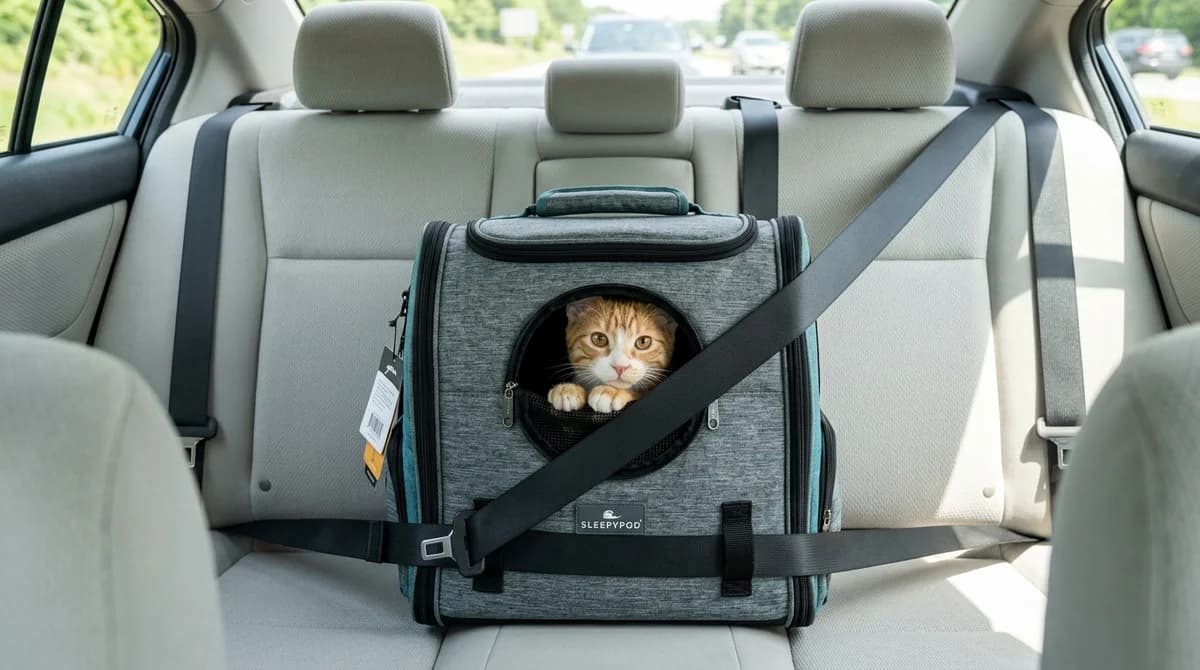
When indoor carries feel easy, move to the car. Place the carrier on the seat, strap it in with the seat belt so it can't slide, and start the engine without driving anywhere. On later sessions, take a short drive around the block and return home. Save the veterinary clinic for real visits — never use it as a practice destination, because that's usually the scariest part of the whole experience. After every practice ride, reward your cat generously.
A week-by-week carrier training plan
Here's a realistic schedule, assuming you begin several weeks before the trip you're preparing for.
| Week | Focus | Daily practice |
|---|---|---|
| Week 1 | Carrier becomes furniture | Leave the carrier open in a living space; add bedding; scatter treats near and inside; no closing the door yet |
| Week 2 | Eating inside | Place food or treats inside daily; gradually move them to the back; the cat enters willingly |
| Week 3 | Door and lift practice | Close the door for seconds, then a few minutes; lift briefly; always let the cat exit on its own |
| Week 4 | Car and short rides | Sit in a parked car; then drive around the block; reward at the destination; never end a session at the clinic |
Every cat moves at its own pace. A kitten may settle into this routine in two weeks; a senior cat with a history of stressful veterinary visits may need two months. That's normal. Progress isn't linear, and a setback usually means you moved too fast — not that you failed.
Troubleshooting common setbacks
The cat hisses or swats near the carrier. Retreat. Move the treats back to a comfortable distance and work there for several days. Fear doesn't shrink when pushed; it shrinks when the cat feels in control.
The cat eats at the front but refuses the back. Try a trail of treats leading to the rear, or a treat-dispensing toy at the back. If your carrier has a top door, leave it open as an alternative entry.
The cat panics when the door closes. Close the door while covering it with your hand or a light cloth, and open it immediately if distress is intense. Short, calm repetitions always beat a long session that ends with the cat feeling trapped.
The cat cries in the car. Some vocalizing is common from stress or displeasure. But if your cat is panting, drooling, or desperately trying to escape, reduce the intensity of sessions. A pheromone spray and a covered carrier can help. If you suspect motion sickness or your cat shows signs of illness during travel, talk to your veterinarian about proper options — that's a medical conversation, not a training one.
Never force a cat into a carrier by pushing, shoving, or dropping the cat in through the top. If your cat needs to travel before training is complete, stay calm and guide the cat gently, rear-first, through the door. Never use the carrier as punishment or a "timeout" spot, and never leave a cat inside for many hours without a litter box and water break. In the car, always secure the carrier with a seat belt so it can't slide or tip during a sudden stop; an unsecured carrier is a serious hazard. And never leave a cat in a parked car — temperatures inside the cabin can become dangerous within minutes, even with windows cracked.
Frequently Asked Questions
How long does carrier training take?
Most cats need about two to four weeks of daily practice. Cats with traumatic veterinary history may take longer. There's no fixed deadline; the cat sets the pace.
Are treats or meals better for training?
High-value treats usually work fastest. If your cat is picky, make the carrier a dedicated meal spot using the cat's regular food.
Can an adult cat with years of carrier fear still learn?
Yes, absolutely. Adult cats can form new associations; they just need more consistency and time. If fear is extreme, ask your veterinarian about whether anti-anxiety medication could support the training — that decision should always involve veterinary input.
Should I cover the carrier in the car?
Some cats calm down when the carrier is draped with a light, breathable cloth because it blocks visual triggers. Others prefer to see out. Test both in short practice drives and use what works.
Key Takeaway
Carrier training is less about forcing a cat to accept something it hates and more about patiently changing what the carrier means. Leave it out, fill it with treats and familiar scents, practice in tiny increments, and let your cat always exit on its own terms. Do this consistently, and the carrier can shift from a dreaded trap to just another cozy spot in the house.
Sources & Scientific References (3)
Share this guide
Help another cat parent find it.