The short answer
The safest way to pick up a cat is to ask first. Approach calmly, let them sniff you, and check their body language. If they seem relaxed and interested, place one hand under their chest just behind the front legs and use the other hand to support their hindquarters. Lift slowly, bring them close to your chest, and keep your grip gentle but secure. To set them down, reverse the process and let their front paws touch the ground first. Never lift a cat by the scruff, armpits, front legs, or tail.
Why Proper Lifting Matters
Cats are both predator and prey, which means they are hardwired to react quickly when they feel unsteady. A poorly executed lift can make a cat feel trapped or unsafe, and an unsafe cat is more likely to squirm, scratch, or bite. Good lifting technique protects both you and your cat. When you support the two heaviest parts of a cat's body—the chest and the back end—you keep their spine stable and their weight balanced. That reduces the chance of injury to your cat's muscles or joints and helps them feel secure enough to stay calm.
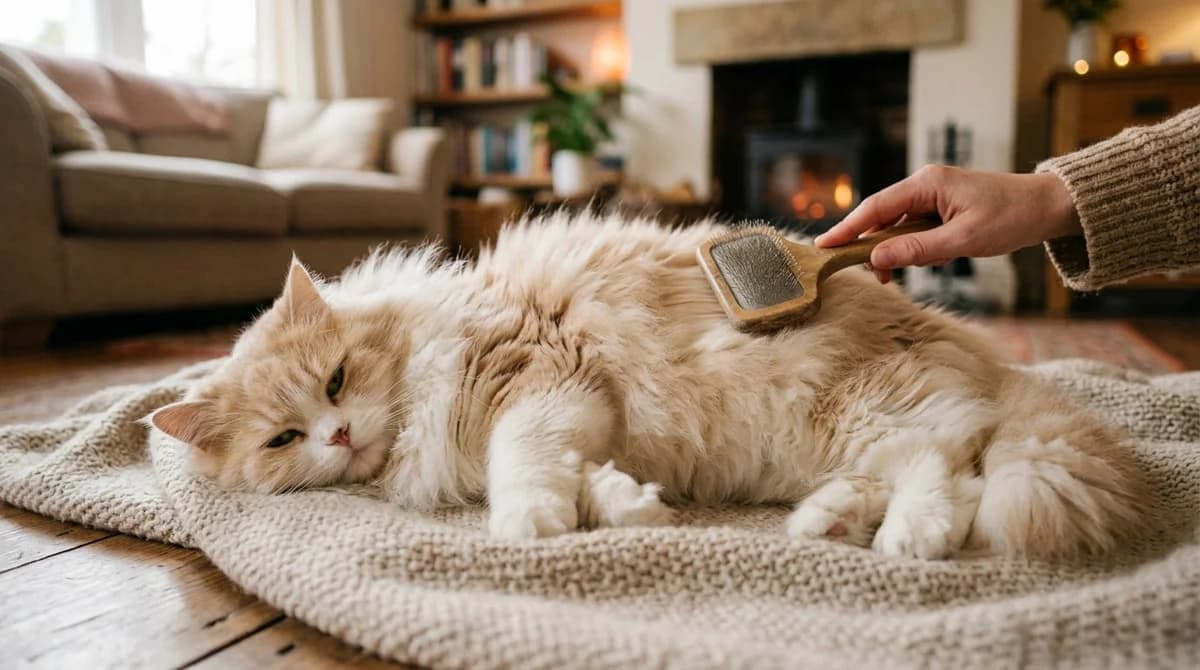
Proper handling also builds trust. Every time you pick up your cat in a way that feels predictable and comfortable, you reinforce that being in your arms is a good place to be. This is especially important for routine chores like nail trims and brushing. For advice on making those sessions easier, see our guides on how to brush a cat's fur and how to trim cat claws safely.
Step 1: Read Your Cat's Body Language
Before you even reach for your cat, give them a chance to say yes or no. A cat that wants to be picked up usually approaches you, rubs against you, or stands tall with a relaxed tail. A cat that does not want to be handled might crouch, flatten their ears, flick their tail, or move away. Respect that signal.
Here is a quick comparison of common body language cues:
| Comfortable / Willing | Uncomfortable / Unwilling |
|---|---|
| Tail held high or softly curled | Tail low, tucked, or thumping |
| Ears forward or neutral | Ears flattened to the sides |
| Relaxed, soft eyes | Dilated pupils or hard stare |
| Approaching and rubbing | Crouching, hiding, or retreating |
| Vocalizing in a quiet, relaxed way | Growling, hissing, or yowling |
| Body loose and wiggly | Body tight and stiff |
Even if your cat shows some welcoming signs, glance at their whole body. A cat can be happy to greet you but not in the mood to be lifted. If your cat walks away, do not chase them. You can try again later. For more tips on helping your cat feel at ease in your home, check our guide to feline enrichment.
:::caution If a cat seems tense, is hissing, or has flattened ears, do not pick them up. Forcing the issue can trigger a defensive bite or scratch, and it teaches the cat that being handled is scary.
Step 2: Approach and Hand Placement
Once you have a clear "yes," approach from the side rather than from directly overhead, which can feel like a predator swooping in. Keep your voice low and calm. Make eye contact briefly, then look away to show you're not a threat.
Stand or kneel close beside the cat. Slide one hand under their chest, positioning your palm so it supports the breastbone just behind the front legs. Your fingers should rest on the front of the chest, not around the throat. Then take your other hand and slide it under their hindquarters, cupping the pelvis so their back legs are tucked and supported.
Thinking of the body as two supported points—one at the chest and one at the rear—does two things. It spreads the cat's weight evenly across both of your hands, and it keeps their spine in a neutral, relaxed position. This is the same principle used in veterinary handling guidelines for stress-reduced care.
Step 3: The Lift and Support
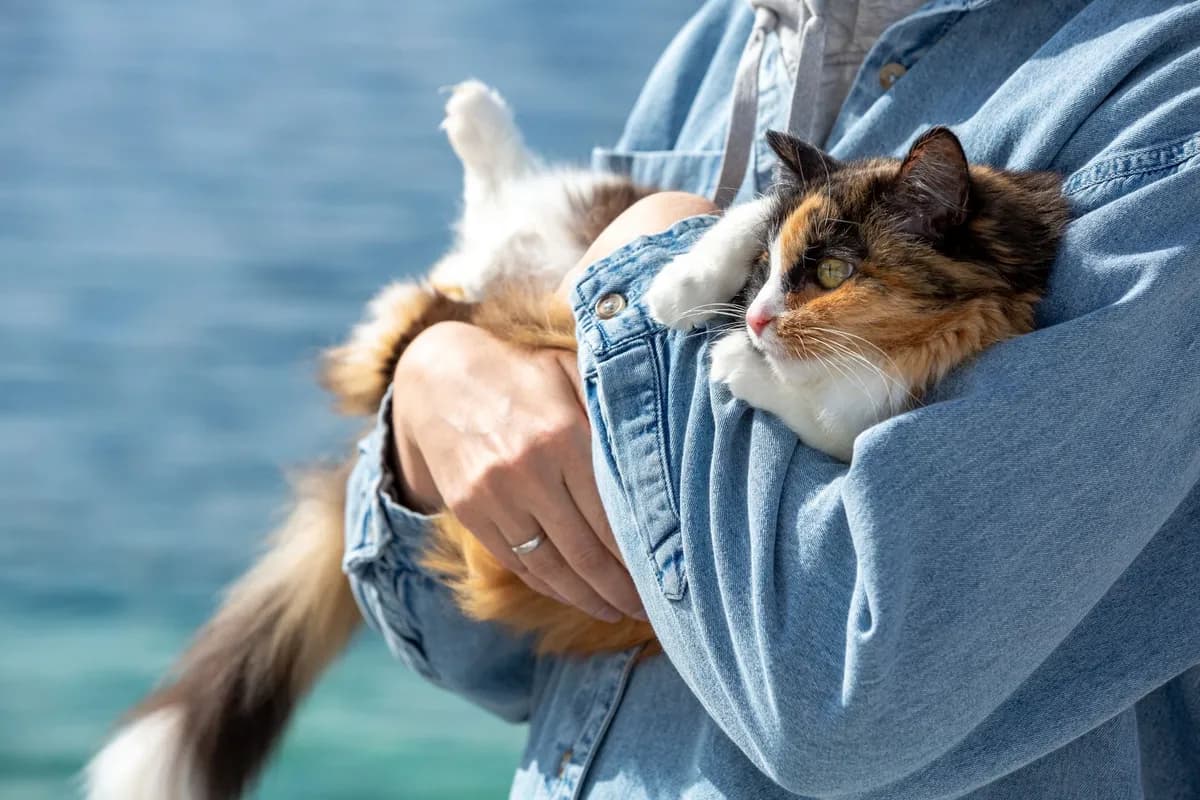
With both hands in position, lift the cat slowly and steadily. Do not jerk, squeeze, or scoop them abruptly. Raise them just far enough to bring their chest against your body. Once the cat is close, you can cuddle them with the forearm of your chest-supporting arm for extra security, while your other hand continues to support their rump.
Your body should be the "safe perch." Keep the cat upright or slightly angled, never upside down or dangling. Many cats feel more secure when their feet have something near them to brace against, so letting them rest their front paws on your forearm or shoulder is fine. The key is to maintain continuous support. If the cat makes a move to jump, don't hold on tighter; gently let them down instead.
A well-supported cat often will hang over your arms like a relaxed loaf, with their tail loosely wrapped. If they start to squirm, it's a sign they want down. Do not "hold on" and force them to stay.
How to Set Down Safely and What to Avoid
Setting a cat down is just as important as picking them up. Lower the cat in the same controlled motion you used to lift. Move them toward a stable surface like the floor or a cat tree, and let their front paws touch first, allowing them to step out of your hands naturally. Let go of the hindquarters only once the cat has committed to standing. Never drop, toss, or place a cat onto an unstable surface like a counter edge.
Avoid the common habits that can stress or hurt a cat:
- Never scruff. Lifting a cat by the loose skin at the back of the neck is sometimes called "mother-cat style," but adult cats do not respond the same way kittens do. Scruffing triggers fear and stress, not calm; it can damage trust and can injure the neck. The only exception is a trained veterinary professional using a gentle scruff for a specific medical procedure.
- Never lift by the front legs, armpits, or tail. These supports put all the weight on fragile joints and can cause serious injury.
- Don't dangle or carry a cat like a baby unless the cat has learned to love it; for most cats this exposes their belly and removes hindquarter support, which triggers insecurity.
- Don't hold a struggling cat more tightly. This teaches them that being picked up is a trap. Let them down and try another time.
:::caution If your cat has recently had surgery, is injured, is pregnant, or has a known medical condition, do not pick them up at all unless a veterinarian has given you specific instructions. A gentle lift that feels fine to a healthy cat could harm a fragile one.
When Handling Is Not a Good Idea
There are days when even the friendliest cat wants to be left alone. It's a good idea to skip the pick-up when the cat is eating, using the litter box, sleeping deeply, hiding, or tending to kittens. Cats also may not want to be held right after a stressful event like a move, a vet visit, or the arrival of a new pet.
Age matters too. A kitten should learn to be handled early, but in short, gentle sessions. A senior cat with arthritis may find the feeling of being lifted uncomfortable, so go even slower and support the joints fully. If your cat becomes aggressive or anxious every time you try to handle them, this isn't a sign that you need a different grip; it's a sign that you need a different strategy. Consult a cat behaviorist or work with your veterinarian to rebuild trust.
Frequently Asked Questions
Is it OK to pick up a cat by the scruff?
No. Scruffing is not a calm-inducing technique for adult cats. It can cause fear, defensiveness, and pain, and it can damage the bond between you and your cat. Let your vet or a veterinary professional use scruffing only when it is strictly necessary for short procedures.
How do I get my cat to like being picked up?
Start by pairing handling with rewards. Gently touch your cat for a few seconds, then give a treat. Gradually work up to supporting the chest and hindquarters, and later, short lifts. Always stop before the cat shows stress, so the experience stays positive.
Should I pick up my cat like a baby?
Few cats enjoy a full "cradle" hold with their belly exposed and no support for the hindquarters. If you want a cuddly hold, keep the cat's body upright against your chest with their rump supported. Some cats do like resting in a crook of your arm like a baby, but that comes with familiarity, not force.
What should I do if my cat squirms while being held?
Squirming is a clear request to be put down. Lower the cat gently and calmly, then move away. Pay attention to what triggered the squirm—maybe the hold was too tight, too high, or too long—and adjust your approach next time.
Key Takeaway
Picking up a cat isn't about muscle; it's about trust. Read the cat's body language, support the chest and hindquarters, lift gently, and put them down just as carefully. When you respect a cat's willingness and always offer a secure hold, you turn a moment of vulnerability into a moment of connection.
Share this guide
Help another cat parent find it.