The short answer
Cats handle hot weather differently than humans do. They sweat only through their paw pads and rely on grooming for evaporative cooling, so they depend heavily on their environment to stay comfortable. The best summer strategy is simple: offer plenty of fresh water, keep the air moving, create cool surfaces to lie on, and give every cat a shady, quiet retreat. Watch high-risk cats closely, move playtime to cooler hours, and never leave a cat in a parked car or an unventilated room. If you notice signs of overheating, act quickly — heatstroke can progress fast.
Why cats feel the heat more than you think
Cats evolved in hot, arid regions and are genuinely good at tolerating warmth — that's why they love a sunbeam in winter. But summer is different. Their cooling system has limits:
- Sweating: Cats have sweat glands mainly in their paw pads, which is nowhere near enough surface area to cool a whole body.
- Grooming: Licking spreads saliva over the fur; as it evaporates, it provides mild cooling. That's why you'll see a hot cat grooming more.
- Panting: Cats can pant to release heat, but they do it far less efficiently than dogs, and panting in a cat is also a sign of stress, pain, or fever.
A cat's normal body temperature sits between roughly 100.5°F and 102.5°F (38–39°C). Once it rises above 103°F (39.4°C), the cat is overheating. Above 105°F (40.6°C), heatstroke becomes a genuine emergency that can damage organs quickly.
10 ways to keep your cat cool this summer
1. Put water everywhere
Dehydration makes overheating worse, and cats are famously picky about their water. Set out several bowls around the house, away from litter trays, and refresh them daily. Many cats drink more from a running fountain. Adding a couple of ice cubes keeps water chilled and gives some cats an entertaining toy — though not all cats like icy water, so keep a room-temperature bowl too.
2. Create cool zones
Cats will find the coolest spot in the house on their own — usually a tile floor, the bathroom sink, or a shady corner. Help them by making those spots inviting: a ceramic tile or a cooling mat placed in a shaded room works well. Leave the choice to the cat; don't force them onto a wet towel or a mat they don't want.
3. Move the air
Air conditioning is the single most effective tool for cooling a home. If you don't have AC, position a fan to create airflow in the room your cat uses most — but don't aim it directly at them all day, since they can't sweat to take advantage of it the way we do. Keep windows open (with secure screens) during cooler parts of the day, and shut curtains or blinds during peak sun.
4. Brush, don't shave
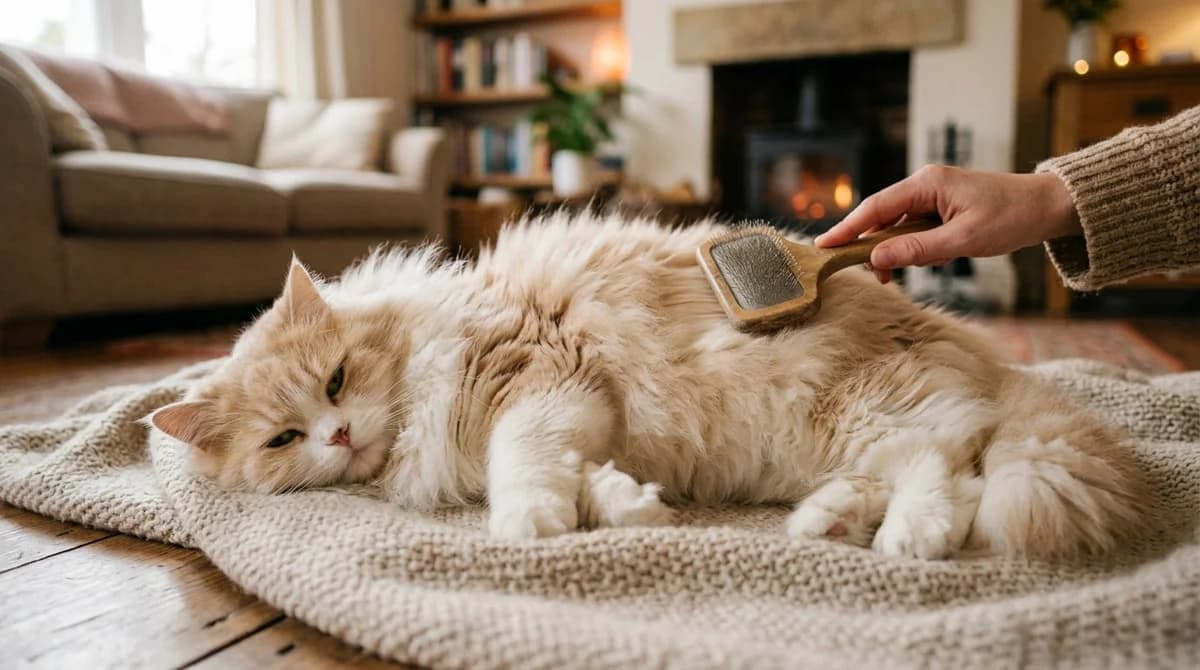
A heavy winter coat traps heat, but shaving is rarely the answer. Fur also insulates against heat and protects skin from sunburn. Instead, brush daily (or several times a week) to remove loose undercoat and dead hair. For long-haired cats, a light sanitary trim around the belly can help, but there's no need to take it all off unless a vet recommends it.
5. Block the midday sun
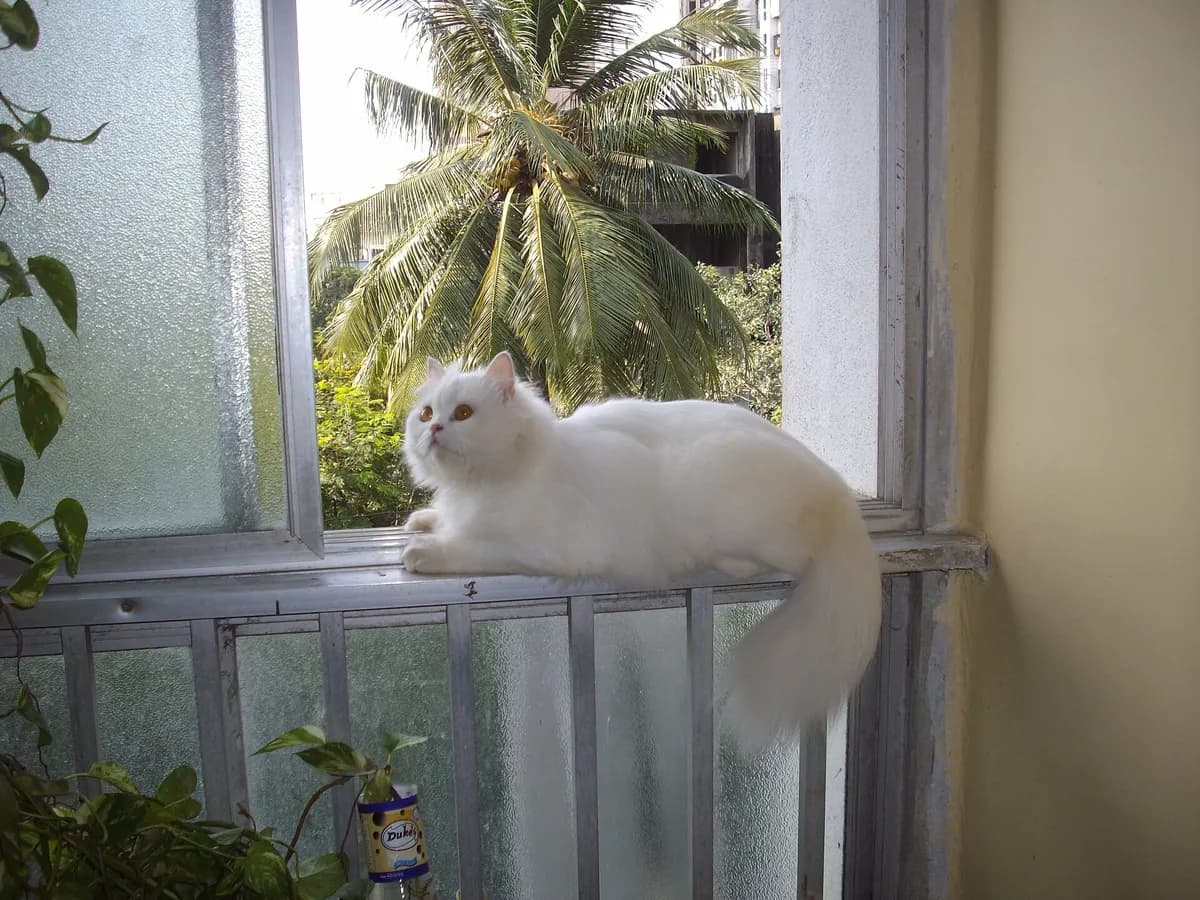
That sunny window ledge is a favorite spot, but when the mercury climbs, direct sun can turn a room into an oven. Close curtains and blinds during the hottest part of the day, and keep the cat's bed or favorite perch out of direct sunlight.
6. Offer safe frozen snacks
Some cats love a frozen treat: an ice cube, a tiny piece of frozen fruit (cats can't taste sweetness, but some like the texture), or low-sodium chicken broth frozen into cubes. Use plain, unsalted broth with no onion or garlic — both are toxic to cats. Offer these as occasional treats, not a meal replacement.
7. Move playtime
Indoor cats need exercise, but midday zoomies generate body heat. Schedule interactive play in the early morning or evening, when the house is cooler. End play if your cat starts panting — that's their cue that they've had enough.
8. Keep outdoor cats safe
Outdoor cats need a way out of the sun. Ensure they can always get back inside, or provide a shaded, ventilated shelter with water. During heatwaves — when temperatures exceed 90°F (32°C) — the safest option is to keep cats indoors entirely.
9. Watch the metal and the pavement
If you use a carrier, never leave it in direct sun; metal carriers can bake. If you walk your cat on a harness, test surfaces with the back of your hand — if it's too hot to touch for five seconds, it can burn paw pads. Better yet, walk only in the early morning or evening, or skip the walk on very hot days.
10. Know your cat's risk level
Kittens, senior cats, overweight cats, long-haired breeds, flat-faced breeds, and cats with heart or respiratory conditions overheat faster. If your cat fits any of these groups, keep a closer eye on them and take preventative measures earlier — not when they already look uncomfortable.
Signs your cat is overheating
Cats hide discomfort well, so you have to look for subtle clues. Here's what to watch for:
| Sign | What it looks like | What to do |
|---|---|---|
| Panting | Open-mouth, fast breathing | Move to a cool room, offer water, check again in 10 minutes |
| Drooling | Excess saliva, damp chin | Begin cooling measures and call your vet |
| Lethargy | Unusually still, hiding, no interest in play | Offer water, monitor closely |
| Red or pale gums | Gums look bright red or very pale | Contact your vet |
| Unsteady walking | Wobbling, weakness, stumbling | Cool gently and call your vet immediately |
| Vomiting | Throwing up with no other cause | Call your vet right away — this can be heatstroke |
A little panting after an intense play session is normal and should resolve in a few minutes. Panting that continues, or any combination of the signs above, is a reason to take action.
Cool-down tactics: what works and what to skip
Not all quick fixes are safe. Here's a quick guide:
| Tactic | Verdict | Notes |
|---|---|---|
| Air conditioning | ✅ Best option | Keep it comfortable, not arctic |
| Cooling mat | ✅ Good | Place in a shaded corner; let the cat choose |
| Damp towel to lie on | ⚠️ Optional | Some cats love it, some hate it; never leave a wet towel on a cat — it traps heat as it dries |
| Ice cubes in water | ✅ Fine | Make sure the bowl is heavy enough not to tip |
| Full water bath | ❌ Avoid | Stressful, and wet fur can mat and hold heat |
| Shaving the whole coat | ❌ Avoid | Removes sun protection and insulation |
| Alcohol rub or ice packs | ❌ Never | Can damage skin or cause shock |
When heat becomes an emergency
Act now if you suspect heatstroke. Heavy panting, drooling, bright red gums, vomiting, a wobbly walk, or collapse are red flags. Start gentle cooling right away — move the cat to a cool, shaded room, offer a small amount of room-temperature water, and wipe their paw pads, ears, and inner thighs with a damp cloth. Do not use ice water, do not submerge them, do not cover them with a wet blanket, and do not force water into their mouth. Then call your vet before or while you travel — even if your cat seems to recover, organ damage can appear hours later.
If you're ever unsure, trust your instinct: a cat that looks off in hot weather deserves a vet's attention.
Frequently Asked Questions
Should I shave my cat for summer?
No — shaving is rarely necessary and can be harmful. A cat's coat insulates against both cold and heat, and it protects against sunburn. Regular brushing to remove loose fur does far more good than a shave. Exceptions exist for matted long-haired cats, but those should be handled by a professional groomer or vet.
Can cats drink ice water?
Yes, most cats can drink ice water safely. Some don't like it, so offer both chilled and room-temperature bowls. Ice cubes in a heavy, stable bowl are fine; if your cat is an aggressive chewer, use larger cubes or crush them to avoid tooth damage.
Do cats need sunscreen?
White-eared, pale-nosed, and hairless cats can sunburn, especially on ear tips and the nose. Use a pet-safe sunscreen made for cats, and avoid human sunscreens — many contain zinc oxide, which is toxic if licked. The simplest protection is keeping sun lovers out of peak rays.
What temperature is too hot for a cat?
There's no single magic number, but when the thermometer climbs above 90°F (32°C), precautions matter. Indoors, stuffy rooms with no airflow can become dangerous even at lower temperatures. A practical rule: if you feel hot and uncomfortable, your cat does too.
Is panting always a bad sign?
Not always. A few minutes of open-mouth breathing after vigorous play is normal. But a cat that pants at rest, or pants continuously, is either overheated or stressed and deserves attention — especially flat-faced breeds like Persians, which struggle to pant effectively at all.
Key Takeaway
Keeping a cat cool in summer is less about forcing a single solution and more about giving them options: fresh water in multiple places, a cool room to retreat to, airflow, and shade. Brush away loose fur, shift playtime to cooler hours, and never leave a cat in a car or hot, unventilated space. Know the early signs of overheating, and if you see them, cool gently and contact your vet — heatstroke moves fast, but with preparation, it's almost always preventable.
Share this guide
Help another cat parent find it.