The short answer
Yes, you can give a cat a bath — and sometimes it's genuinely necessary — but for most healthy cats, baths are rare events, not routine care. The secret to a successful bath is preparation, not technique. Gather everything before any water runs, keep the water lukewarm and shallow, use a shampoo made specifically for cats, and keep the whole session under ten minutes. Then dry your cat thoroughly in a warm room before letting them wander off. Done that way, a bath can be a manageable, low-drama task instead of a wrestling match.
Do cats even need baths?
Cats are fastidious self-groomers. Their barbed tongues and natural coat oils keep fur clean, so a healthy adult cat rarely needs a full bath. Bathing too often — more than every few weeks — can strip natural oils and leave skin dry and itchy.
That said, there are legitimate reasons for the occasional bath:
- Long-haired cats sometimes get litter, feces, or food stuck in their fur that they can't remove alone.
- An outdoor cat might come home with mud, sap, or a strong-smelling substance on their coat.
- A greasy, matted coat on a long-haired cat can be easier to deal with after a gentle bath.
- A veterinarian may recommend a specific bathing routine for a skin condition; in that case, follow their instructions rather than a generic guide.
- Some allergy-prone households want to reduce dander, though regular brushing helps more than bathing in most cases.
If none of these situations apply, a bath is optional. Many indoor cats go their whole lives without one.
Try the no-water options first
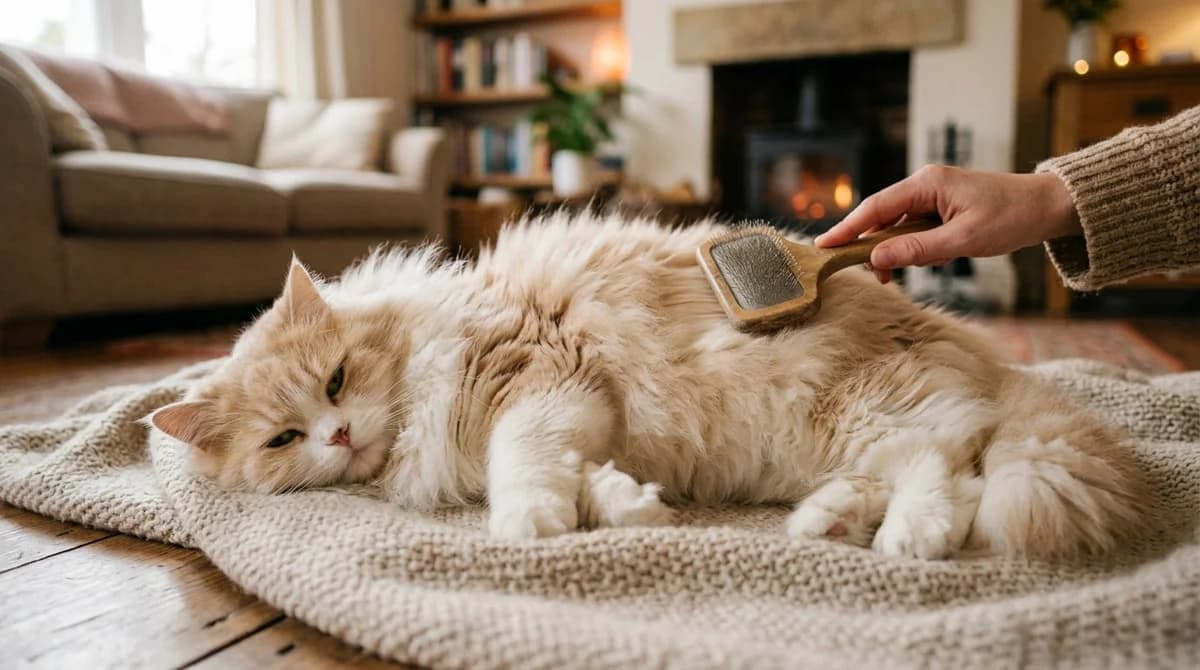
Before committing to a full bath, consider the gentler tools. Most 'dirty cat' problems respond to brushing, not bathing, because a thorough brush lifts out loose fur, dirt, and dander. For small messes like muddy paws or a sticky tail, a warm, damp washcloth is often enough.
Waterless cat shampoos and grooming wipes are a reasonable middle ground for spot cleaning and for cats who become genuinely stressed by water. Keep them on hand, and you may find a real bath is rarely needed at all.
What you'll need: assemble the bath kit first
Nothing turns a calm bath into chaos faster than realising halfway through that you forgot a towel. Collect everything before the cat comes anywhere near water:
- Cat-specific shampoo (never human shampoo, dish soap, or dog shampoo)
- Two or three large, absorbent towels
- A plastic cup or small pitcher for rinsing
- A soft washcloth for the face
- Cotton balls to protect the ears
- A non-slip mat or a flat towel on the bottom of the tub or sink
- A helper, if your cat is strong or easily startled
- A generous pile of treats
Brushing ahead of time also helps: removing loose fur and tangles makes the wash quicker and reduces mats later.
Use only shampoo formulated for cats. Human shampoo, dish soap, and dog shampoo are made for different skin and can dry out a cat's coat and cause irritation. When in doubt, check the label for "cat shampoo" and nothing else.
Prepare the room, the water, and the cat
Choose a small, warm room and close the door and windows. Warmth matters: a chilly cat is a struggling cat. Fill the tub or sink with just two to three inches of water — enough to wet the belly, not enough to feel like swimming. Test the temperature with your wrist; it should feel like comfortable warm bath water, around 37-38°C (98-100°F). When in doubt, aim slightly cooler rather than hotter.
Put the non-slip mat in the water. Brush your cat's coat thoroughly, and if possible trim their claws a day or two in advance. Just before the bath, place a cotton ball gently in each ear to keep water out. Keep your voice low and steady, and if the sound of running water frightens your cat, fill the tub before you bring them into the room.
Test the water temperature with your wrist before lowering your cat in. It should feel pleasantly warm — roughly 37-38°C (98-100°F). Water that is too hot can burn sensitive cat skin, and cold water adds stress.
Step-by-step: how to wash a cat
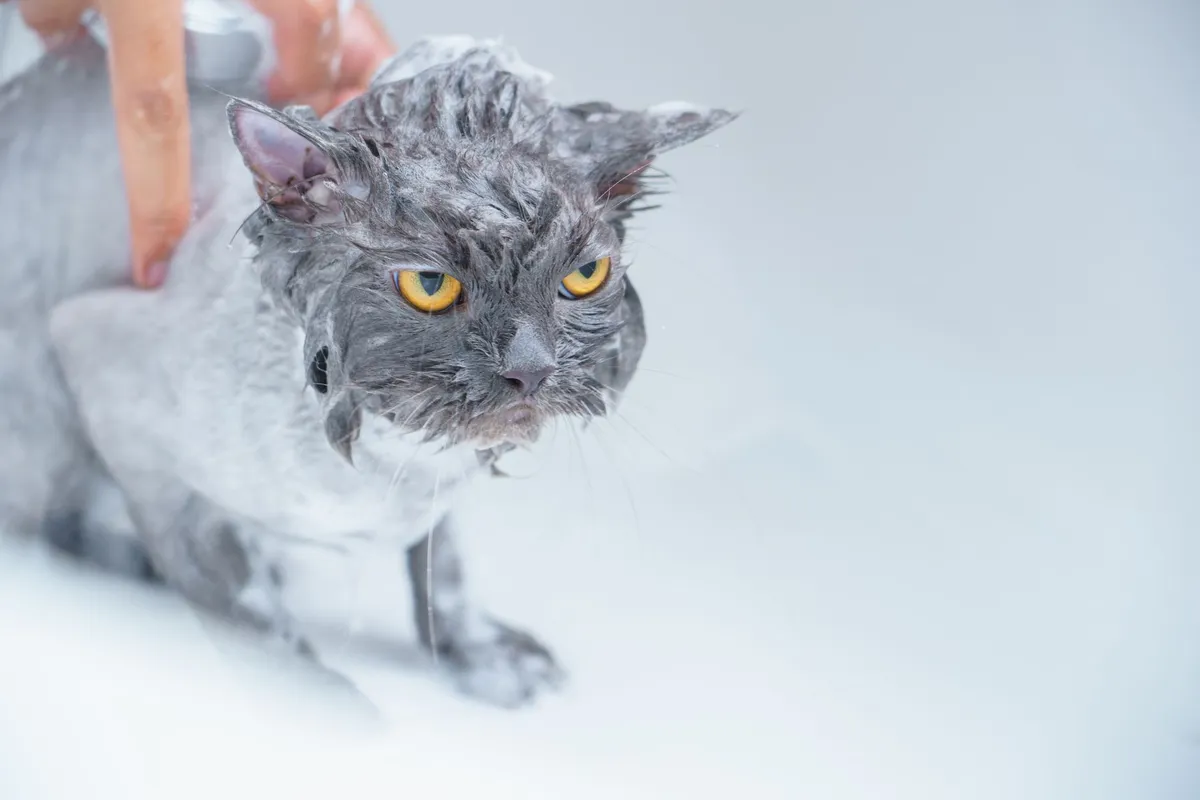
Now for the bath itself. Move slowly and speak calmly. The goal is a five-to-eight-minute session, not a luxurious spa treatment. If your cat becomes truly panicked — ears flat, hissing, scrabbling to escape — stop the bath rather than pushing through.
| Step | What to do | Why it helps |
|---|---|---|
| 1. Lower your cat in gently | Place the cat in the water hind end first, supporting the chest with your non-dominant hand. | Entering backward feels less threatening and keeps the head facing the exit, which cats prefer. |
| 2. Wet the coat from the back down | Use the cup to scoop water and pour it over the shoulders and back. Avoid the head and ears. | Pouring from the back mimics grooming and keeps the most sensitive areas dry. |
| 3. Shampoo sparingly | Apply a small amount of cat shampoo and work up a gentle lather from neck to tail. | A little shampoo goes a long way; heavy lather is harder to rinse and can irritate skin. |
| 4. Clean the face with a washcloth | Wipe the forehead, cheeks, and chin with a damp cloth. Never pour water over the head. | The eyes, ears, and nose stay dry and protected. |
| 5. Rinse thoroughly | Scoop clean water and pour slowly over the coat until no suds remain. | Leftover shampoo residue can cause itching and flaking. |
| 6. Squeeze, lift, and wrap | Gently squeeze water from the fur with your hands, then lift the cat into a waiting towel. | Removing excess water lets the towel do its job much faster. |
Talk softly throughout and give a treat right after step 6, even if the cat is vocal about their opinion. Repeated positive experiences change a cat's feelings about baths over time.
If your cat is panicking — hissing, biting, ears flattened, or fighting to escape — end the bath immediately. Never force a frightened cat to stay in water. Let them calm down and use a warm washcloth, waterless shampoo, or a professional groomer instead.
Drying done right
Drying is the most rushed step and the one most likely to leave a cat chilled. Wet fur loses body heat quickly, so stay in the warm room until the job is complete.
Wrap the cat in a towel with their head peeking out, then gently press and squeeze the towel through the fur. Avoid vigorous rubbing, which tangles long coats and irritates the skin. When the first towel is soaked, swap in a fresh one and repeat. For long-haired cats, pass a wide-tooth comb through the drying fur to stop small mats forming.
A hairdryer is optional. Some cats tolerate it; many don't. If you try one, use the lowest heat and speed, keep it moving constantly, and never aim it at the face. If your cat flinches or flees, switch it off and stick to towels.
Once the coat is damp rather than wet, let your cat finish in a warm, draft-free room. Cats are excellent self-dryers, and a little remaining moisture will be groomed away. Finish with treats, fresh water, and a quiet place to recover.
When your cat says "no"
Some cats cannot tolerate a bath no matter how carefully you prepare, and that is not a failure on your part. Cats have strong instincts around water, and forcing the issue damages trust. If your cat escalates to biting or frantic escape attempts, stop immediately.
Reach for waterless shampoo, grooming wipes, a professional groomer experienced with cats, or simply a more frequent brushing routine. In most cases, one of these handles the problem and the bath can be skipped entirely.
Frequently Asked Questions
How often should I bathe my cat?
Healthy cats rarely need baths at all. When a bath is genuinely needed — say, a long-haired cat with a messy coat — it should be an occasional event, no more than once every four to six weeks. More frequent bathing strips the natural oils that keep cat skin and coats healthy.
Can I use human shampoo or dish soap?
No. Human shampoo and dish soap are formulated for different skin and can dry out a cat's coat or cause irritation. Dog shampoo is not a safe substitute either, because dog skin differs from cat skin. Look for a shampoo labelled specifically for cats.
What if my cat absolutely refuses to go near water?
Do not force it. Use grooming wipes, waterless shampoo, or a good brushing session instead. If the coat is badly matted or very dirty, a professional groomer who works with cats is a far better option than a battle at home.
How long should the whole bath take?
Plan for five to eight minutes from the moment your cat enters the water to the moment they are wrapped in a towel. Longer sessions increase stress and chill the cat, so speed — built on good preparation — is a feature, not a bug.
Is it safe to bathe a kitten?
Very young kittens should not be fully bathed unless absolutely necessary; they lose heat quickly and are constant self-groomers. For a messy young kitten, a warm damp washcloth is the gentler choice. If you have concerns, ask a veterinarian.
Key Takeaway
Bathing is rarely a routine part of cat care, so treat it as an occasional event reserved for messes a cat cannot handle alone. Prepare everything in advance, keep the water warm and shallow, use cat-specific shampoo, move through the steps calmly, and never skip the drying phase. Most importantly, if your cat is overwhelmed, stop — there is almost always a gentler alternative, and protecting your cat's trust matters far more than a perfectly clean coat.
Share this guide
Help another cat parent find it.