The short answer
Pick an unscented, clumping litter with a fine, sand-like texture. It's the closest match to what most cats instinctively want to dig in, and it makes daily scooping quick and effective. Keep the depth around 2–3 inches (5–8 cm) and scoop at least once a day.
But the truly right litter is the one your cat will actually use. Some cats love wood pellets; others refuse anything that isn't fine clay. Start with the evidence-based default, then listen to your cat. A box they dislike can trigger house-soiling, one of the most common behavioral reasons cats end up in shelters. When testing new litters, transition gradually — or offer two boxes with different litters side by side and let your cat vote with their paws.
The box is also your best early-warning system for urinary health: daily scooping makes it easy to spot changes in clump size, frequency, or blood before they become emergencies.
Why your cat's opinion matters more than yours
Cats are fastidious by nature. Their wild ancestors buried waste to hide scent from predators, and that instinct runs deep in house cats. But not just any material will do. Cats have strong preferences about texture especially: fine, sandy granules generally win because they feel most like the loose soil cats would use outdoors. Coarse pellets or sharp crystals can feel wrong under the paws and make digging awkward.
Scent matters too. A cat's nose is far more sensitive than ours, and heavily perfumed litter can be genuinely off-putting. That's why feline behavior experts nearly always recommend unscented litter. A "fresh" fragrance that smells nice to you can read as a chemical cloud to a cat — and some cats respond by avoiding the box entirely. The practical lesson: you're shopping for the cat, not yourself. Great odor control is worthless if the cat won't step into the box.
Litter types, compared
Every litter falls into one of a few broad families. Here's how the main types stack up on the things owners and cats care about most.
| Litter type | Texture | Odor control | Dust level | Best for | Watch out for |
|---|---|---|---|---|---|
| Clumping clay (sodium bentonite) | Fine, sand-like | High when scooped daily | Low to moderate | Most adult cats; easy waste removal | Not for very young kittens; heavy bags |
| Non-clumping clay | Fine to coarse | Moderate; full changes needed often | Moderate | Budget-conscious owners | Weaker odor control; frequent changes |
| Silica gel crystals | Small hard beads | High | Low | Low-dust households; busy owners | Some cats dislike the texture; noisy under paws |
| Wood or pine pellets | Coarse pellets that break into sawdust | Moderate | Low | Eco-conscious owners | Some cats refuse pellets; can track |
| Paper pellets | Soft pellets | Moderate | Very low | Kittens, seniors, recovering cats | Weaker odor control; frequent changes |
| Corn, wheat, grass, or walnut | Fine to grainy | Varies by brand | Low to moderate | Owners wanting plant-based options | Quality varies; wheat and corn can be allergens |
If you're torn between two types, buy small bags and run a side-by-side test with two litter boxes. Whatever the cat uses and covers consistently is your answer.
How to judge a litter before you buy
A few features separate good litters from frustrating ones:
- Unscented is the safest default. Skip anything with perfumes or heavy deodorizers. Odor control should come from absorbency and your scooping routine, not fragrance.
- Low dust helps everyone. Dust irritates airways — your cat's and yours. Cats with asthma or other respiratory conditions especially benefit from low-dust options like paper pellets or quality clumping clay. Pour some into a box and watch how much dust kicks up before you commit.
- Fine beats coarse for most cats. Fine granules feel like soil. Exceptions exist, which is why testing matters.
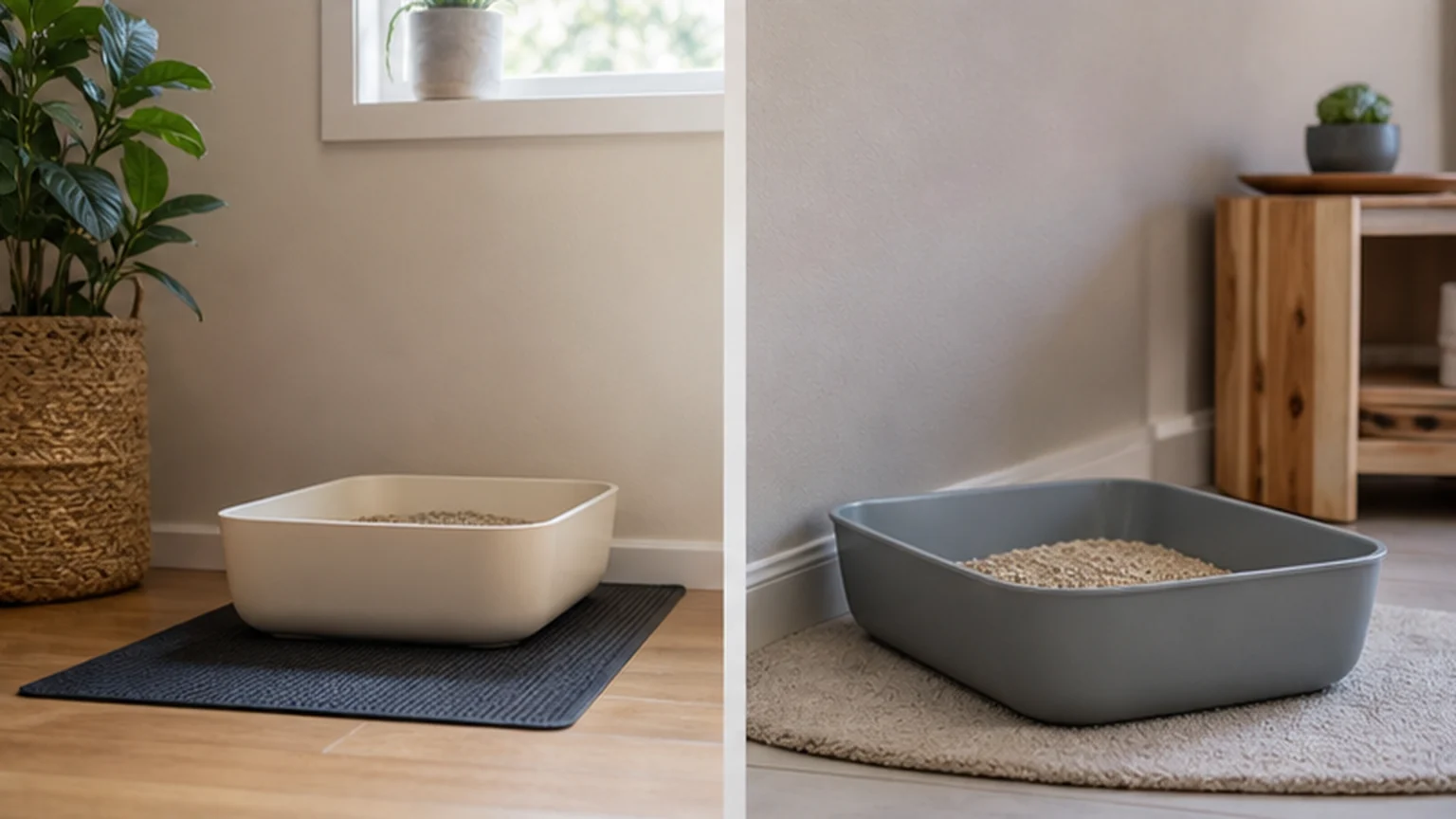
- Check tracking and lifting weight. Light, fine litters track more; a mat under the box catches a lot. Clay is heavy — if carrying big bags is a problem, lighter plant-based options or crystals may be worth the trade-off.
- Compare cost per use, not price per bag. A cheap non-clumping litter that needs changing weekly can cost more than a pricier clumping litter that lasts weeks with daily scooping.
Safety and life-stage considerations
Kittens. Very young kittens explore with their mouths, and a curious kitten can swallow litter. Clumping clay can expand in the digestive tract and cause a blockage, so many veterinarians recommend non-clumping paper litter for kittens under about four months. Keep the fill shallow — one to two inches is plenty — and switch gradually as the kitten matures.
Senior cats. Older cats often have arthritis. Deep, heavy litter is hard to dig in, so use a shallower fill (about 1–2 inches / 3–5 cm) and a soft, lightweight, low-dust formula. Lower-sided boxes also make entry easier.
The health watch. The litter box is a health-monitoring tool. Changes in urination frequency, urine clump size, or stool appearance can be early clues to illness, and daily scooping is how you notice them.
If your cat is straining in the box, urinating very little or very often, crying out while trying to pee, or producing bloody urine, call a veterinarian immediately — this can be a life-threatening urinary blockage, especially in males. Don't wait to "see if the litter helps." Avoid ammonia- or bleach-based cleaners when washing the box; strong chemical smells can discourage your cat. If you're pregnant or immunocompromised, have someone else scoop daily or wear gloves and wash your hands well, since cat feces can carry toxoplasmosis. Finally, never flush cat litter — even "flushable" brands can carry Toxoplasma parasites and clog plumbing.
How to switch litters without drama
Cats are creatures of habit, and a sudden swap is a common cause of box avoidance. Change gradually: keep about 75% old litter with 25% new for a few days, then move to 50/50, then 25/75, reaching 100% new around day 10. If you're unsure, keep a second box with the old litter until the switch is complete. Never punish a cat for avoiding the box — clean the spot, reconsider the litter, and check with a vet if the problem continues.
The maintenance half of the equation
No litter performs well if it's neglected:
- Scoop daily, ideally twice a day.
- Full changes: clumping litter every 2–4 weeks; non-clumping clay and paper every 5–7 days; crystals follow package directions.
- Wash the box with hot water and mild, unscented soap; rinse thoroughly. Skip ammonia, bleach, and citrus cleaners.
- One box per cat, plus one extra, in quiet, well-ventilated, low-traffic spots — not next to food and water.
- Keep the depth gentle: about 2–3 inches (5–8 cm) for most adults; some cats prefer less.
Location and box size matter as much as the litter itself. A box that's too small, too dirty, or too exposed will fail no matter what you fill it with.
Frequently Asked Questions
Should I use scented or unscented litter?
Unscented, always a safe first choice. Cats rely heavily on smell, and strong fragrances can drive some cats away from the box altogether. Handle odor with a good clumping litter, daily scooping, and regular full changes.
How often should I completely change the litter?
Clumping litter: every 2–4 weeks if you scoop daily. Non-clumping clay and paper: roughly once a week. Dump everything, wash the box, dry it, and refill with fresh litter.
How much litter should I put in the box?
Most adult cats prefer about 2–3 inches (5–8 cm). Too little and the box feels shallow and smelly; too much can feel awkward to dig in. Kittens and senior cats often do better with less — around 1–2 inches (3–5 cm).
Is clumping litter safe for kittens?
For kittens under about four months, most vets recommend non-clumping paper litter, because curious kittens sometimes taste it and clumping clay can swell in the stomach and cause a blockage. Transition to clumping litter gradually once the kitten is older.
Can I flush cat litter?
No. It can clog pipes, and cat waste may carry Toxoplasma gondii, a parasite that survives wastewater treatment and harms marine wildlife. Bag it and bin it.
Key Takeaway
The best cat litter is unscented, low-dust, and clumping with a fine texture for most cats — but your cat's preference is the final vote. Test in small batches, transition gradually, and pair any good litter with daily scooping, regular full changes, and a quiet, accessible location. Do that, and the litter box stays a reliable part of your home and a useful window into your cat's health.
Share this guide
Help another cat parent find it.